

Calodiscus gradually acquired three movable segments between its two shields. Thousands of detached fossil pieces from Sweden record the changes. A few articulated shells, including enrolled specimens, show which shields and segments went together at different ages.
Quick facts
| Group | Eodiscida |
|---|---|
| Age of the type species | Early Cambrian |
| Genus established | Howell, 1935 |
| Type species | Calodiscus lobatus |
| Type area | Troy, New York, USA |
| Swedish material | Shields, segments and articulated shells |
What can the fossils tell us?
The growth series records the successive release of three movable segments.
Articulated specimens helped associate head and tail shields at particular stages.
Juveniles dominate the Fånån material, whereas fossils from Scania show evidence of sorting after death.
From the type series to the Swedish collections
James Hall named Agnostus lobatus in 1847 from beds near Troy, New York. Howell made it the type species of Calodiscus in 1935. The Browns Pond Formation type material is held by the American Museum of Natural History under AMNH 210.
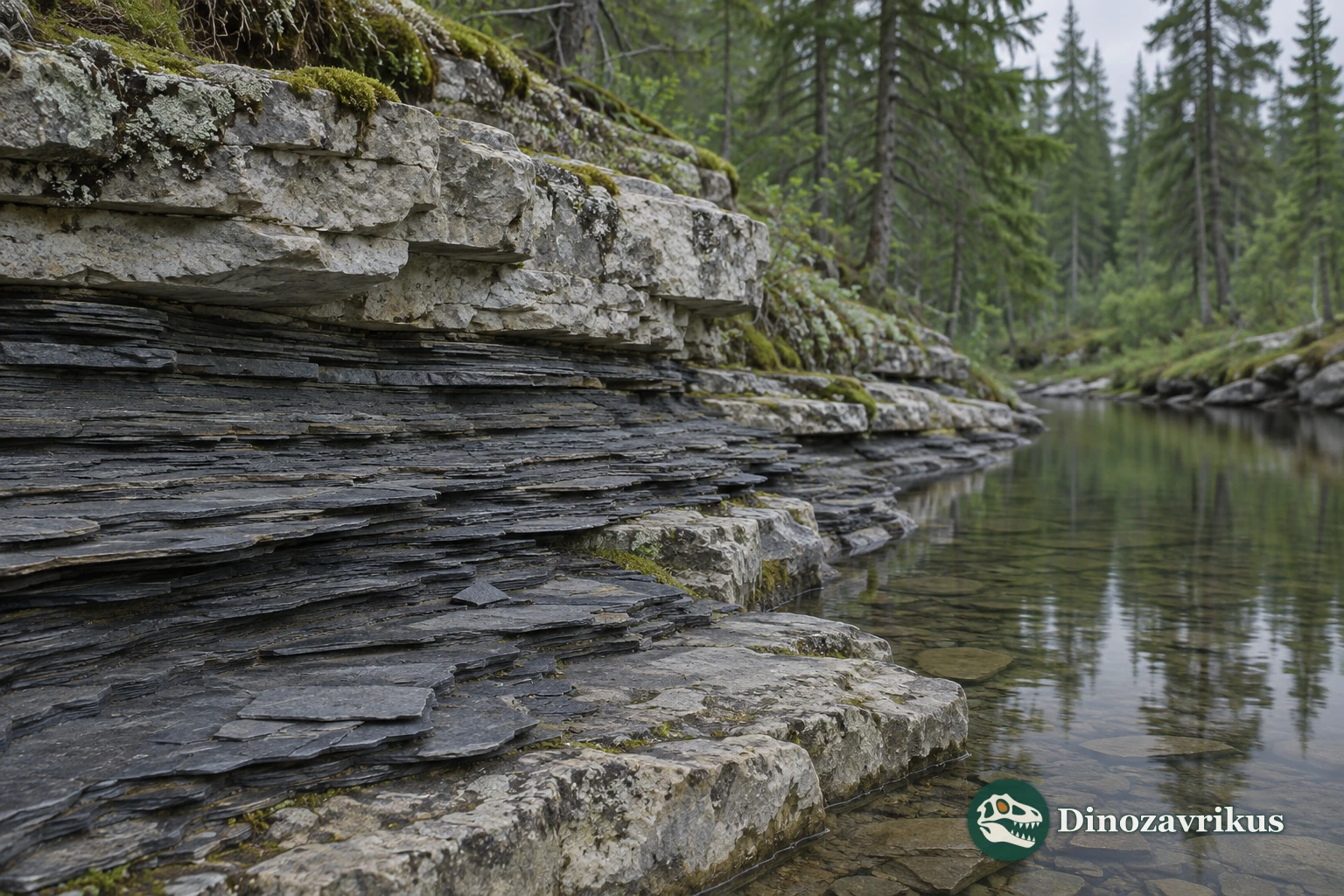
The 2009 study compared material from the Fånån rivulet in Jämtland and Gislövshammar in Scania. Young individuals dominate the Fånån remains. The size distribution in the southern collection is consistent with transport and sorting after death.
How the thorax gained three segments
At first there were no separate movable segments between the two shields. New rings formed near the rear of the temporary pygidium. At particular moults, a ring at the front of the tail shield separated to become a thoracic segment. The researchers traced three successive releases in the fossil series.
After the third segment appeared, the shell continued to grow without adding more segments. Measurements and estimated growth increments support at least seven later growth stages with a fixed number of segments. Those stages are inferred from the series of fossils.
Shells preserved in an enrolled pose
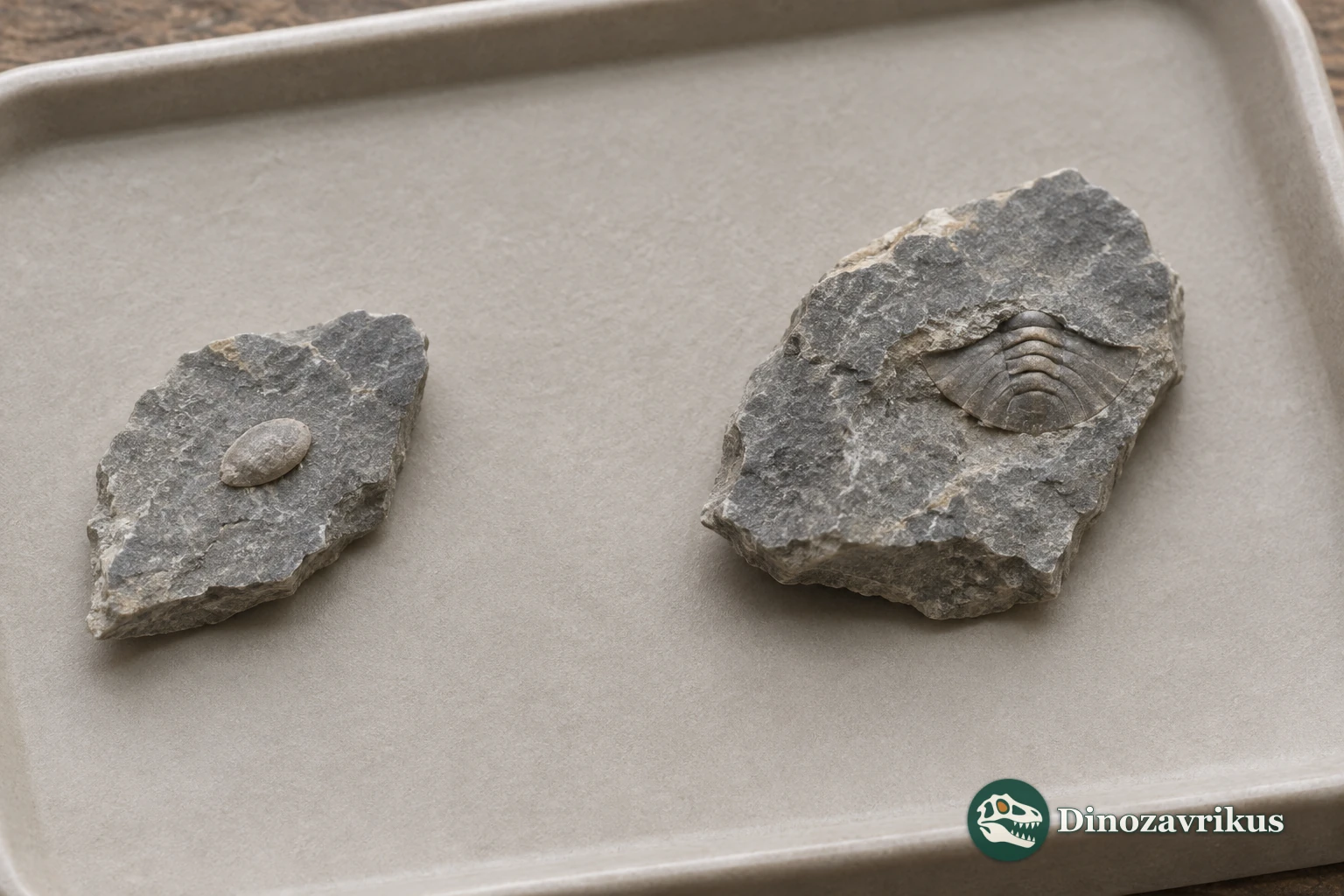
Both young and later specimens are preserved enrolled. Even some juveniles with no free thoracic segment could fold the tail under the head. A notch at the back of the temporary tail shield may have allowed water exchange while the shell was closed.
The attachment of the hypostome, a plate under the head, changed as the animal grew. The authors interpreted the later condition as consistent with feeding on organic particles on the bottom. That interpretation comes from the hard parts and comparison with other trilobites.
Using the records to compare rocks
Calodiscus lobatus occurs in Early Cambrian deposits on both sides of the modern Atlantic. Some of those beds can be correlated with deposits containing the bellimarginatus species of Serrodiscus. The whole assemblage and the position of each bed matter, since Calodiscus also occurs in some younger deposits.
Frequently asked questions
Where was the type material found?
In the Browns Pond Formation near Troy, New York.
Where did new thoracic segments come from?
One at a time, a segment was released from the front of the temporary pygidium at a moult.
Did the shell gain more segments after the third?
No. The shell grew larger at later stages, with its segment count fixed.
How do we know Calodiscus enrolled?
Several Swedish fossils preserve the tail tucked against the head.