

Canadaga was a large hesperornithiform from the Late Cretaceous of Arctic Canada. Its name is based on three vertebrae from the back of the neck. Similar bones from a second island made it possible to check the features that distinguish it from other diving birds.
Quick facts
| Group | Hesperornithiforms (Hesperornithiformes), Hesperornithidae |
|---|---|
| Age | Late Cretaceous |
| Region | North America (Nunavut, Canada) |
| Diet | Exact diet unknown |
| Type species | Canadaga arctica |
| Holotype | CMN 41050, three cervical vertebrae |
| Localities | Bylot and Devon islands |
| Devon Island material | NUVF 284, three cervical vertebrae |
What can the fossils tell us?
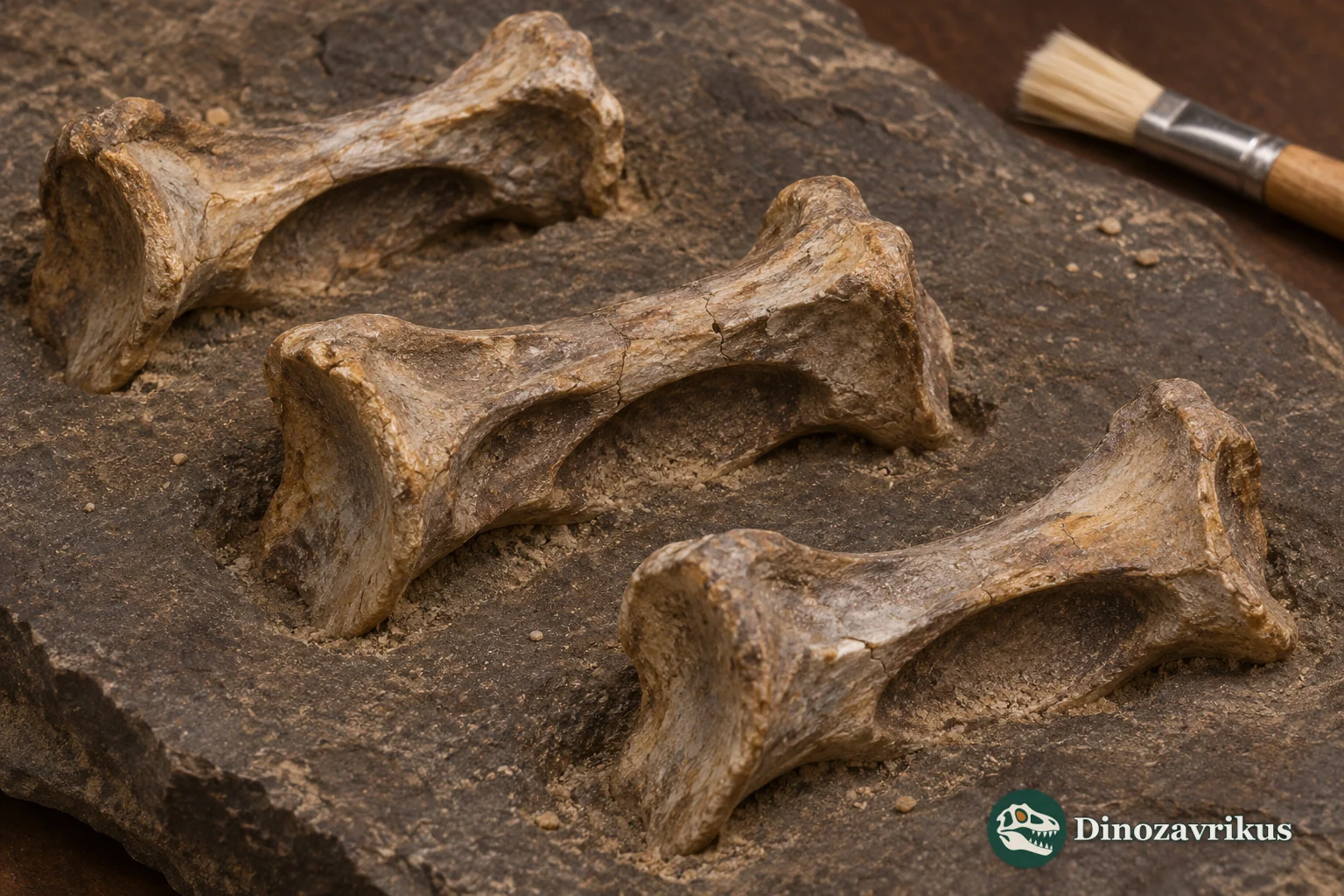
The type bones have deep hollows along the sides of the vertebral bodies and prominent downward projections.
The Devon Island specimen has the same hollows. Its bones overlap those of the holotype in their positions along the neck.
The vertebral bodies from Devon Island are roughly 25–27 mm long. Researchers compared them with bones from matching positions in other birds.
Bones from two Arctic islands
Hou Lianhai named Canadaga arctica in 1999 using material from Bylot Island that Dale Russell made available for study. The three bones of the holotype, CMN 41050, were identified as cervical vertebrae 15–17. The description drew attention to the expanded vertebral bodies, the deep hollows on their sides and the pit between the body and the rib-bearing process.
A second set of vertebrae, NUVF 284, came from the Kanguk Formation on Devon Island. The researchers identified them as cervical vertebrae 16–18. The site exposes marine mudstones and sandstones rich in glaucony. The bones match the Bylot type in their size and arrangement of hollows and projections.
How much can the vertebrae reveal?
The three Devon Island centra measure about 25–27 mm in length. In comparisons using the same part of the neck, the bones exceeded those of the studied specimens of Hesperornis. An estimate of total length would depend on proportions that are poorly known for Canadaga.
Better-preserved relatives such as Parahesperornis provide limb evidence for foot-propelled diving. Canadaga's place among the hesperornithids and its occurrence in marine rocks support a diving interpretation. The Arctic remains leave questions about its prey and diving depth open.
Frequently asked questions
Where was Canadaga found?
The holotype came from Bylot Island. A second occurrence is known from Devon Island. Both islands are in Nunavut, Canada.
Which fossils identify the species?
The diagnosis relies on the shape of the posterior cervical vertebrae, especially their side hollows and the processes beneath them.
How long was Canadaga?
Three vertebral bodies from Devon Island are about 25–27 mm long. The available bones give a comparative estimate of size but leave the total body length uncertain.
How might it have swum?
Its close relatives used their feet to propel themselves underwater. Relatedness supports the same interpretation for Canadaga, although the Arctic finds provide few details about movement.