

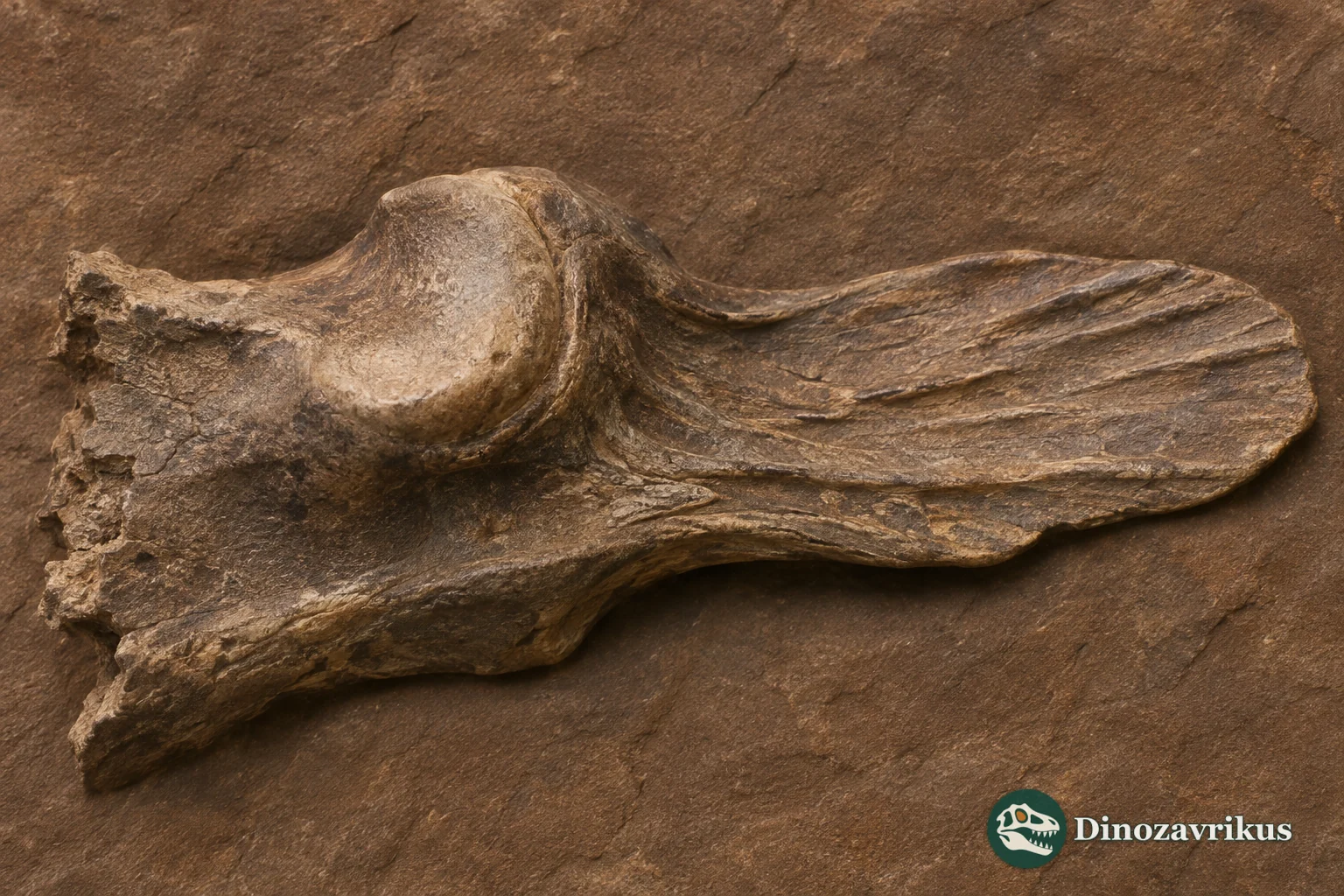
Capulomala was an Early Triassic stereospondyl amphibian. It is known from parts of lower jaws in India and Australia. A greatly expanded process behind the jaw joint gives these fragments their distinctive shape.
Quick facts
| Group | Temnospondyls, stereospondyls |
|---|---|
| Age | Early Triassic |
| Region | Asia and Australia: India and Queensland |
| Species | Capulomala panchetensis and Capulomala arcadiaensis |
| Scientific name | Capulomala |
| Diet | Unresolved from the known material |
What can the fossils tell us?
The rear parts of lower jaws come from India's Panchet Formation and Australia's Arcadia Formation.
An unusually expanded part of the lower jaw distinguishes Capulomala from other described stereospondyls.
No complete skull has been confidently assigned to the genus, and the jaw fragments leave body length unresolved.
Fossils from India and Queensland
Anne Warren, Ross Damiani and Dhurjati Sengupta described two species in 2009. C. panchetensis comes from the Panchet Formation in eastern India's Damodar valley. The holotype of C. arcadiaensis, QM F39706, comes from the Tank locality in Queensland's Arcadia Formation. It preserves part of the right side of the lower jaw.
The back of the jaw
The best-known area lies behind the joint where the lower jaw met the skull. In Capulomala this area projects into an exceptionally broad process. Its shape is useful for identifying the genus. The proportions of the head and how the animal caught food remain uncertain.
Comparing incomplete animals
The early Australian stereospondyl Banksiops preserves a skull that gives researchers a view of the palate. Capulomala preserves a different part of the skeleton. A specimen with the skull and lower jaw together would help bridge that gap.
Frequently asked questions
How many species of Capulomala have been described?
Two. Capulomala panchetensis comes from India, and Capulomala arcadiaensis comes from Australia.
Which bone identifies Capulomala?
The back of the lower jaw preserves an unusually broad process behind the jaw joint.
Where was the holotype of the Australian species found?
At the Tank locality in Queensland, in the Early Triassic Arcadia Formation.
How large was Capulomala?
The preserved jaw fragments provide too few landmarks for a reliable estimate of total body length.