

Cardabiodon was a large lamniform shark from the early part of the Late Cretaceous. Teeth found alongside vertebral centra in Western Australia gave researchers a rare opportunity to estimate the length of a single shark and examine how it grew.
Quick facts
| Order | Lamniformes |
|---|---|
| Age | Cenomanian and Turonian |
| Type locality | CY Creek, Western Australia |
| Fossils | Teeth and vertebral centra |
| Type specimen length | About 5.5 m, estimated |
| Type collection | Western Australian Museum, WAM 96.4.45 |
What can the fossils tell us?
The reconstructed dentition has four anterior and twelve lateroposterior files. The upper row is too incomplete to provide a comparable measurement.
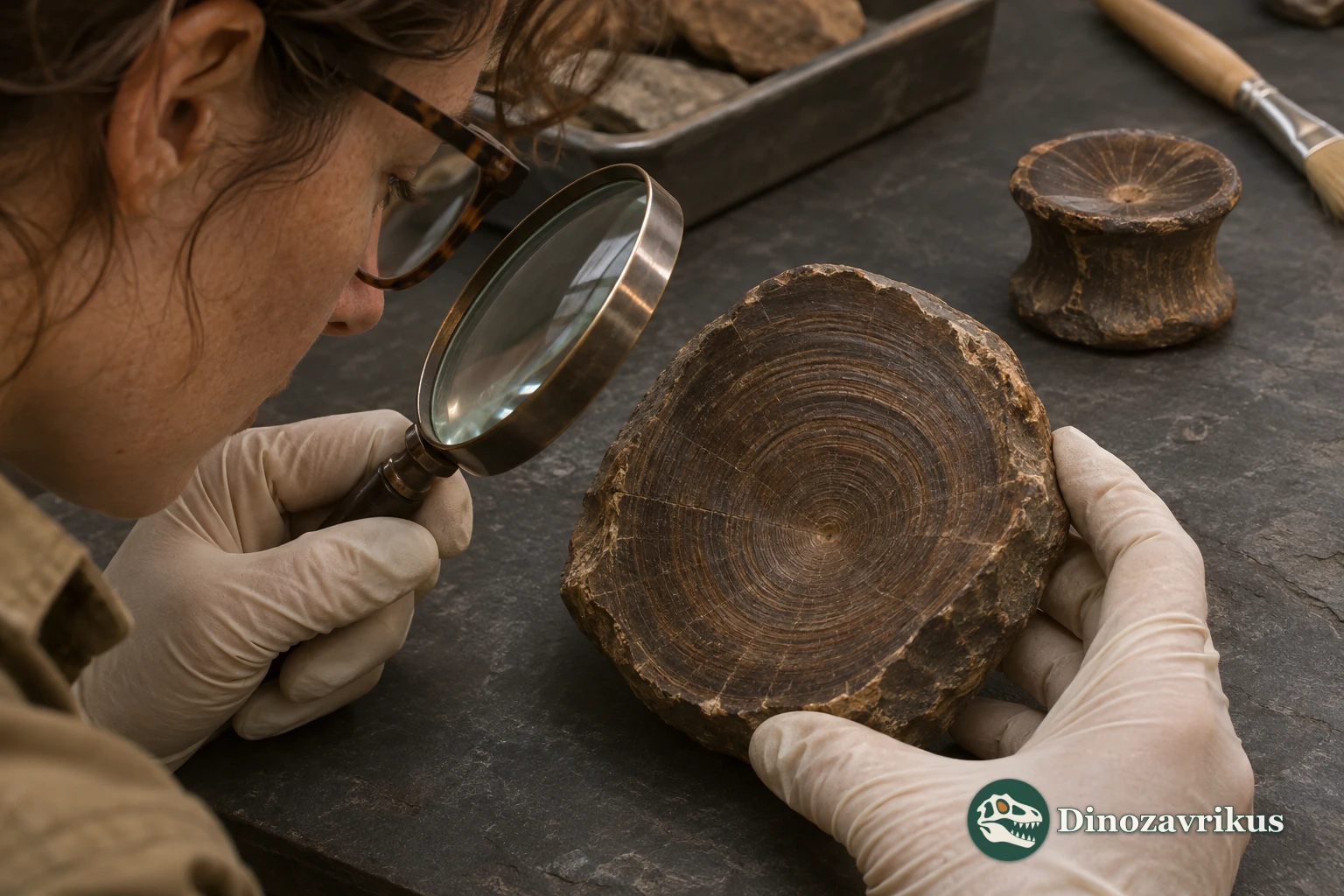
This number can be read in section. Converting it to years depends on the assumption that the bands formed annually.
The Australian type comes from the Cenomanian and the Montana species was described from Turonian deposits. The sparse record leaves much of its range unresolved.
The shark from CY Creek
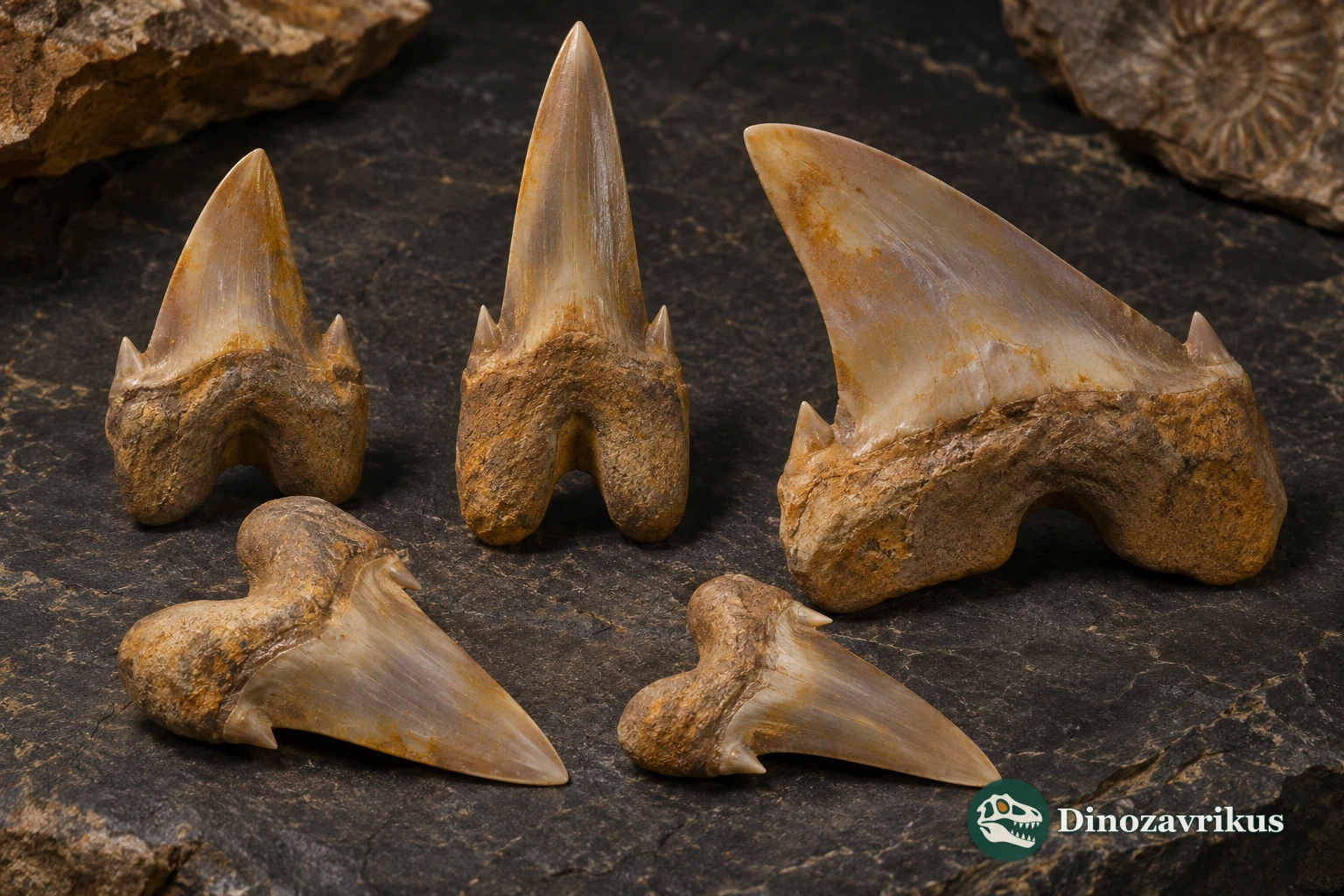
Mikael Siverson named Cardabiodon ricki in 1999. The type material came from the uppermost Gearle Siltstone at CY Creek on the Giralia Anticline, Western Australia. Teeth and centra belonging to WAM 96.4.45 were found together, allowing the dental and vertebral anatomy to be studied in the same individual.
Tooth shape changes along the jaw, from the anterior files to those nearer the corners of the mouth. The position of a tooth is also important when comparing isolated material of the Cenomanian shark Dwardius.
Estimating the length of the type specimen
Michael Newbrey and colleagues revised the arrangement of the lower teeth. Adding the tooth widths with a millimetre of spacing between teeth gave a bite circumference of 746 mm along the lower dentition, excluding the gap at the corners of the mouth. They applied the relationship between bite circumference and body length in the living great white shark and obtained about 5.5 m.
The figure applies to the Australian type individual. Its accuracy depends on how closely the extinct shark shared the modern shark’s jaw-to-body proportions. The researchers left the incomplete upper dentition out of their estimate.
Reading growth inside the vertebrae
The vertebral centra have thick, sturdy plates that radiate outwards from the centre. Newbrey and colleagues inferred that these centra belonged to a shark with a rigid backbone that could swim rapidly. Its swimming speed and fin outlines cannot be recovered from this material.
Sections from two individuals each preserve thirteen growth bands beyond the birth ring. A change in the growth curves around bands five to seven prompted the suggestion that the shark was approaching sexual maturity. The number of specimens is too small to give a firm age at maturity or a lifespan for the species.
Cenomanian and Turonian records
Siverson and Johan Lindgren described Cardabiodon venator in 2005 from the Fairport Member of the Carlile Shale in Montana. The teeth came from an ammonite zone near the beginning of the middle Turonian.
Cenomanian occurrences of C. ricki also include England, Kazakhstan and Canada. The geographic pattern has prompted a hypothesis that the genus favoured temperate waters. The small number of comparable fossil samples from Cretaceous tropical regions limits that test.
Frequently asked questions
How did researchers estimate its size?
They reconstructed the lower dentition of the type specimen and used a relationship between bite circumference and body length measured in great white sharks.
What material belongs to the type specimen?
An associated set of teeth and vertebral centra from the Gearle Siltstone in Western Australia.
How old was the type individual?
Its centra show thirteen growth bands after the birth ring, suggesting about thirteen years if the bands formed annually.
Which species was named from Montana?
Cardabiodon venator was described by Siverson and Lindgren from Turonian teeth.