

Dwardius was a Cretaceous lamniform shark identified mainly from isolated teeth. The type species comes from Cenomanian rocks of southern England. Material from Poland and India allows researchers to compare dental forms across different marine basins.
Quick facts
| Group | Lamniform sharks |
|---|---|
| Type species | Dwardius woodwardi |
| Genus authority | Mikael Siverson, 1999 |
| Material | Isolated teeth |
| Type area | Southern England |
| Age of type material | Cenomanian |
What can the fossils tell us?
The Australian vertebrae in the same study belong to Cardabiodon.
Researchers compare the Indian and English fossils by identifying equivalent tooth positions.
Recovery methods favoured larger teeth, which affects comparisons of the shark assemblage.
The name and type species
Jacques Herman named the type species in 1977. Mikael Siverson established Dwardius as a separate genus in 1999. The type material is from the middle or late Cenomanian of southern England. The same paper describes the Australian Cardabiodon, which preserves teeth associated with vertebrae. The body-length estimate from those vertebrae applies to that Australian shark.
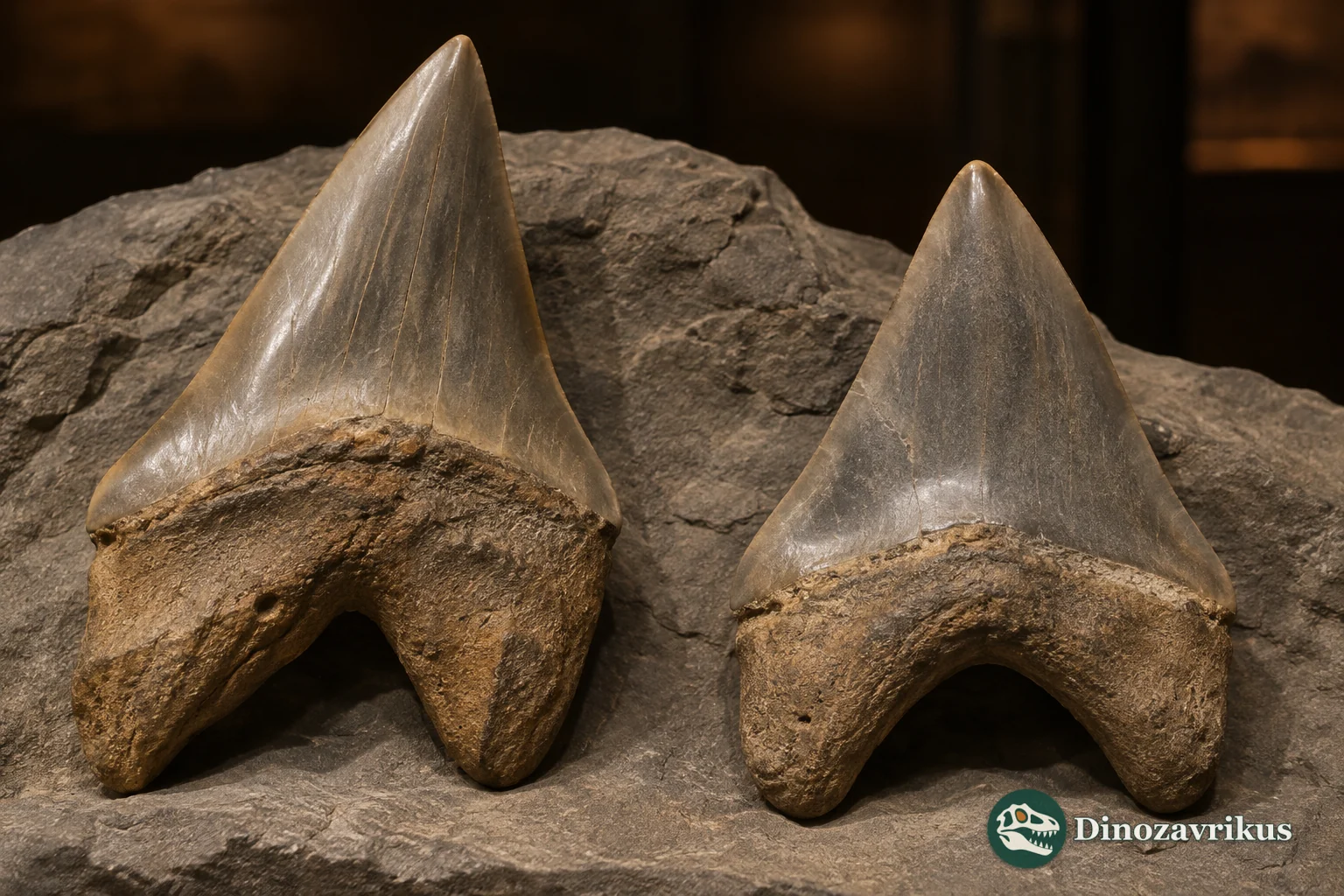
Comparing isolated teeth
Crown and root shapes vary with position in the jaw, so comparable tooth positions matter when identifying Dwardius. Early Cenomanian fossils from southern India were described as D. sudindicus. The authors made particular use of lower lateral teeth when comparing them with D. woodwardi. A similar outline in one isolated crown does not settle the species identification.
The Annopol assemblage
At Annopol, Poland, Dwardius occurs in a latest Albian shark assemblage. The study reported that either Dwardius or Cretoxyrhina tended to dominate in the assemblages compared and proposed competition as an explanation. Recovery also depended on sediment and processing. The methods used at Annopol did not recover the smallest teeth effectively.
Size and appearance
The robust teeth are useful for comparing Dwardius with other Cretaceous lamniforms. The known dental evidence leaves its exact body proportions and length uncertain. The illustration uses a plausible lamniform outline. Its colour, fin shapes and posture remain artistic choices. Read about a separate example of tooth position in Araloselachus.
Frequently asked questions
When was the genus established?
Mikael Siverson established the genus in 1999 for a species named by Jacques Herman in 1977.
Where was the type species found?
The type material comes from Cenomanian deposits in southern England.
Is there material outside England?
Yes. The genus occurs in Poland, and D. sudindicus was described from southern India.
How long was it?
Its exact length is unknown. The isolated teeth do not provide a dependable measurement.