

Cardiocorax mukulu is a late Cretaceous plesiosaur from Bentiaba in southwestern Angola. Its 2015 description was based chiefly on pectoral and pelvic girdles, part of a forelimb, ribs and a small number of vertebrae. A nearly complete three-dimensional skull, described in 2021 as a separate specimen, substantially expanded the known anatomy. The fossils place the genus among elasmosaurids, but published phylogenetic analyses have returned several positions within that family. They do not establish a complete body length, colour, prey or a direct ancestor-descendant relationship.
Quick facts
| Type species | Cardiocorax mukulu |
|---|---|
| Group | Elasmosaurid plesiosaur |
| Age | Early Maastrichtian; about 71.64–71.40 million years ago |
| Locality | Bentiaba, Namibe Province, Angola |
| Holotype | MGUAN PA103, girdle bones and partial skeleton |
| Additional skull | MGUAN PA278, nearly complete three-dimensional skull and associated neck |
| Length | No reliable total body length is established |
Evidence guide
MGUAN PA103 includes the pectoral and pelvic girdles, a partial forelimb, ribs and several vertebrae. Referred material PA270 adds parts of the pelvis and hindlimb; it is a separate specimen.
MGUAN PA278 preserves a three-dimensional cranium and mandible, teeth, hyoids and associated neck bones. It was found about three metres above the holotype horizon and is not a missing piece of PA103.
The local bonebed is dated to about 71.64–71.40 million years ago. This is an age for the horizon, not a precise date for the death of an individual animal.
The 2021 study found an early or intermediate position in four of six analyses, while one implied-weighting analysis recovered a closer relationship to Styxosaurus. These are results from character matrices, not direct observations of ancestry.
A name tied to a heart-shaped opening
Ricardo Araújo and colleagues named Cardiocorax mukulu in 2015 from material collected at Bentiaba, in Angola's Namibe Province. The genus name refers to the heart-shaped opening between the paired coracoids in the shoulder girdle. The authors explained mukulu as a word meaning ‘ancestor’ in local Bantu languages. Neither part of the name says that the animal was a direct ancestor of another plesiosaur.
The holotype is MGUAN PA103, described in the original paper as a new elasmosaurid from the early Maastrichtian. It includes pectoral and pelvic girdles, a partial forelimb with humerus, radius and ulna, isolated phalanges, several dorsal ribs, five cervical vertebrae and one dorsal vertebra. The first phylogenetic analysis placed it as the sister taxon to Styxosaurus snowii. That was a result of a particular character matrix and sampling, later reassessed when more anatomy became available.
A partial skeleton and separate referred material
The holotype's shoulder girdle includes a reduced dorsal blade of the scapula and a distinctive relationship between the clavicles and coracoids. The 2015 diagnosis also discussed the asymmetry of a coracoid buttress and the heart-shaped intercoracoid opening. These features help identify the fossil; they do not provide a full silhouette or a direct record of how the animal swam.
A second specimen, MGUAN PA270, preserves pelvic and hindlimb material referred to the genus. The skull-bearing specimen MGUAN PA278 is another separate find, not a piece that completes PA103. Keeping the catalogue numbers distinct matters because the evidence for the head and the evidence for much of the trunk and girdles come from different individuals. The evidence-rich record of Callawayasaurus offers a useful comparison for how additional articulated skeletons can answer different questions without filling every gap.
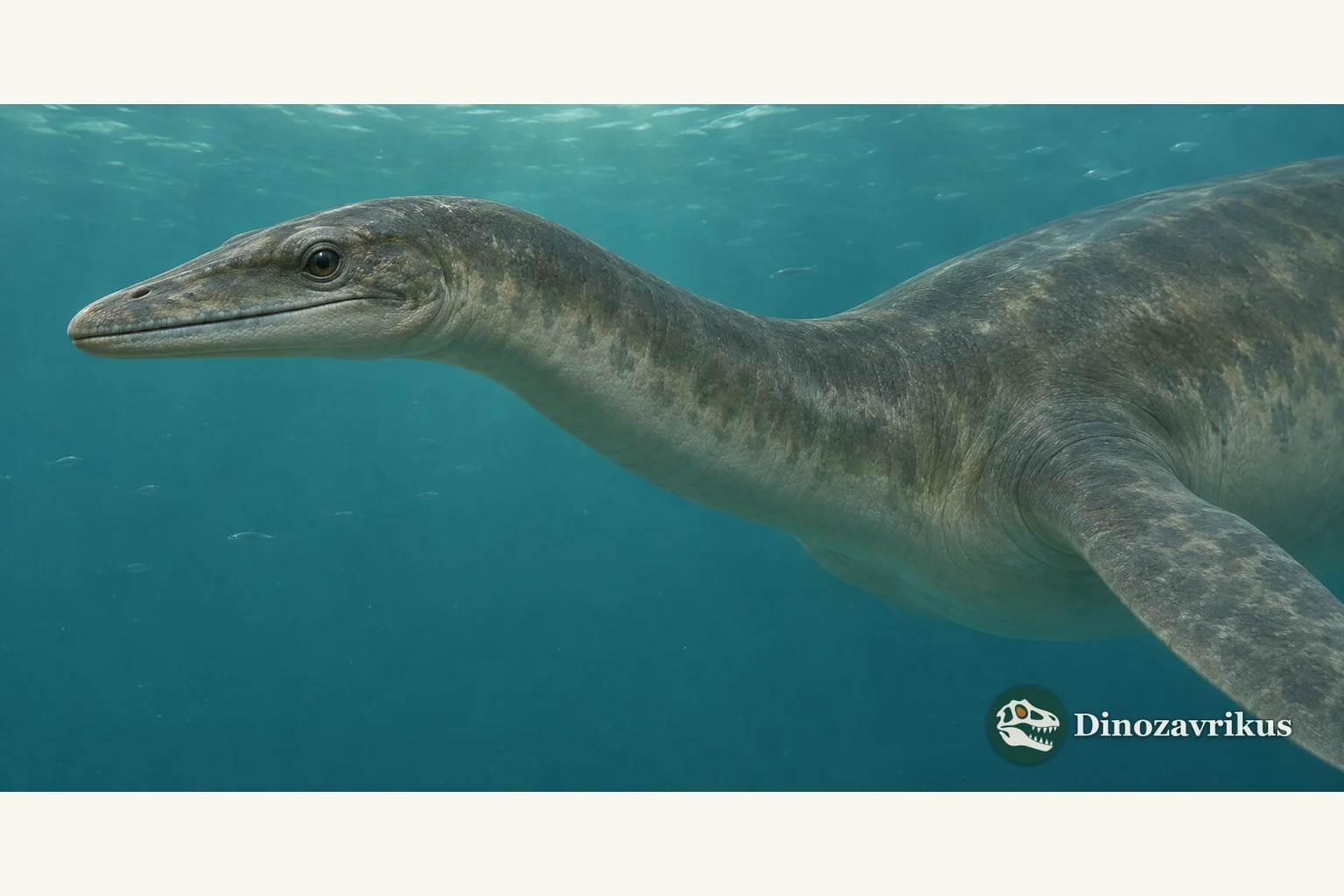
What the later skull added
Miguel P. Marx and co-authors described MGUAN PA278 in 2021. It preserves the most complete plesiosaur skull then known from sub-Saharan Africa, in three dimensions, with the lower jaw, teeth, hyoid elements and an atlas-axis complex. Seventeen postaxial cervical vertebrae, partial ribs, a femur and limb bones were also associated with the specimen. It came from Bentiaba about three metres above the holotype horizon and roughly 250 metres to its northeast.
The skull allowed a much fuller comparison of the tooth rows and bone contacts than the original postcranial material permitted. The authors counted five premaxillary alveoli and seventeen maxillary alveoli. The skull is not exceptionally broad, and the neck vertebrae do not have the extreme elongation seen in some elasmosaurines. These distinctions are anatomical comparisons; they do not establish the animal's body length or feeding behaviour.
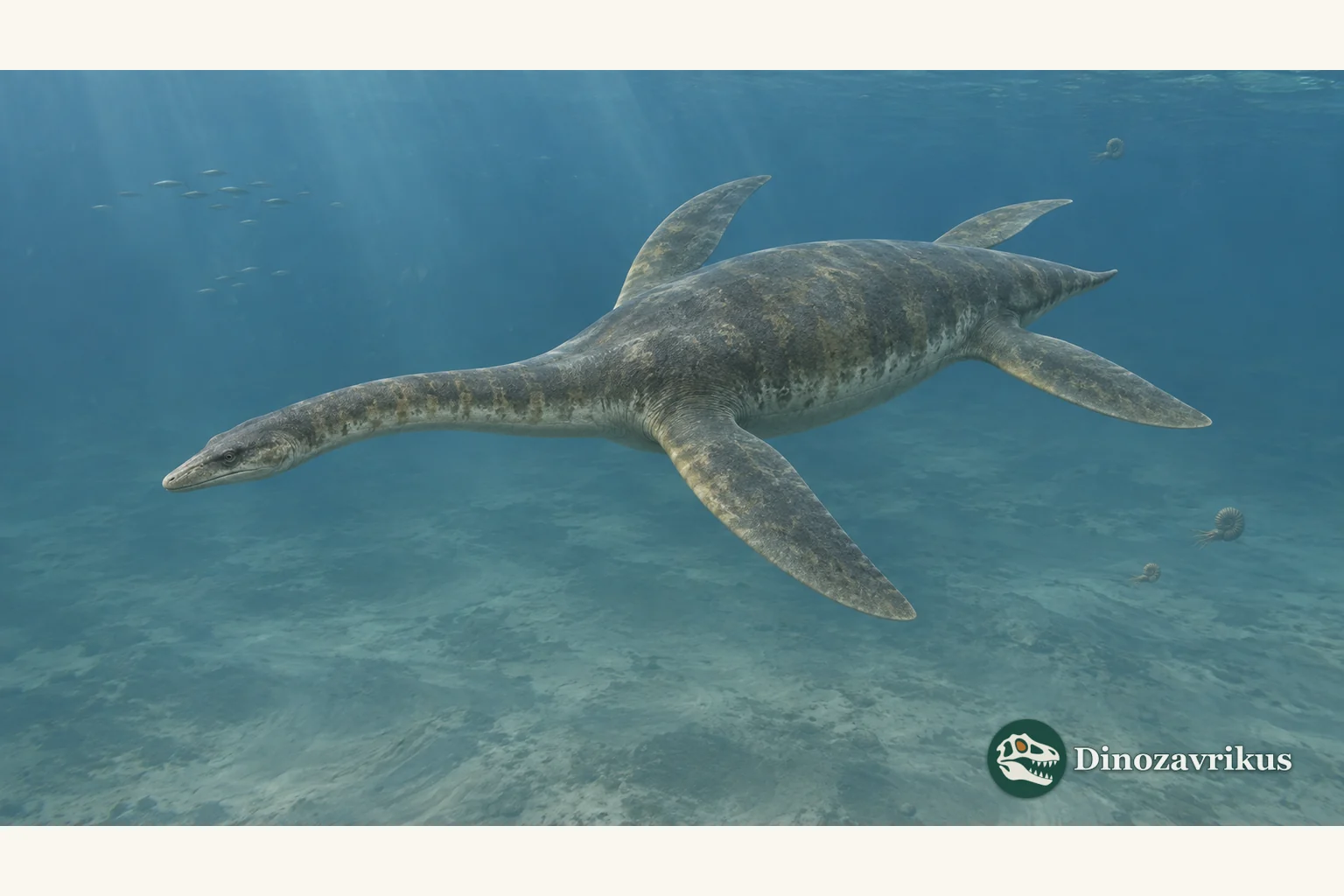
Why its position among elasmosaurids remains unsettled
The 2021 study ran six phylogenetic analyses using updated character scores and different matrix settings. In four analyses, Cardiocorax branched early or in an intermediate position within Elasmosauridae. One implied-weighting analysis recovered it as the sister taxon of Styxosaurus snowii. The authors also noted low support and substantial homoplasy in the family-level trees. The range of results reflects the way character coding, taxon sampling and incomplete fossils affect a branching analysis.
A phylogenetic tree is a hypothesis about relationships based on shared anatomical characters. It is not a record of a direct parent species, and a branch that moves between analyses should not be presented as settled consensus. The skull adds important character information, but other parts of the skeleton remain incomplete. The broader overview of plesiosaurs and pliosaurs explains the differences between the long-necked and short-necked body plans without treating them as a simple ladder of evolution.
An early Maastrichtian marine bonebed
The holotype is from the Mocuio Formation at Bench 19, Bentiaba. Geological work places the bonebed in the early Maastrichtian, about 71.64–71.40 million years ago. The fossil-bearing interval is described as a one- to two-metre bed of fine-grained sandstone. The age belongs to the geological horizon and its fossil assemblage, not to a precise moment in the animal's life.
Sedimentological and faunal evidence indicates a marine shelf setting below ordinary storm-wave influence. This is an interpretation of the depositional environment. It does not establish an exact swimming depth for Cardiocorax, prove that every fossil in the bonebed shared one habitat, or show that animals gathered there while alive. No prey remains or stomach contents have been published with the specimens that identify a specific diet.
Body size, movement and what is not preserved
None of the described specimens preserves a complete, measurable skeleton from skull to tail. A total length or mass should therefore not be supplied as a direct measurement. The girdles, limbs and neck bones do show a plesiosaur body plan with four paddles, but they do not record the exact stroke, speed or turning ability of a living animal.
The original study used girdle shape to propose a possible protraction-and-retraction rowing cycle. That is a testable interpretation of joint and limb anatomy, not an observation of fossilized motion. The later skull paper likewise cautions that character similarities can be homoplastic. Colour, skin, soft-tissue contours, growth, reproduction and pathologies have not been established for the described specimens. The artwork on this page is an illustrative reconstruction of an elasmosaurid, not a specimen portrait.
Frequently asked questions
Where was Cardiocorax found?
The holotype came from Bench 19 at Bentiaba in Namibe Province, southwestern Angola, in the Mocuio Formation.
What fossils are known?
The holotype MGUAN PA103 preserves girdles, part of a forelimb, ribs and a few vertebrae. Referred material and the separate specimen MGUAN PA278 add pelvic and hindlimb bones, a nearly complete skull and associated neck elements.
How old is Cardiocorax?
The fossil-bearing horizon is early Maastrichtian, approximately 71.64–71.40 million years old. The range dates the bonebed, not an individual animal's lifespan.
How long was it?
No reliable total length is established because none of the described specimens preserves a complete measurable body from skull to tail.