

Cardiolophus was a genus of early perissodactyls from Eocene Wyoming. The type species, C. radinskyi, is known from a skull, lower jaws and vertebrae, alongside fragmentary finds from the Bighorn and Clarks Fork basins. A 1991 revision placed it among tapiroid-like forms; a 2026 phylogeny recovered it on a distinct basal branch of the order.
The genus belongs in the ancient mammal catalogue. It was not a horse or a proven horse ancestor: early perissodactyl evolution included several branches, and many old labels of “early horses” have not held up under broad comparisons.
Quick facts
| Scientific name | Cardiolophus Gingerich, 1991 |
|---|---|
| Type species | C. radinskyi Gingerich, 1991 |
| Other included species | C. semihians (Cope, 1882) |
| Age | Early Eocene, Wasatchian age |
| Range | Bighorn and Clarks Fork basins, Wyoming |
| Holotype | UM 78915: skull, jaws, atlas and axis |
| Relationships | A basal perissodactyl branch in a 2026 analysis |
| Caveat | Not a demonstrated direct ancestor of horses |
What can the fossils tell us?
UM 78915 includes a skull, lower jaws, atlas and axis, providing more context than an isolated tooth but not a complete skeleton.
Researchers compare ridge development and premolar and molar proportions; some isolated teeth resemble those of other genera.
The Wasatchian sequence provides a chronological framework, but specimens are not all from one moment.
The analysis groups Cardiolophus among early perissodactyl branches; it does not establish direct ancestry of horses.
How the genus was established
Philip Gingerich established Cardiolophus in a 1991 revision of early Eocene perissodactyls from the Clarks Fork Basin. Earlier, different teeth and fragments had been assigned to Systemodon, Homogalax, “cf. Homogalax” or Hyracotherium. The name refers to Heart Mountain near the type locality.
The holotype of C. radinskyi is UM 78915: a skull and lower jaws with the atlas and axis, collected by S. J. Carlson at University of Michigan locality SC-2. This association is informative but is not a complete skeleton. Gingerich diagnosed the genus by moderately lophodont cheek teeth, short diastemata and a combination of characters distinguishing it from Hyracotherium and Homogalax.
Skull and cheek teeth
Dental rows preserve premolar and molar proportions, crown height and transverse ridges. These combinations helped distinguish early perissodactyls whose isolated teeth can look similar. The diagnosis rests on several characters, not on a single heart-shaped outline.
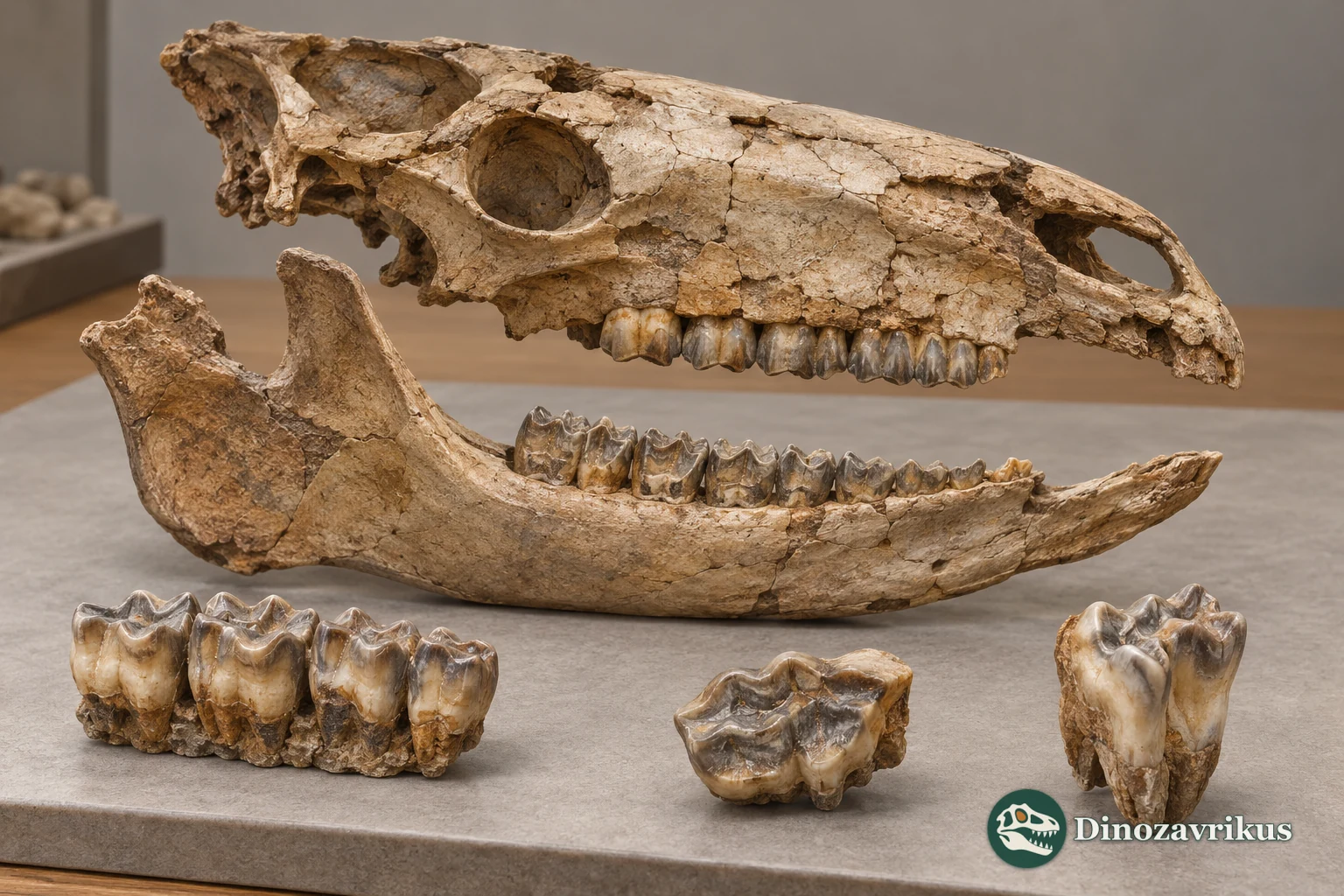
The fossils permit comparison of jaw and tooth anatomy but do not provide a precise body mass or complete stature. Measurements of the holotype are direct; estimates of the living animal depend on comparisons with other early perissodactyls.
Age and localities
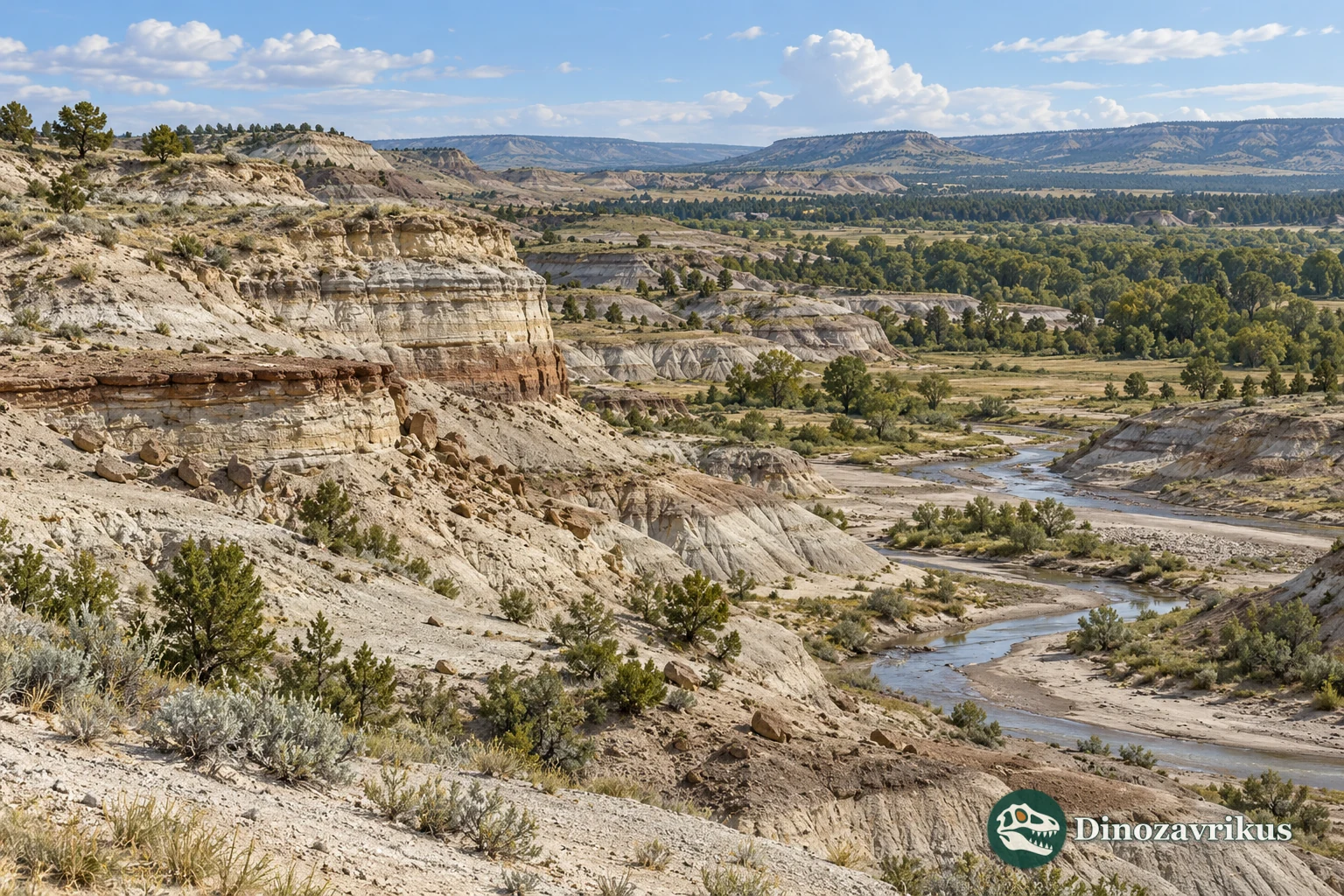
Gingerich placed C. radinskyi in the early Eocene Wasatchian North American land-mammal age and reported it from Wyoming’s Bighorn and Clarks Fork basins. The type locality, SC-2, is in the Clarks Fork Basin; the species spans several Wasatchian subintervals. C. semihians is known from a later part of the sequence.
Revising its relationships
Gingerich discussed Cardiolophus among tapiroids and Isectolophidae. In 2026, Jérémy Tissier and Thierry Smith compared early perissodactyls in a broader phylogeny. Their analysis placed C. radinskyi and C. semihians with several Asian forms in a clade distinct from Pliolophus, near the base of other perissodactyl branches. They also showed why calling several early genera “horses” can mislead. The separate Wyoming genus Orohippus offers a useful comparison among Eocene perissodactyls, but shared region and broad age do not establish close relationship.
A phylogenetic position is an inference from sampled characters and taxa, not a new observation of the holotype. Broader samples or new fossils may change the internal branching pattern.
Diet and unknowns
The teeth are compatible with plant processing, but do not establish a precise menu. Limb proportions and complete postcranial series are not equally well known for every specimen; confident claims about speed, gait, social structure or a specific habitat exceed the direct evidence.
The clearest portrait is of an early perissodactyl with a distinctive combination of cheek-tooth and jaw features. Artistic reconstruction can suggest a small four-legged mammal but cannot establish its colour, behaviour or direct relationship to modern horses.
Frequently asked questions
When did Cardiolophus live?
It is known from the early Eocene Wasatchian sequence in Wyoming’s Bighorn and Clarks Fork basins.
What is the holotype of Cardiolophus radinskyi?
UM 78915, a skull and lower jaws with the atlas and axis, collected at locality SC-2.
Was Cardiolophus an early horse?
Not in the strict modern sense. It was an early perissodactyl, placed among basal branches in a 2026 analysis, not a demonstrated horse ancestor.
What did Cardiolophus eat?
Its teeth are consistent with plant processing, but the exact diet is unknown.