

Catagonus historically grouped several South American peccaries. A 1975 report of living Chacoan peccaries called C. wagneri made the name famous as a supposedly fossil genus found alive. A later phylogenetic revision challenged that broad grouping. Under its restricted treatment, the extinct type C. metropolitanus remains in Catagonus, while the living species is Parachoerus wagneri.
This is a taxonomic distinction, not a denial that the living animal was discovered. The cover is a generic artistic peccary reconstruction, not a portrait of a known fossil individual.
Quick facts
| Group | Tayassuidae, peccaries |
|---|---|
| Type species | C. metropolitanus, named by Florentino Ameghino |
| Historical usage | Also included the living C. wagneri and fossil C. stenocephalus |
| 2017 revision | Restricted Catagonus to the fossil type species |
| Fossils | Skulls, jaws and teeth from South America |
| Dating | Separate species and sites have different ages |
| Visual limit | Coat color and individual behavior are not preserved |
What can the fossils tell us?
Catagonus is anchored by C. metropolitanus. Its anatomy must be assessed from fossil cranial and dental material, not borrowed wholesale from the living Chacoan peccary.
A 2017 phylogenetic analysis proposed Parachoerus for living wagneri and Brasiliochoerus for fossil stenocephalus, restricting Catagonus to its type.
A roughly 20 ± 2 ka ESR estimate was reported for material historically assigned to C. stenocephalus. It cannot be applied to C. metropolitanus.
Why a living peccary carried the fossil name
Florentino Ameghino established the fossil species C. metropolitanus in the early twentieth century. Later authors placed other peccaries in the same genus, including wagneri, which was known from fossils before living animals were reported in Paraguay. That discovery confirmed the survival of the Chacoan peccary, but the genus label depends on subsequent systematic analysis.
A 2017 phylogenetic study compared cranial and dental characters across living and extinct peccaries. Its traditional broad Catagonus was paraphyletic. The authors proposed keeping the name for its type species, moving living wagneri to Parachoerus and fossil stenocephalus to Brasiliochoerus. Older combinations still appear in publications and should be read in their taxonomic context.
Fossils and their separate histories
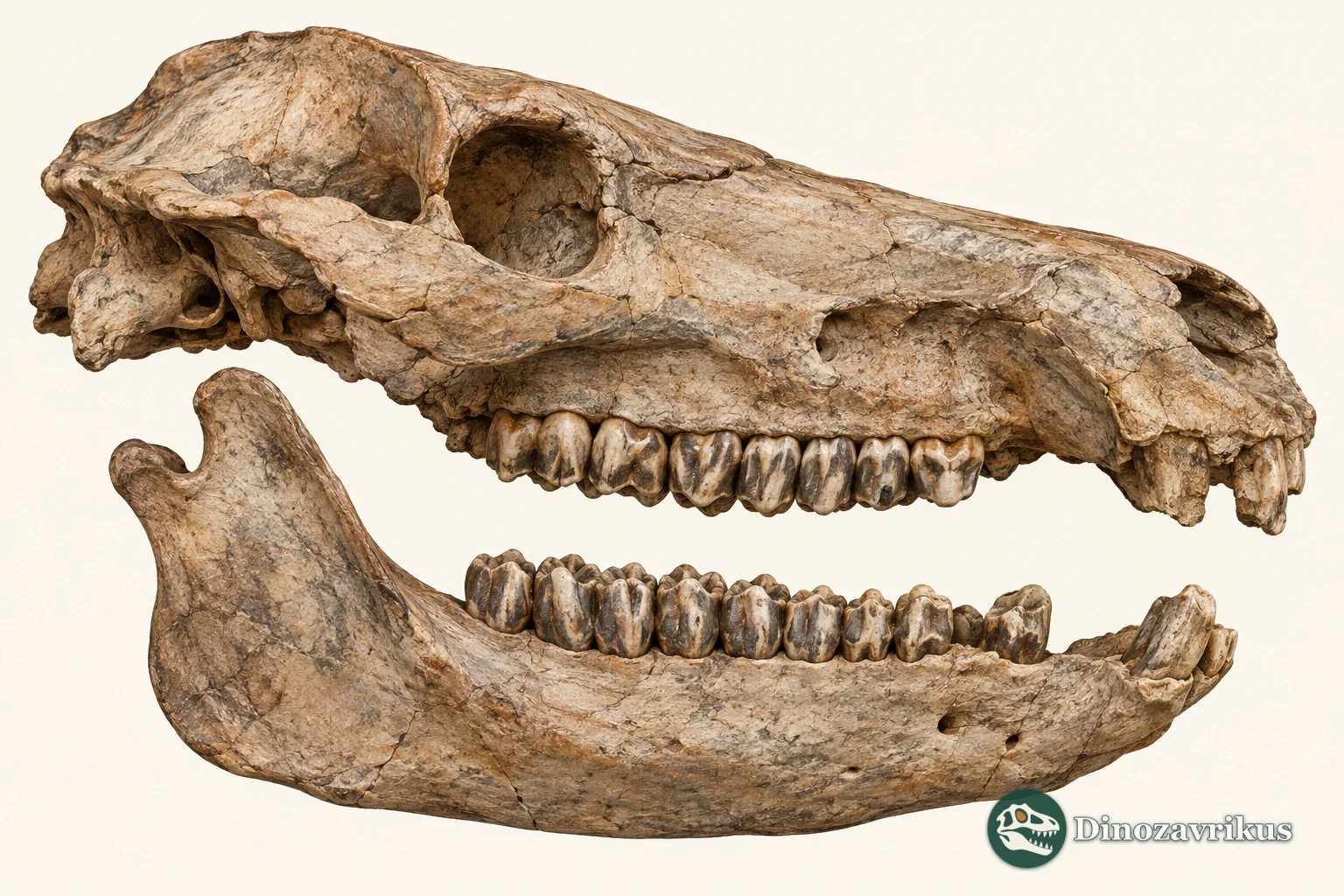
Skulls, jaws and teeth preserve the features used to compare snouts, tooth rows and relationships. Researchers described a partial late Pleistocene skull of wagneri from the Sopas Formation of Uruguay. It widens that species' fossil record, but it is not a type specimen of C. metropolitanus, and the 2017 revision puts the living species in another genus.
An electron spin resonance estimate near 20 ± 2 thousand years was published for material traditionally identified as C. stenocephalus. It dates that sample under a particular method, not every peccary once called Catagonus. Some fossils belong to the Quaternary. Thrichomys illustrates another South American mammal record, without implying close kinship to peccaries.
Reconstruction and ecological limits
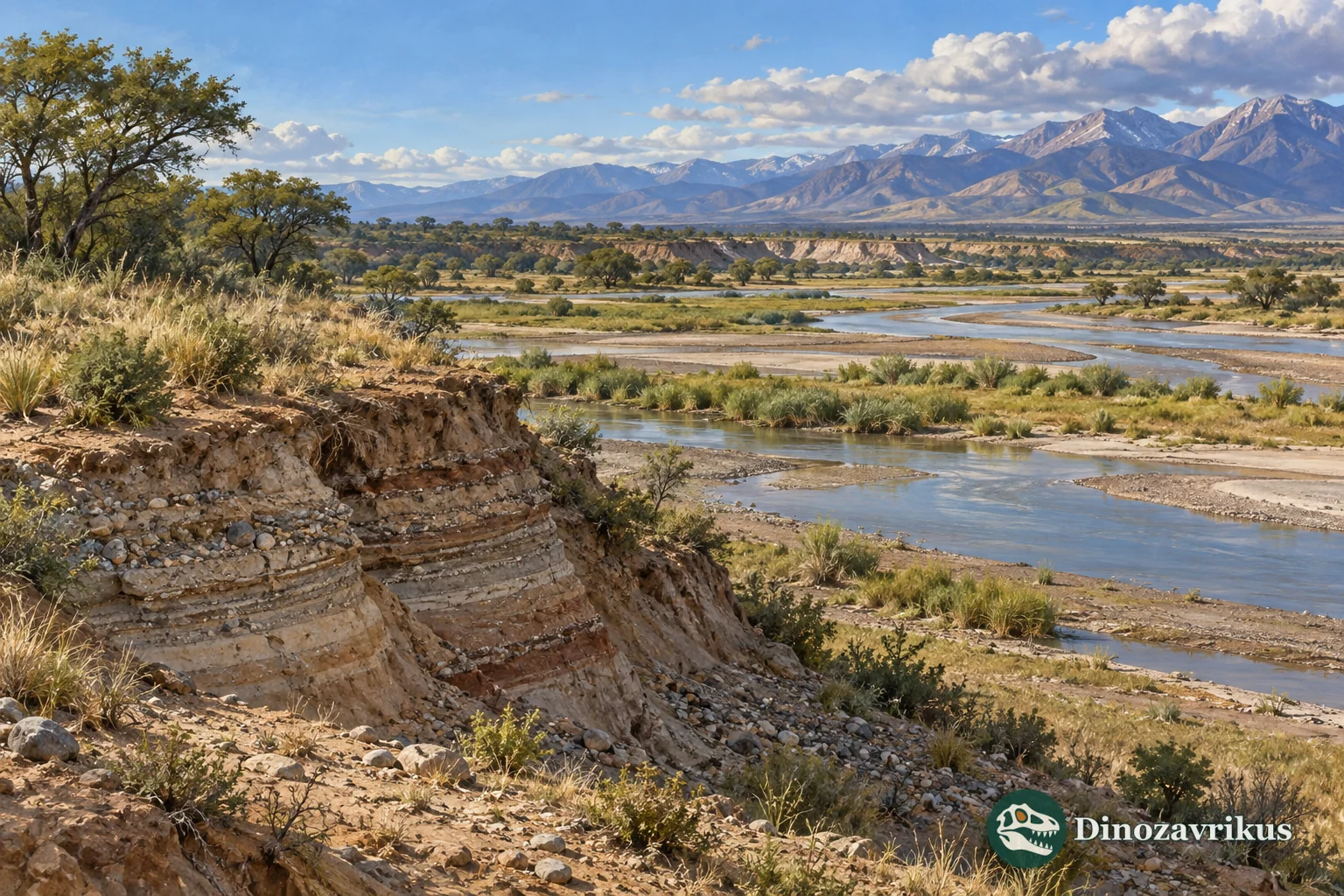
Living Chacoan peccaries occupy dry parts of the Gran Chaco. Their bodies allow useful comparisons, but their habitat cannot automatically be assigned to the fossil type species. Site sediment and associated fauna are needed to reconstruct a specific fossil setting. The landscape illustration is conceptual, not a recorded excavation location.
Fossil cranial characters support hypotheses of relatedness. They do not establish the coat color, exact diet or individual behavior of C. metropolitanus. Calling the animal a living fossil also obscures the difference between the living Chacoan species and a revised fossil genus.
What a new find could test
Associated skulls and jaws from well dated deposits could refine comparisons among the named forms. A date for one specimen cannot establish when all members of the historical grouping originated or disappeared. The systematic assignment must be stated alongside every cross-species comparison.
Frequently asked questions
Is Catagonus alive today?
In older broad classifications the living Chacoan peccary was Catagonus wagneri. A 2017 revision moved it to Parachoerus and restricted Catagonus to its fossil type.
Which species fixes the name Catagonus?
The type species is C. metropolitanus, named by Florentino Ameghino.
What is the Uruguayan fossil?
A partial late Pleistocene skull assigned to wagneri from the Sopas Formation, not the type of C. metropolitanus.
Does the 20 ± 2 ka estimate date the genus?
No. It applies to a particular sample historically called C. stenocephalus and cannot date every species once placed in Catagonus.