

Cederstroemia is an extinct carpet-shark genus recognised from isolated teeth. A 1995 revision separated it from a mixed set of fossils that had been assigned to another genus. Its teeth have a compact, robust form interpreted as a cutting adaptation, but no associated skeleton reveals the animal’s full proportions, colour or exact way of life.
Quick facts
| Group | Orectolobiform carpet sharks; modern studies place the genus in Orectolobidae |
|---|---|
| Type species | Cederstroemia triangulata from Montana |
| Known material | Isolated teeth; no associated skeleton is known |
| Age | Cretaceous; named species come from different stages |
| Geography | North America, Europe and a first Asian report from Japan |
| Body length | Unknown; tooth measurements do not yield a reliable total length |
| Feeding | A cutting function was inferred from tooth shape; prey are unknown |
What can the fossils tell us?
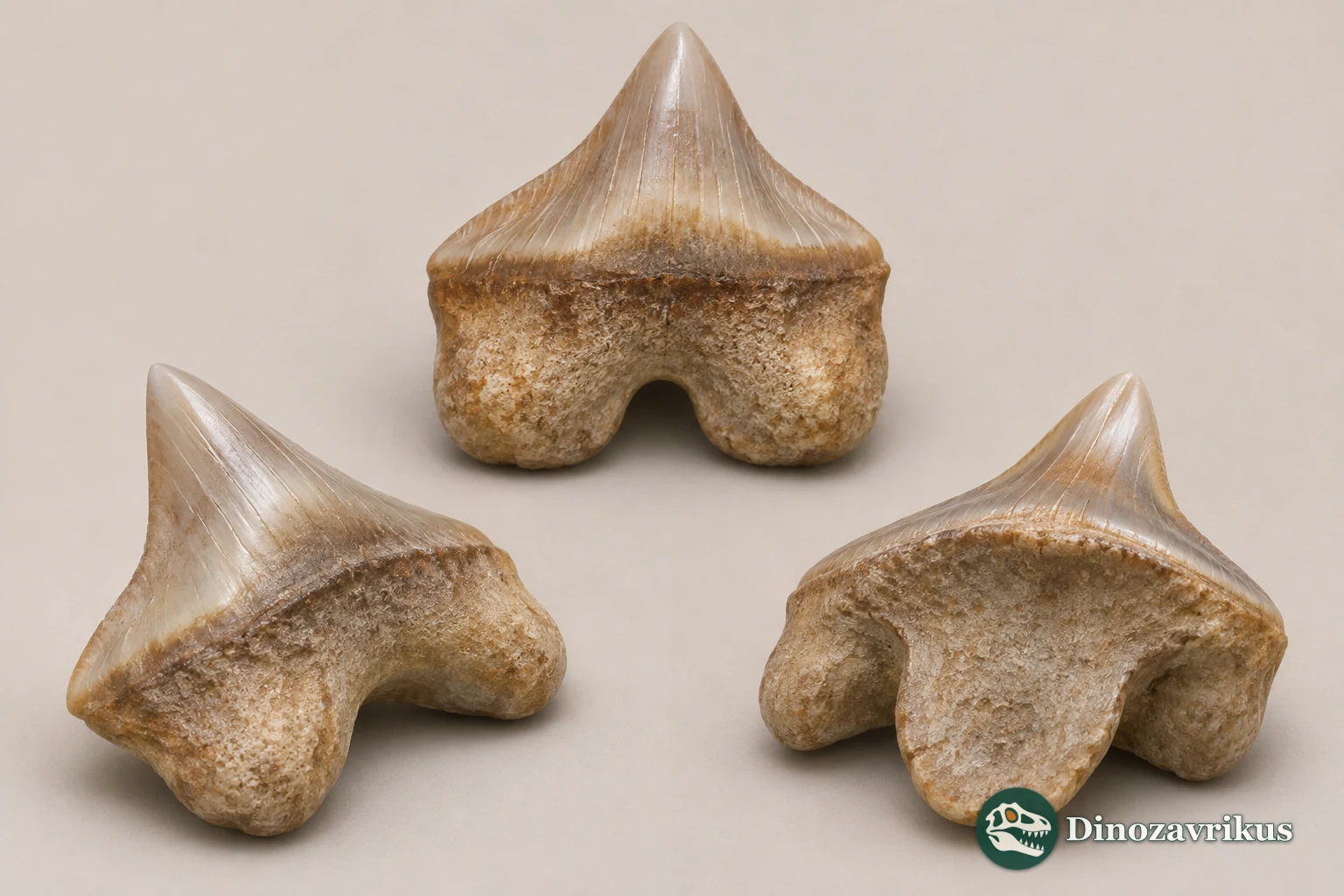
The described teeth are small but robust, with a short cusp, sloping shoulders, a labial apron and a thick root. Shape varies between species and along the tooth row, so identification depends on a combination of crown and root characters.
The type species is from the Campanian Judith River Formation in Montana. Other species were reported from Europe and New Mexico. Four incomplete Japanese teeth were assigned to Cederstroemia sp.; the authors identified their sampled bed as Santonian while noting the wider age debate over the Kashima Formation.
The original description interpreted the dentition as adapted for cutting, but no associated gut contents, jaws or complete skeleton identify prey or body proportions. The cover is a comparative artistic impression rather than a species portrait.
A genus separated during a revision
Mikael Siverson established Cederstroemia in a 1995 revision of Cretaceous carpet sharks. The work examined teeth from the Judith River Formation in Montana. One tooth included in the type series of Cretorectolobus olsoni did not belong with its name-bearing specimen and was interpreted as a different orectoloboid shark. Siverson used that tooth to establish a new genus, with C. triangulata as its type species.
The revision also reassessed teeth previously called Eucrossorhinus microcuspidatus. Siverson interpreted them as juvenile teeth of the same species represented by adult Cretorectolobus olsoni. Those fossils did not become a new animal; their classification changed after size-related variation and a mixed type series were considered together. The genus Cretorectolobus is now treated separately, and the comparison helps explain why careful tooth-by-tooth study matters.
The dental characters
Teeth assigned to Cederstroemia are small relative to many shark teeth but unusually robust for Mesozoic orectolobiforms. Anterior teeth may approach equal height and width. Their main cusp is short, the shoulders slope, and a labial apron extends below the crown. The lingual uvula is flattened near the middle, while the root is thick and may have different patterns of vascular openings. The genus was described as having a dentition adapted for cutting.
The character set is more informative than a single triangular outline. Root shape, the position of foramina, crown shoulders, ornament and jaw position all matter. Teeth can resemble those of angel sharks, and incomplete specimens may lack the details needed for confident assignment. A tooth-based genus such as Johnlongia presents a different combination of features, even though it too is documented mainly by detached teeth.
Five named species and a Japanese record
A 2024 review lists five valid species: C. triangulata from Montana, C. nilsi from Sweden, C. ziaensis from New Mexico, and C. havreensis plus C. siverssoni from European localities. Tooth widths and crown ornament vary among them. Some species have been described from a small number of teeth, including incomplete examples, so the authors note that identifications remain open to reconsideration as new material appears.
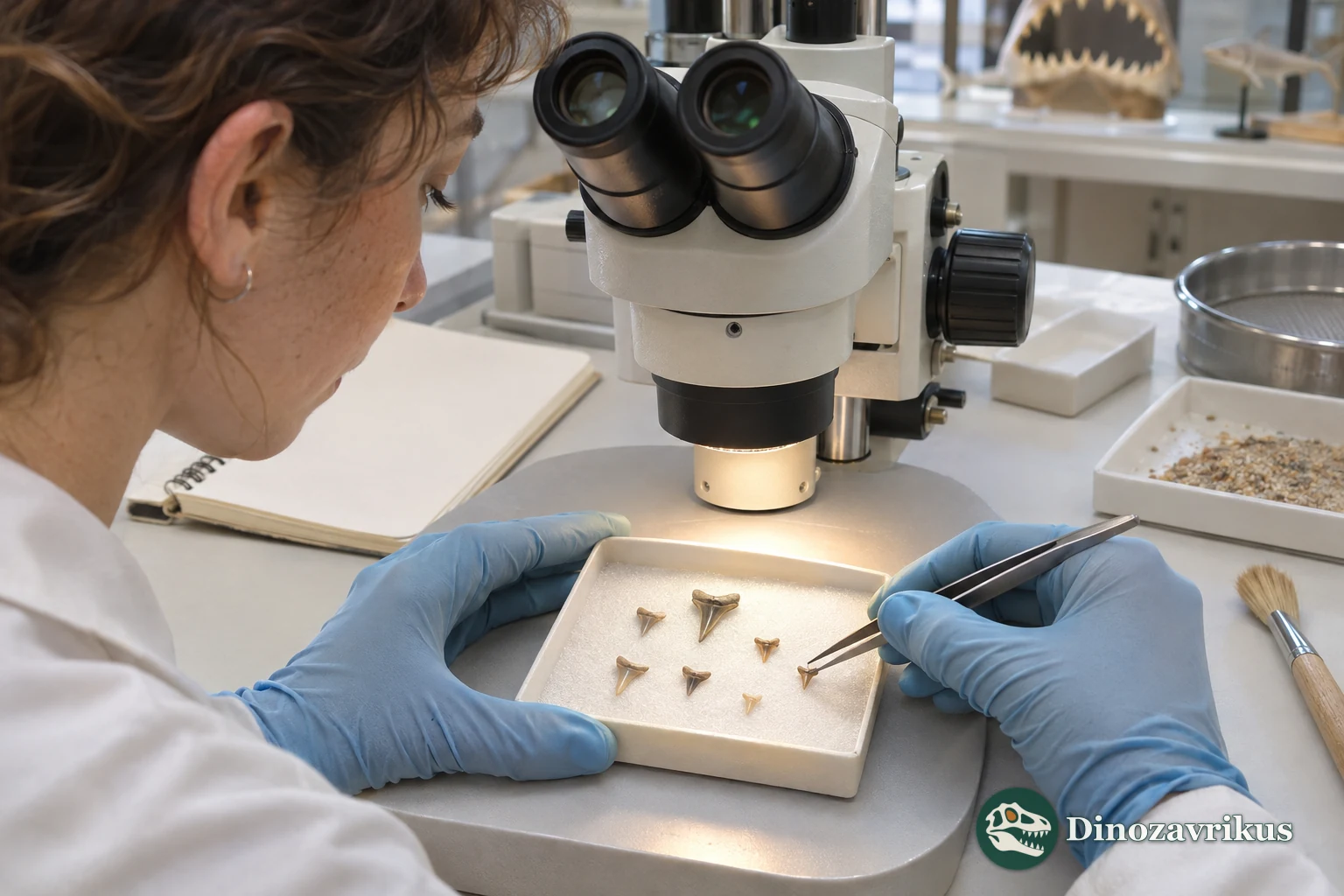
Masahiko Kaneko and Sergey Solonin reported the first Asian occurrence in 2024. They described four slightly damaged or incomplete teeth, MCM-A2575 to MCM-A2578, from tuffaceous sandstone in the Kashima Formation near the Shuparo River, Yubari, Hokkaido. The specimens are held at Mikasa City Museum. The largest measured 2.75 millimetres high and 5.12 millimetres wide. Because the sample was small and preservation incomplete, the authors used the open identification Cederstroemia sp. rather than naming a new species.
The paper treated the sampled bed as Santonian. It also reviewed competing age assignments for the Kashima Formation as a whole, which range more broadly across the Late Cretaceous. The authors suggested that the teeth might represent an undescribed morphology but did not establish that as a new taxon. Additional specimens and comparisons would be needed to test the idea.
What the teeth do not tell us
A cutting dentition is a functional interpretation of tooth shape. The descriptions do not report stomach contents or prey preserved with Cederstroemia, so a particular diet cannot be named. Nor can the small size of a tooth be converted into the shark’s body length without a validated relationship between tooth position and total length. No such associated jaw or skeleton has been reported for the genus.
Orectolobiform sharks include animals with different proportions and habits. The classification alone does not show whether Cederstroemia had skin fringes, spots, a broad head or a particular swimming style. The cover image is a general carpet-shark-like impression. Its body outline and colour are speculative, while the teeth are the direct fossil evidence.
Frequently asked questions
Why was Cederstroemia separated from Cretorectolobus?
During a 1995 revision, one tooth in a mixed type series did not match the name-bearing Cretorectolobus specimen. Siverson used it to establish a separate orectoloboid genus.
Which species is the type species?
Cederstroemia triangulata, described from the Judith River Formation in Montana, anchors the genus name.
Is the shark’s body length known?
No. The fossil record discussed here consists of isolated teeth, and no reliable model converts them into a total body-length estimate.
Was Cederstroemia found in Japan?
Yes. Four incomplete teeth from Hokkaido were reported in 2024 as Cederstroemia sp. The authors did not name a new species from that small sample.