

The type species of Chaunoproetus was described from the tail shield of a juvenile from the Carnic Alps. That fossil was later reported missing. Subsequent finds in Alpine limestone include eyeless parts of the head and tails that differ in outline.
Quick facts
| Group | Proetid trilobites |
|---|---|
| Age | Late Devonian, Famennian |
| Named by | Rudolf and Emma Richter, 1919 |
| Type species | Chaunoproetus palensis |
| Finds | Carnic Alps and southern France |
| Setting | Marine carbonate mud |
What can the fossils tell us?
Rudolf Richter described it from Großer Pal in 1913. Later researchers reported that it could no longer be located.
The head material from late Devonian Alpine forms lacks a visual surface.
The tail assigned to C. carnicus tapers sharply and carries small bumps near the margin.
A missing type from Großer Pal
Rudolf Richter described Proetus (?) palensis in 1913 from an isolated pygidium, or tail shield. Its developmental stage identifies it as a juvenile. In 1919 the species became the type of Chaunoproetus.
At nearby Grüne Schneid, Raimund Feist found similar tails, a separate cranidium and a free cheek. He identified them as C. cf. palensis to mark the uncertainty. There was no type specimen available for direct comparison. A tail shield from Puech de la Suque in southern France was later assigned to C. palensis.
Why the tail of carnicus was recognised separately
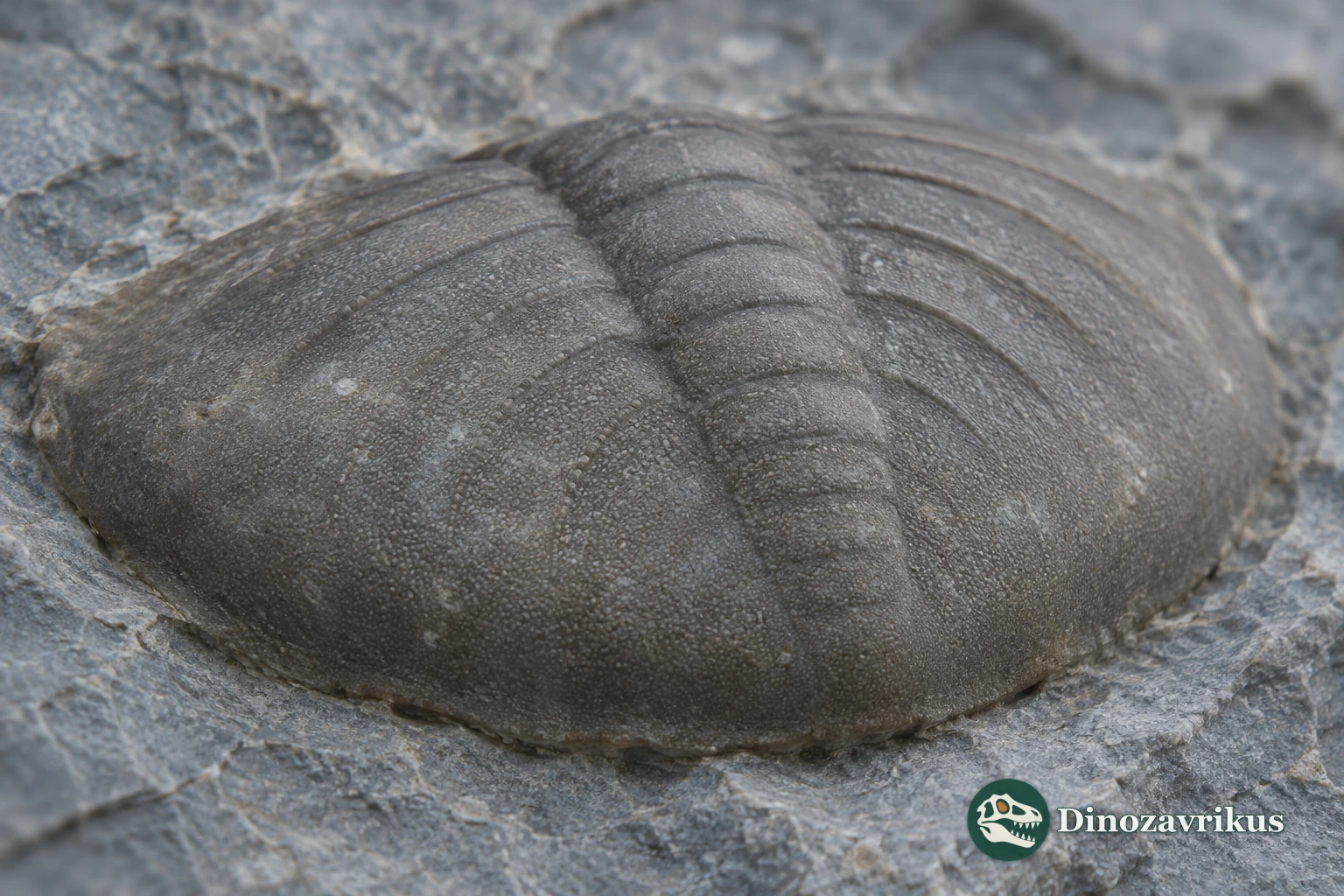
The type specimen of C. carnicus, the other Alpine species, is held in Marburg as specimen 2736. The same rock sample preserves an isolated tail. Feist compared it with a pygidium from Grüne Schneid and suggested that both tails belonged to C. carnicus.
The Grüne Schneid tail narrows almost to a point. Small bumps are visible on the sloping margin and behind the axis. Researchers can compare those characters with other specimens directly. Finding parts on the same rock does not establish that they came from the same individual.
A late Devonian seafloor community
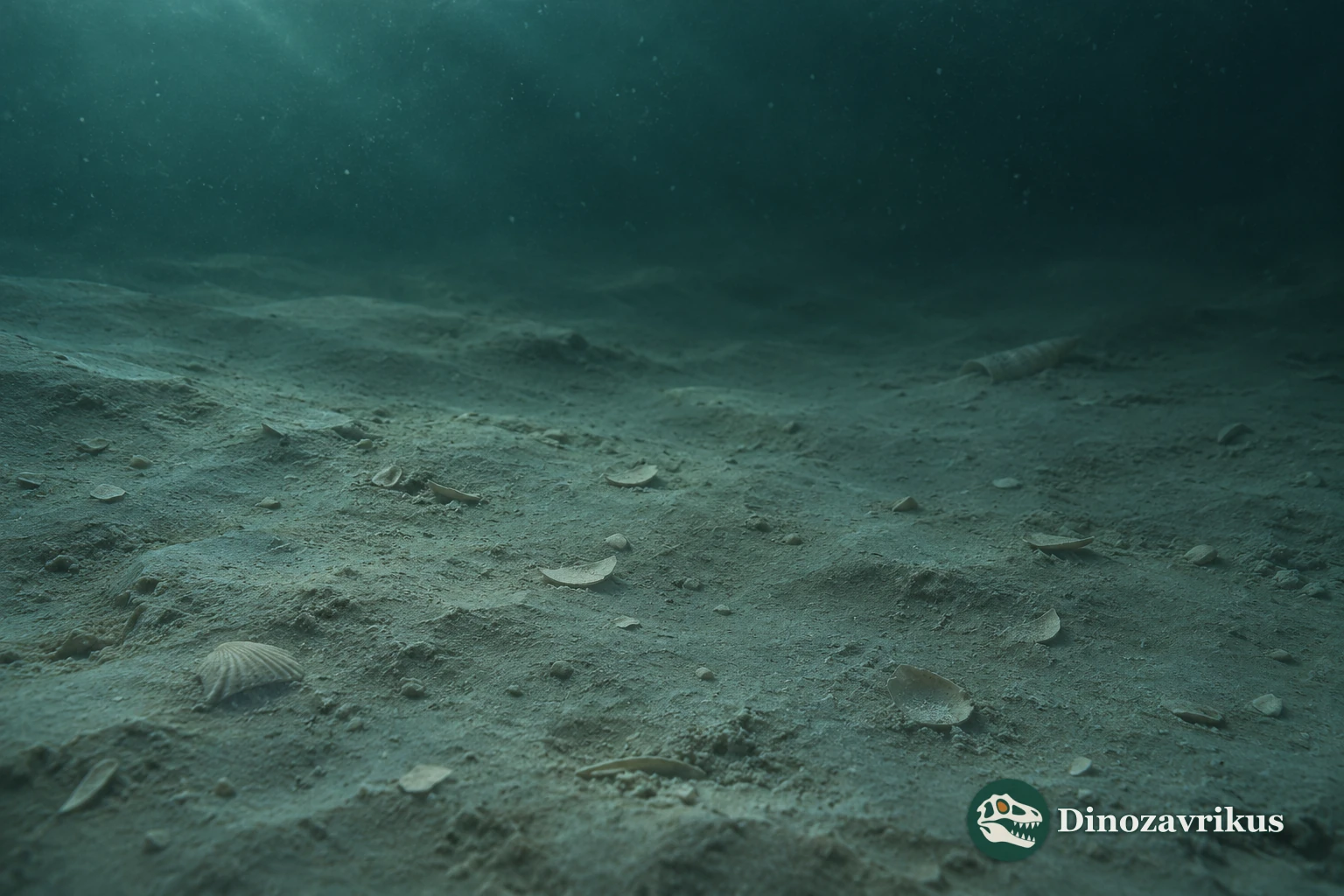
At Grüne Schneid, Chaunoproetus occurs in late Famennian limestone alongside other trilobites with missing or reduced eyes, including Helioproetus. Feist associated the fauna with a muddy carbonate seafloor before the Hangenberg crisis.
The eye reduction is visible in the preserved shell. The shields alone cannot establish how the trilobite searched for food or the exact depth at which it lived.
Frequently asked questions
When did Chaunoproetus live?
The Alpine and French records described here come from the Famennian, near the end of the Devonian.
What was the type species originally based on?
Rudolf Richter described it from a juvenile tail shield found at Großer Pal.
What is distinctive about the tail attributed to carnicus?
It tapers sharply at the back. Small bumps are visible on its sloping margin and behind the axis.
Could Chaunoproetus see with compound eyes?
The Late Devonian forms described from the Carnic Alps lack visual surfaces on the head.