

Cheirogaster is an extinct land tortoise named for a shell found in southwestern France. For decades its name was also applied to younger European tortoises, including several giants. Comparisons of their shells narrowed the name to the late Eocene French species.
Quick facts
| Group | Turtles, land tortoises (Testudinidae) |
|---|---|
| Age | Late Eocene (Priabonian) |
| Region | Europe: Gironde, France |
| Type species | Cheirogaster maurini |
| Holotype | Shell from Falaise de Baby |
| Scientific name | Cheirogaster |
| Diet | No direct evidence |
What can the fossils tell us?
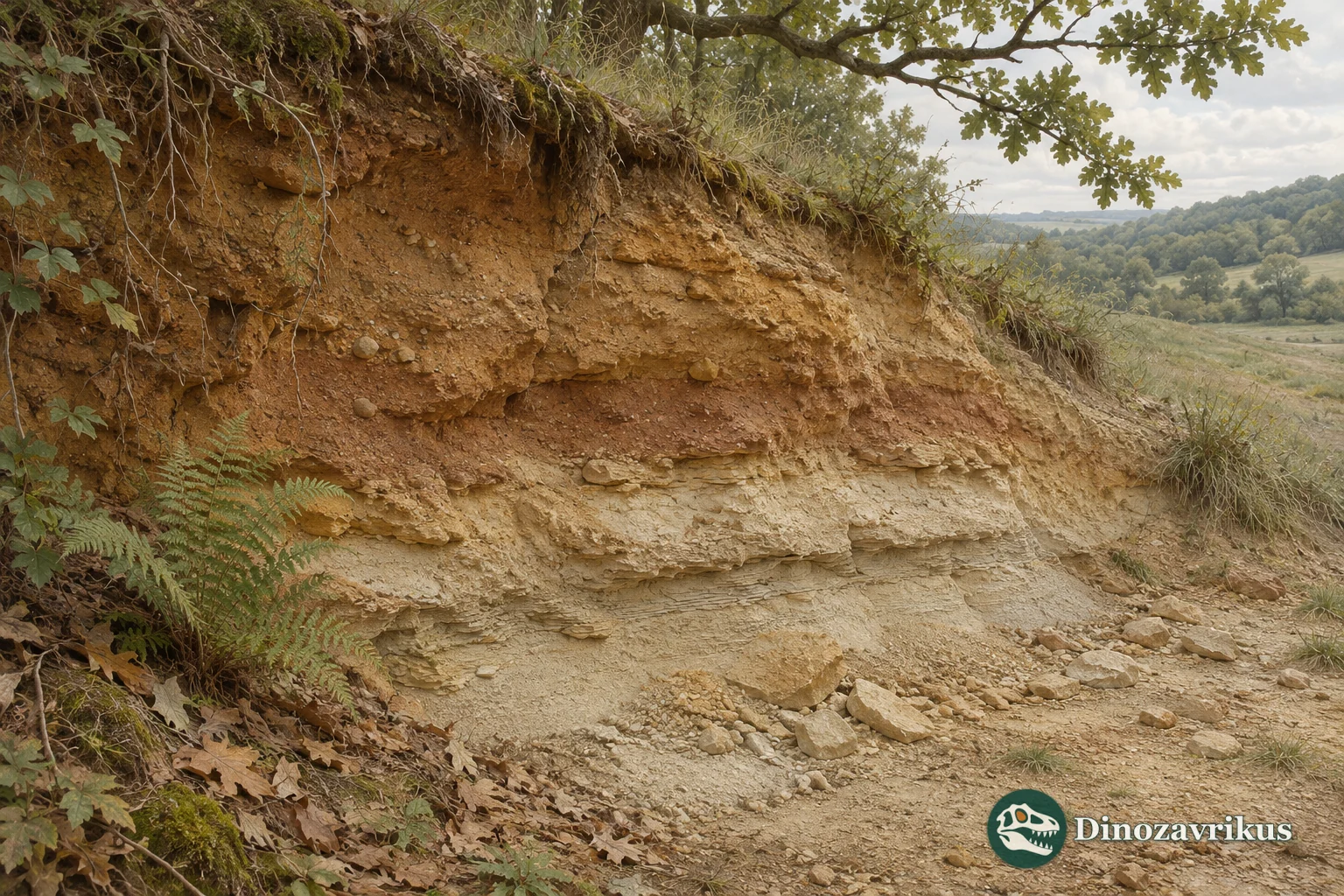
The type shell comes from Falaise de Baby. The locality dates to the Priabonian, the final stage of the Eocene.
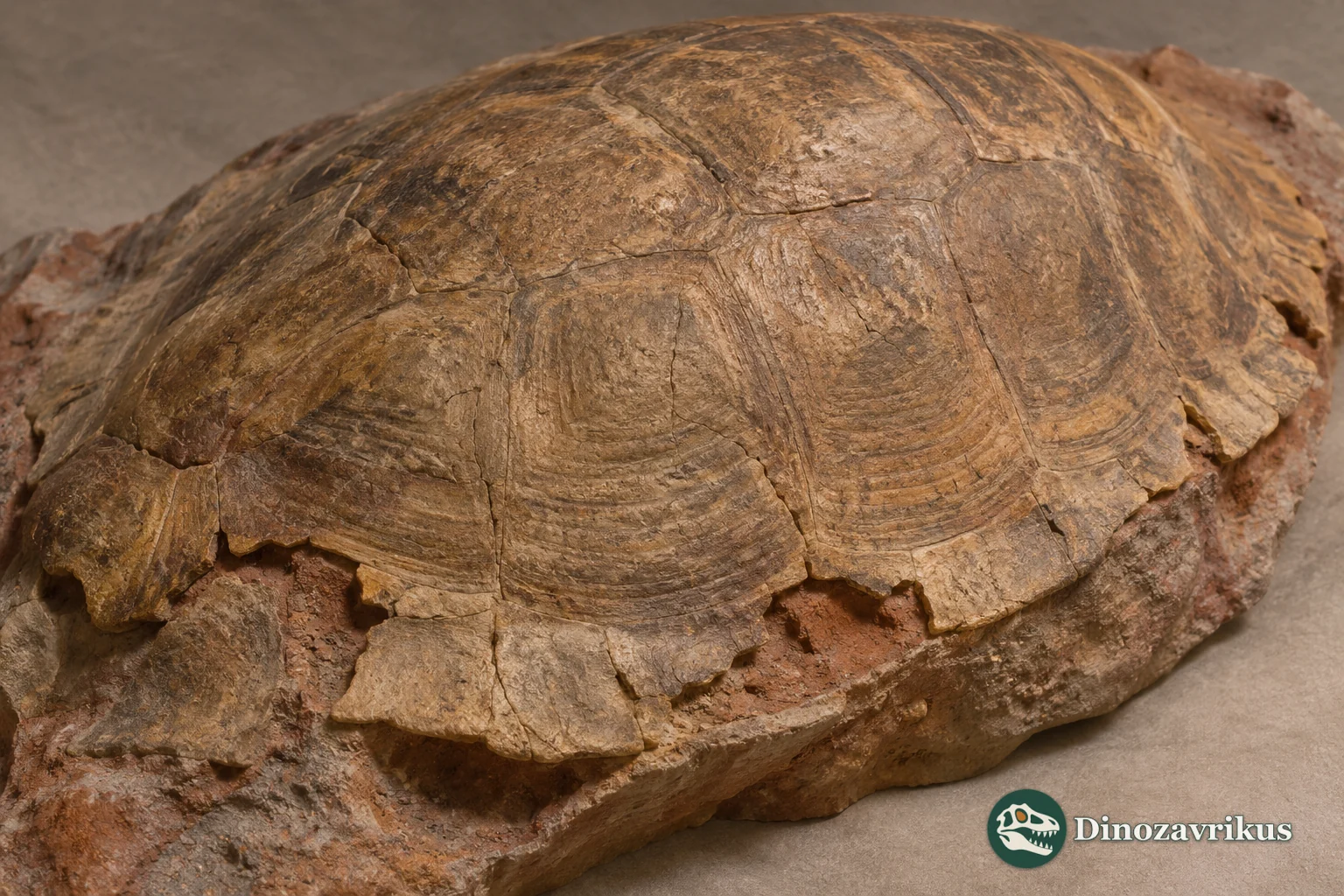
The carapace has a notch over the neck. The preserved groove pattern shows that it lacked a separate cervical scute.
Neogene giants once identified as Cheirogaster now have a different genus name. The age of the French type species anchors the revised record.
The shell from Falaise de Baby
Frédéric-Marie Bergounioux named Cheirogaster maurini in 1935. The type locality, Falaise de Baby, is in the Gironde department of France. The shell has a tall dome and is longer than it is wide. Its carapace is well under a metre long. The largest measurements published for tortoises formerly referred to Cheirogaster belong to other forms.
What the shell surface preserves
Sutures mark the joins between bones. The shallower grooves trace the edges of the horny scutes that covered them. At the front of the Cheirogaster carapace, a notch lay over the neck, with no separate cervical scute. Another feature used in comparisons is the rounded course of the groove separating the humeral and pectoral scutes on the plastron, the lower half of the shell.
Researchers use this combination to compare the French tortoise with other early testudinids. Its placement among those lineages varies with the character set and method used.
Why the name applies to fewer fossils today
Isolated shells made it difficult to separate Europe’s large land tortoises, and a wide range of localities and ages once fell under Cheirogaster. A revision used more complete material to place European Neogene giants in Titanochelon. The restricted Cheirogaster refers to the late Eocene type species.
Frequently asked questions
Where was the type shell found?
It comes from Falaise de Baby in the Gironde department of southwestern France.
How can a fossil show the absence of a cervical scute?
Grooves preserve the pattern of scute boundaries at the front of the upper shell. That pattern lacks a separate scute over the neck.
How large was the type species?
Its upper shell was well under a metre long.
Why does Cheirogaster appear in studies of Miocene fossils?
The genus name once included Neogene tortoises. Several of the large species have since been placed in Titanochelon.