

Titanochelon was a genus of giant land tortoises known from shells, skulls and limb bones. Its European record is particularly well documented. The type species comes from middle Miocene deposits in Spain, and one of the youngest fossils of the genus is a thigh bone from early Pleistocene Fonelas.
Quick facts
| Group | Turtles, tortoises (Testudinidae) |
|---|---|
| Age | Miocene, Pliocene and early Pleistocene |
| Region | Europe |
| Type species | Titanochelon bolivari |
| Scientific name | Titanochelon |
| Diet | No direct dietary evidence |
What can the fossils tell us?
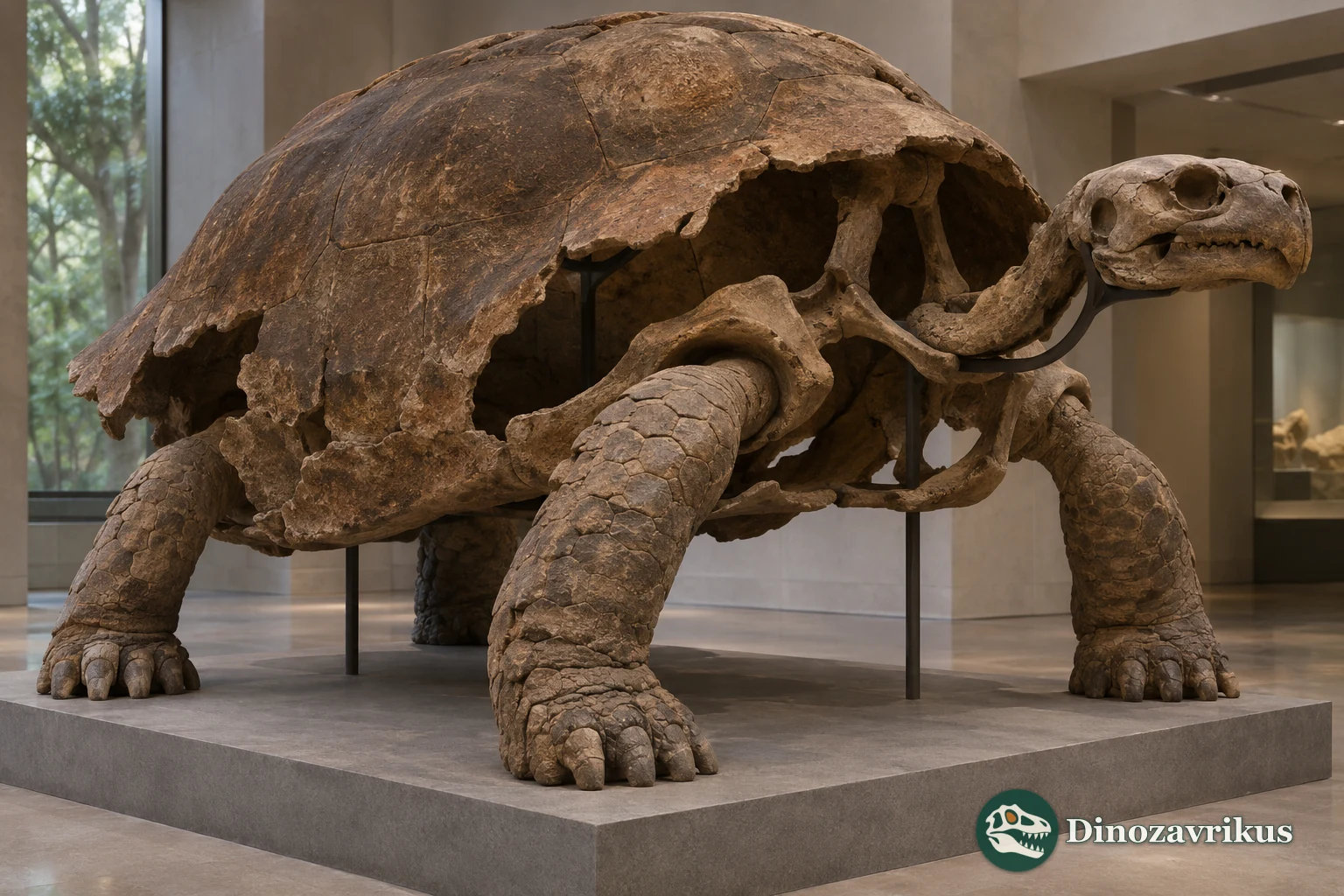
The specimen Alcalá 2 includes parts of both shell shields and other bones. This middle Miocene fossil from near Alcalá de Henares is held in Madrid.
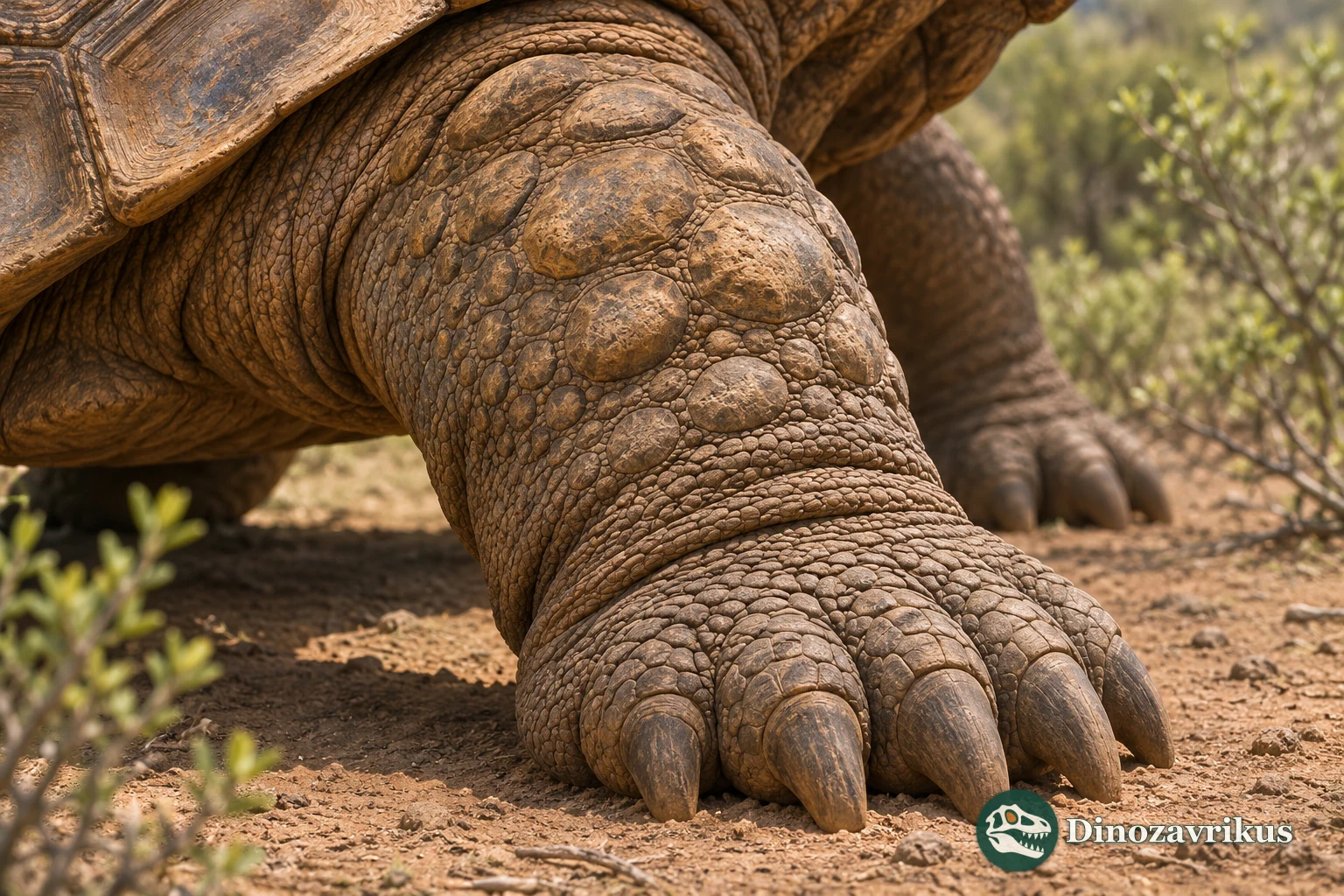
Osteoderms are known in T. bolivari and T. perpiniana. They formed in the skin of the limbs independently of the shell.
The Fonelas femur preserves 25.6 cm of its length. Estimating the shell required reconstructing the rest of the femur and applying a proportion from another specimen.
The Madrid specimens
Eduardo Hernández-Pacheco described Testudo bolivari in 1917. Adán Pérez-García and Evangelos Vlachos selected it as the type species of Titanochelon in 2014. Alcalá 2, a partial skeleton from Cerro del Viso, is its lectotype, the specimen selected from the original material to anchor the name. Its shell and other bones are held at Spain's National Museum of Natural Sciences in Madrid.
Distinguishing two Spanish species
The 2014 study treated the Catalan T. richardi as a synonym of T. bolivari. In 2025, researchers described a partial skeleton from about 9.4–9.1 million years ago near Sabadell that includes parts of the shell together with a skull. Differences in the orbital rims and jaw surfaces helped support recognising T. richardi as a distinct species.
Limbs and skin armour
Strong limbs carried the tortoise's heavy body. Bony plates embedded in the limb skin are known in T. bolivari and T. perpiniana. The North American tortoise Hesperotestudo also had osteoderms. The positions of these plates vary even between species of a single genus and are one of several characters used to compare them.
Measured bone and estimated shell length
Some members of the genus reached around two metres in length. The Titanochelon fossil from Fonelas P-1 is an incomplete femur, with 256 mm preserved. Researchers estimated a full femur length of 275 mm and obtained a carapace length of about 142 cm using the proportions of a comparison specimen. The result depends on a single comparison and the original dimensions cannot be measured directly.
The late Fonelas record
The Fonelas P-1 deposit dates to about two million years ago. It documents Titanochelon in continental Europe after the start of the Pleistocene. Researchers have discussed cooling and increased seasonality as possible factors in the shrinking range of these giant tortoises. The age of the fossil establishes a late occurrence, while the exact timing of extinction remains unknown.
Frequently asked questions
Where did Titanochelon live?
Its best-known fossils come from Europe. The type species was described from material in the Madrid area.
What is Alcalá 2?
It is the lectotype of Titanochelon bolivari, a specimen preserving parts of the shell and other bones from middle Miocene Cerro del Viso.
How was the 1.42 metre shell length estimated?
Researchers reconstructed the length of the incomplete Fonelas femur, then used the ratio between femur and shell length in another specimen.
Did it survive into the Pleistocene?
Yes. An incomplete Titanochelon femur from Fonelas comes from a deposit about two million years old.