

Hesperotestudo was a genus of extinct land tortoises in North and Central America. Its species varied in size and in the arrangement of their armour. In the Miocene type species, small bones could fuse into a shield over the tail. In a later Pleistocene species, the carapace could grow to more than a metre long.
Quick facts
| Group | Turtles, tortoises (Testudinidae) |
|---|---|
| Age | Miocene, Pliocene and Pleistocene |
| Region | North America, Central America and Bermuda |
| Type species | Hesperotestudo osborniana |
| Scientific name | Hesperotestudo |
| Diet | No direct dietary evidence |
What can the fossils tell us?
Holotype AMNH 5868 includes a skull, shell and limb bones. It comes from the Miocene Pawnee Creek Formation of northeastern Colorado.
Small bones in the tail of Hesperotestudo osborniana fused into a shield. The arrangement differed among species, some of which had substantial armour around the hind limbs.
Shell geometry can inform estimates of body mass and cooling rate. Models constrain possible thermal tolerances without establishing how the tortoises behaved as seasons changed.
The history of the name
Oliver Hay named the type species Testudo osborniana in 1905. Its type, AMNH 5868 from the Pawnee Creek Formation, is held at the American Museum of Natural History. Ernest Williams introduced Hesperotestudo in 1950. Some classifications placed the giant Pleistocene species H. crassiscutata in a separate group, Caudochelys. A subsequent phylogenetic revision recovered it among the other species of Hesperotestudo.
Armour beyond the shell
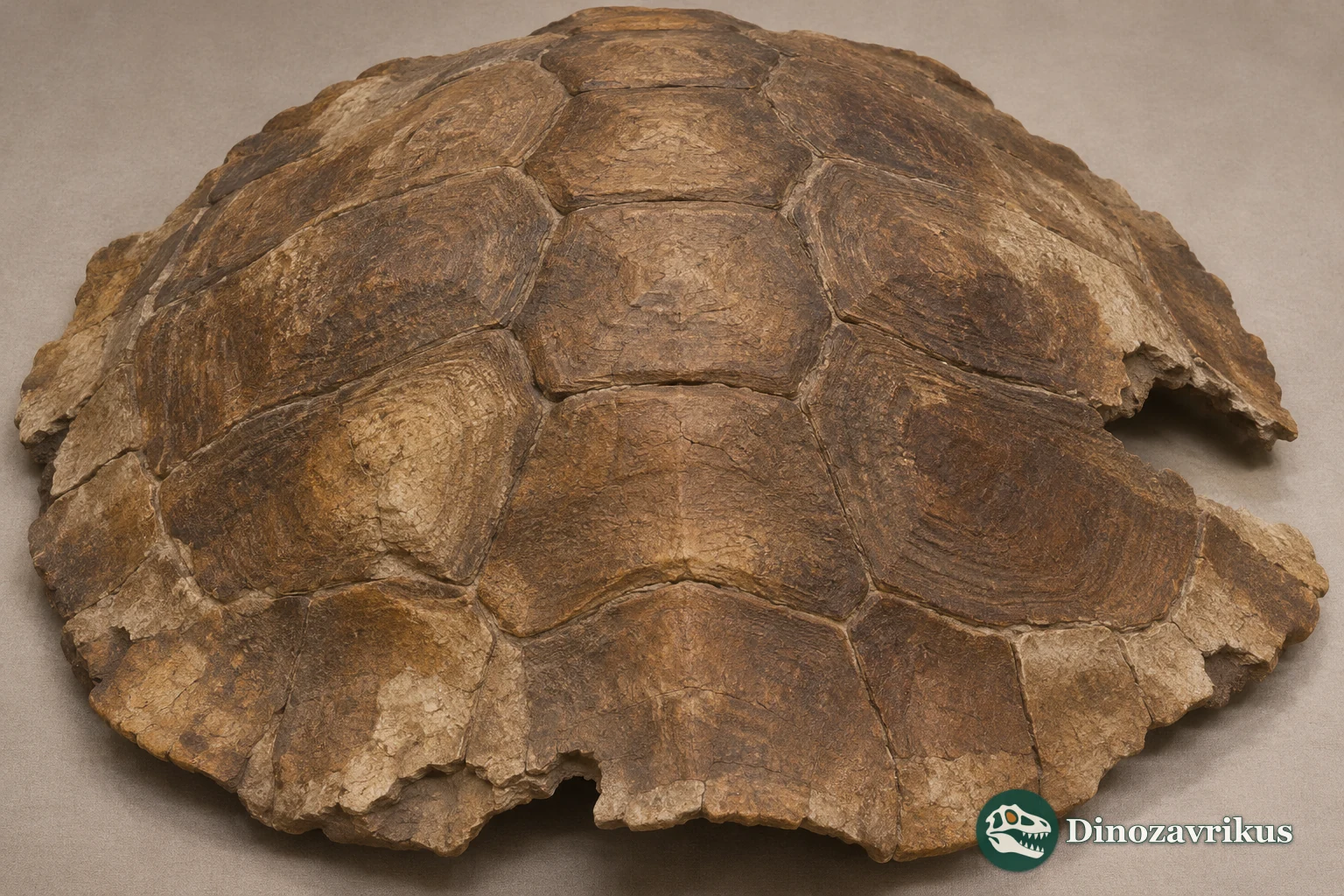
In the type species, bony plates embedded in the skin could fuse into a tail shield. Substantial hind limb armour occurs in other members of the genus. Meiolania offers another example of tail defence, with the tail encased in rings of bone. The structures had similar protective functions, and their shapes and anatomical details differ.
From the Great Plains to Bermuda
Well-supported records stretch from the Miocene to the late Pleistocene, with earlier assignments also proposed. Late Miocene material is known from Costa Rica, and Pleistocene fossils occur in El Salvador. The separate species H. bermudae was described from a relatively complete Pleistocene skeleton in Bermuda. That fossil confirms that the tortoises reached the islands. The timing and route of dispersal remain open.
Size and cold tolerance
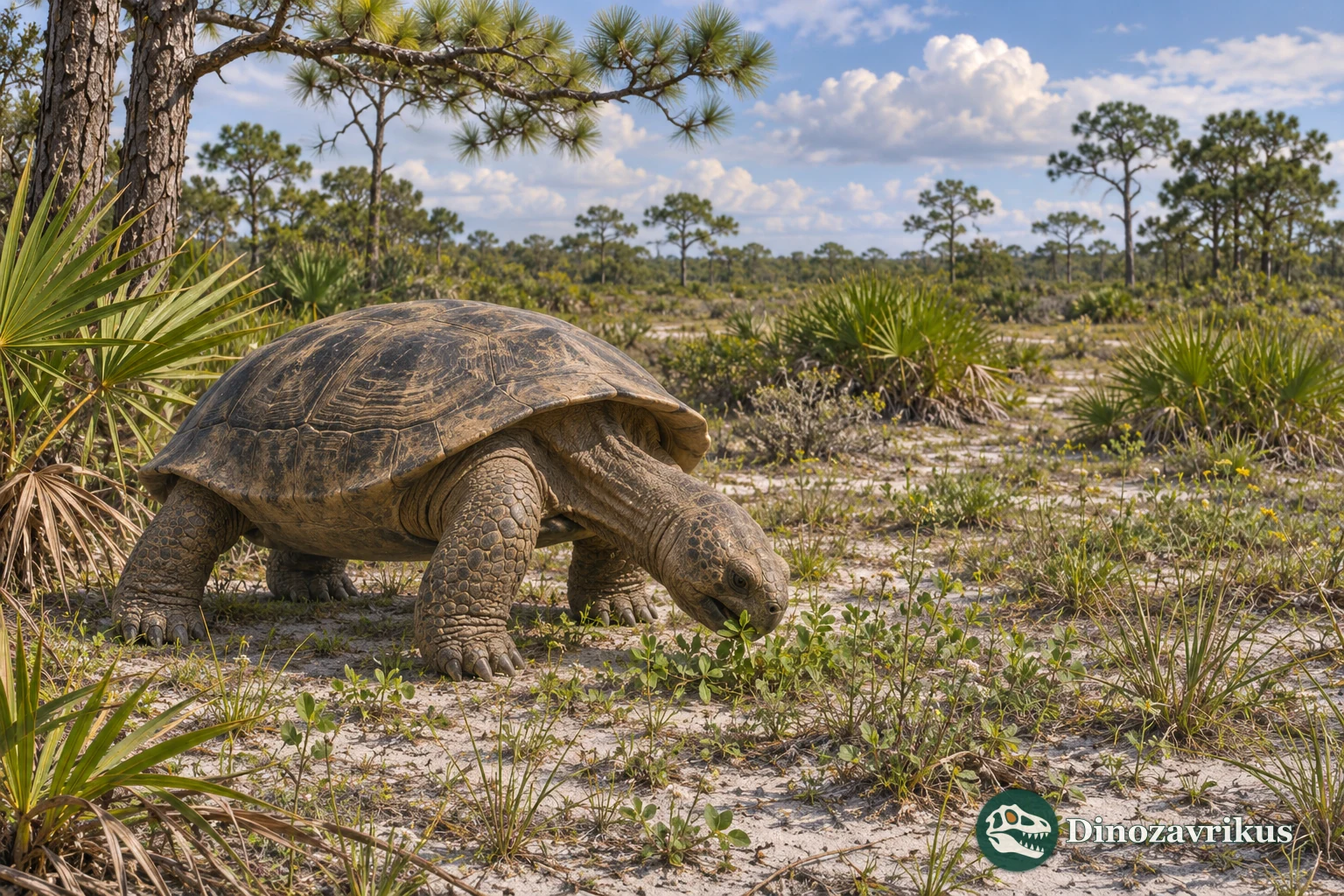
In large specimens of H. crassiscutata, the carapace was more than one metre long. A study of Pleistocene tortoises used shell geometry to estimate body mass and then modelled heat loss at different air temperatures. A large body could slow cooling. Seasonal activity depended on environmental conditions as well, so the presence of a giant tortoise does not establish a precise winter temperature.
Frequently asked questions
Where did Hesperotestudo live?
Fossils occur in North and Central America. A distinct species has also been described from Pleistocene Bermuda.
What is the type species?
Hesperotestudo osborniana was named from a Miocene Colorado specimen preserving a skull, shell and limb material.
Did every species reach a metre?
Body sizes varied. Carapaces more than a metre long are documented in the large Pleistocene species H. crassiscutata.
What is known about the tail armour?
In H. osborniana, small bones in the skin could fuse into a shield over the tail. The arrangement of the armour varied among species.