

Cheliderpeton was an Early Permian temnospondyl from Bohemia. It had a narrow, rounded snout and a long notch near the rear of the skull. Several individuals are known, giving researchers material to compare beyond the skull.
Quick facts
| Group | Temnospondyls (Temnospondyli) |
|---|---|
| Age | Early Permian |
| Region | Europe: north-eastern Bohemia, Czech Republic |
| Type species | Cheliderpeton vranyi |
| Scientific name | Cheliderpeton |
| Diet | Unknown |
What can the fossils tell us?
The fossils come from the Early Permian Ruprechtice horizon. The original material also preserves some ankle bones.
The diagnosis combines traits including the rounded tip of the snout, a long notch in the skull and a broad bone in the shoulder girdle.
Skin and coloration remain unknown. They are approximate in the reconstruction.
The Ruprechtice horizon
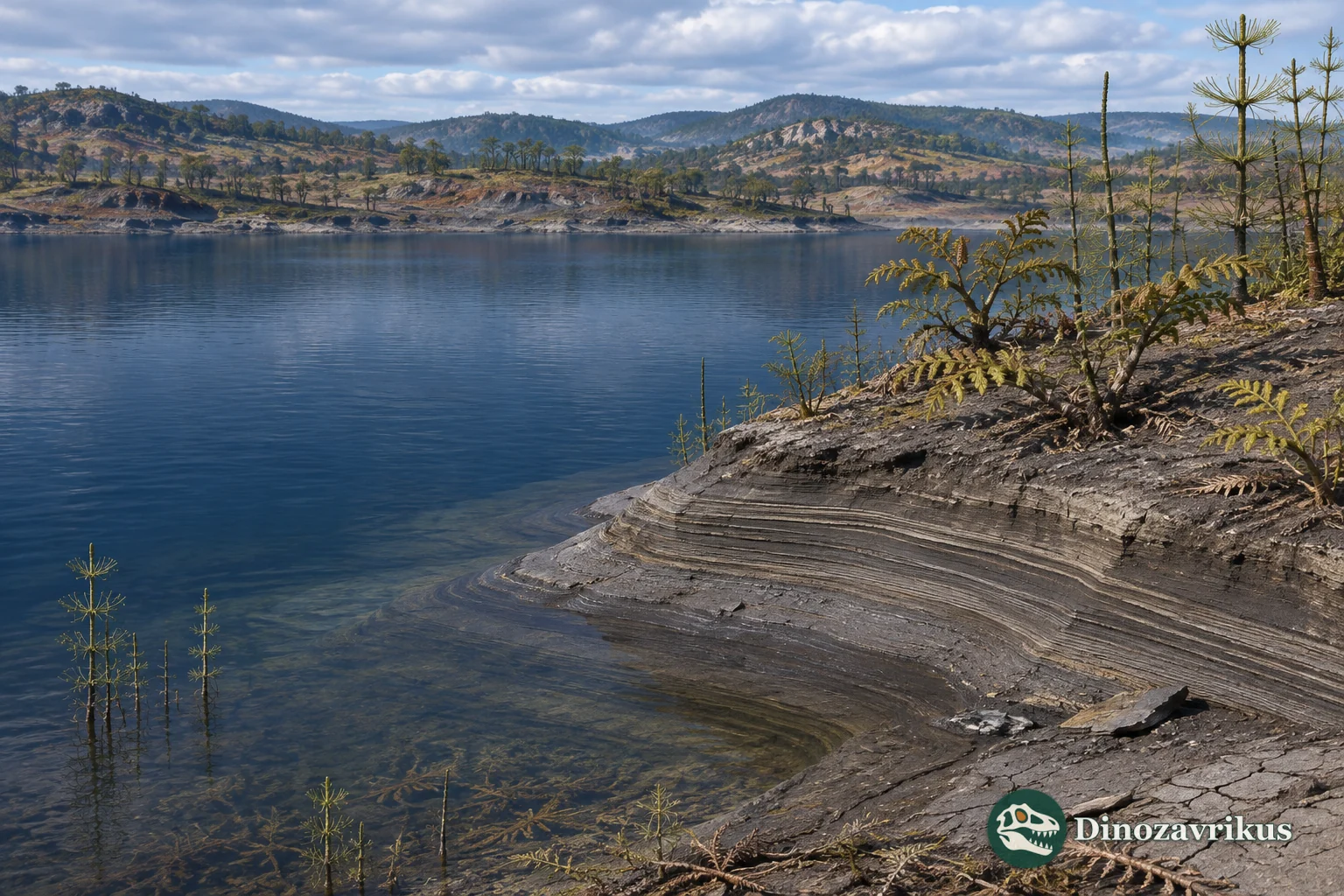
Antonín Frič described the type species, Cheliderpeton vranyi, in 1877. His early publications used several variants of the name. The fossils come from the Ruprechtice horizon of the Intrasudetic Basin in north-eastern Bohemia, where deposits preserve animals from Early Permian lakes.
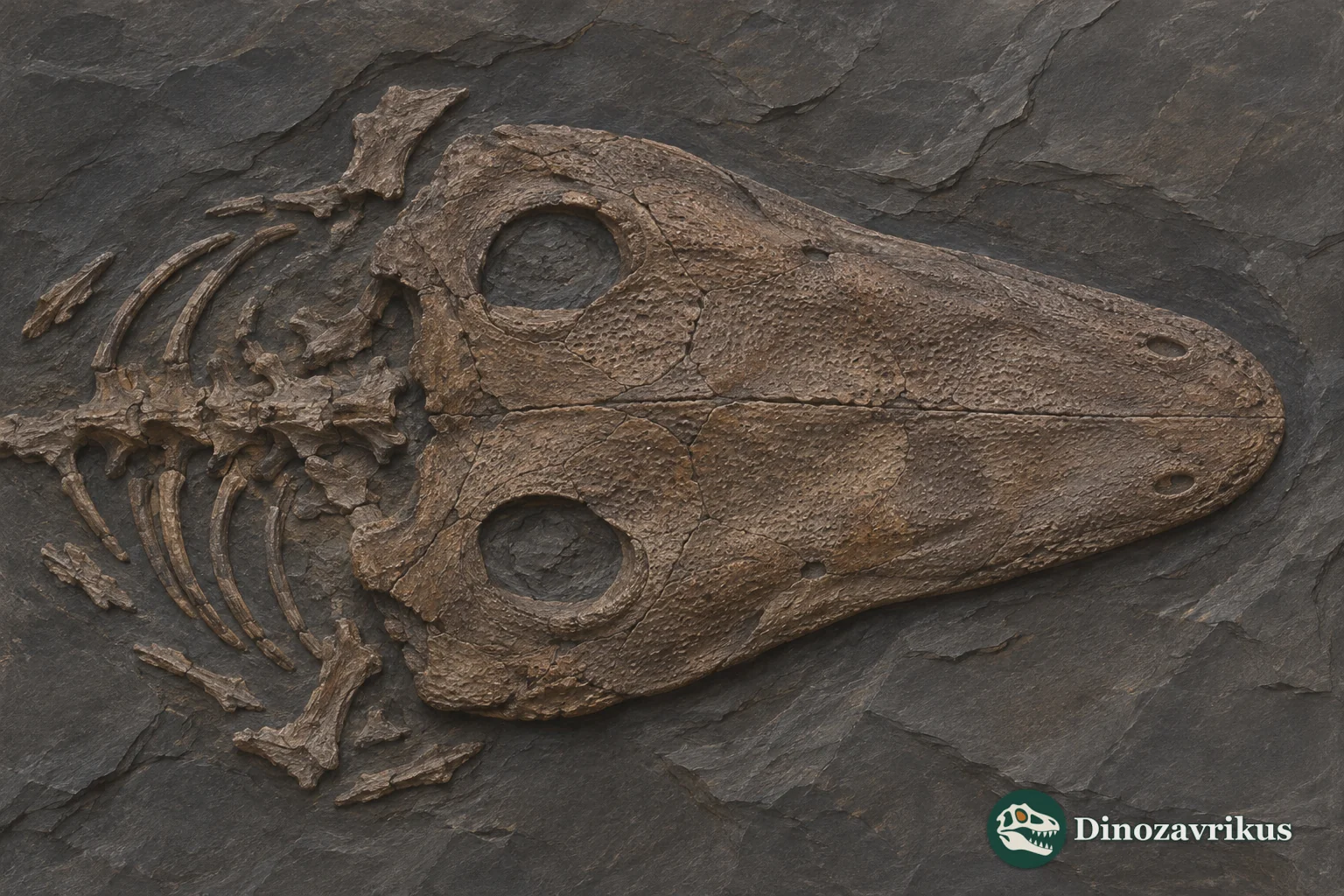
The skull, interclavicle and hind foot
In their 2002 redescription, Ralf Werneburg and Jean-Sébastien Steyer highlighted a narrow, round-tipped snout, a long narrow notch at the back of the skull and a quadratojugal that widens towards the rear. The shoulder girdle contains a short, broad, diamond-shaped interclavicle.
Ossified ankle bones survive in just one of the original specimens. In 2023 researchers compared the position and shape of these small bones and revised some of their identifications. Across the temnospondyls they examined, the degree of ossification was not consistently tied to body size.
Which fossils still belong to Cheliderpeton?
The name Cheliderpeton latirostre long appeared in publications on German Permian fossils. A revision placed that species in Glanochthon. Its skeletons therefore cannot be used to reconstruct the Bohemian genus or extend its range to Germany.
The 2002 review also concluded that the Czech specimen described as Actinodon germanicus belongs to the type species of Cheliderpeton.
Frequently asked questions
Where was the type species found?
Its fossils came from the Ruprechtice horizon of the Intrasudetic Basin, in what is now the Czech Republic.
What shape was the snout?
It was narrow, with a rounded tip.
What do its fossils preserve of the hind foot?
One specimen preserves several ankle bones. Researchers have revised the identifications of some elements after comparing them with related amphibians.
What became of Cheliderpeton latirostre?
That species, known from German fossils, was transferred to the genus Glanochthon.