

Chelydropsis was an extinct turtle in the snapping turtle lineage. Its carapace lay low and its plastron was relatively narrow. European fossils document much of the history of the genus. Disarticulated shell plates from northern France take that record back to the middle Eocene.
Quick facts
| Group | Turtles, snapping turtle lineage (Pan-Chelydridae) |
|---|---|
| Age | Eocene, Oligocene, Miocene and Pliocene |
| Region | Europe |
| Type species | Chelydropsis carinata (= Chelydropsis murchisoni) |
| Scientific name | Chelydropsis |
| Diet | No direct dietary evidence |
What can the fossils tell us?
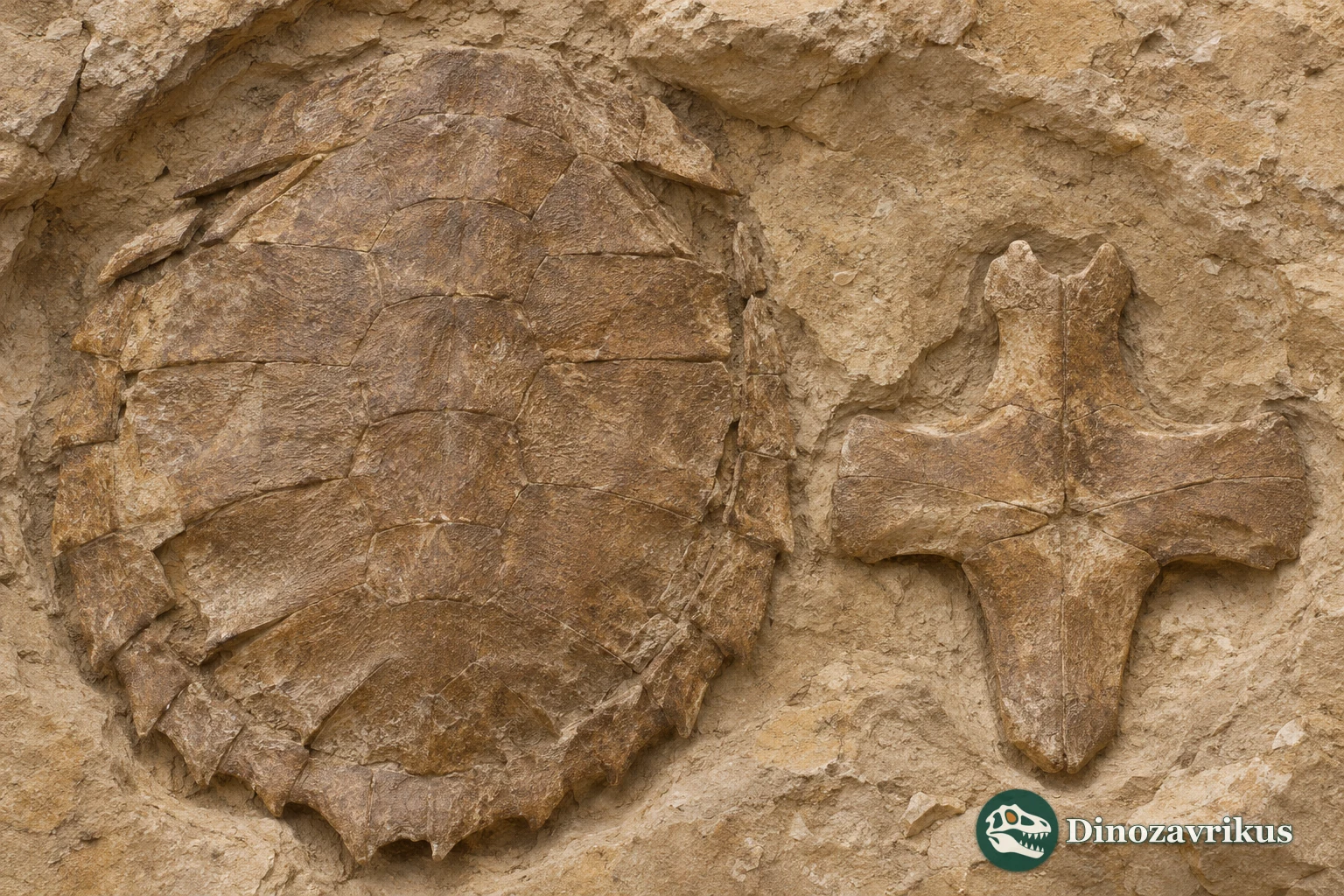
The type series of C. aubasi contains upper and lower shell bones from one horizon at Chéry-Chartreuve, where remains of several individuals accumulated.
The plastron was narrow and roughly cross-shaped. Its lateral bony projections fitted into sockets on the edge of the carapace.
European fossils are often interpreted as members of one lineage. Identification of some younger specimens depends on whether C. pontica is recognised as a separate species.
The type name
Karl Peters named Chelydropsis carinata in 1868 from a nearly complete carapace from Styria, Austria. He thought the nuchal, the bone at the front of the shell, was divided. Later researchers interpreted the split as damage after death. The remaining anatomy overlaps with Chelydra murchisoni, named by Thomas Bell in 1836. The species are now combined under the older name, Chelydropsis murchisoni.
The middle Eocene record in France
C. aubasi was named from shell bones at Chéry-Chartreuve. Its type series contains bones of several individuals that were disarticulated before final burial. Comparison of the plates revealed a shallow gutter around the shell margin, folds along some scute boundaries, and bony pegs that joined the plastron and carapace.
How the shell was built
The narrow, cross-shaped plastron left space around the bases of the limbs. Bony pegs at its sides joined it to the carapace. In another European turtle, Ptychogaster, a prominent feature of the plastron was a movable hinge between its plates. The undersides of the two turtles had very different constructions.
From the Oligocene into the Pliocene
C. decheni is known from Oligocene and early Miocene localities. C. murchisoni is well documented in the middle Miocene of central Europe. Finds from Steinheim, Germany, include parts of the skull, jaw, vertebrae, limbs and shell. Late Miocene and early Pliocene material around the northern Black Sea has been called C. pontica. Some authors retain that species, while others combine it with C. murchisoni.
Geography and habitat
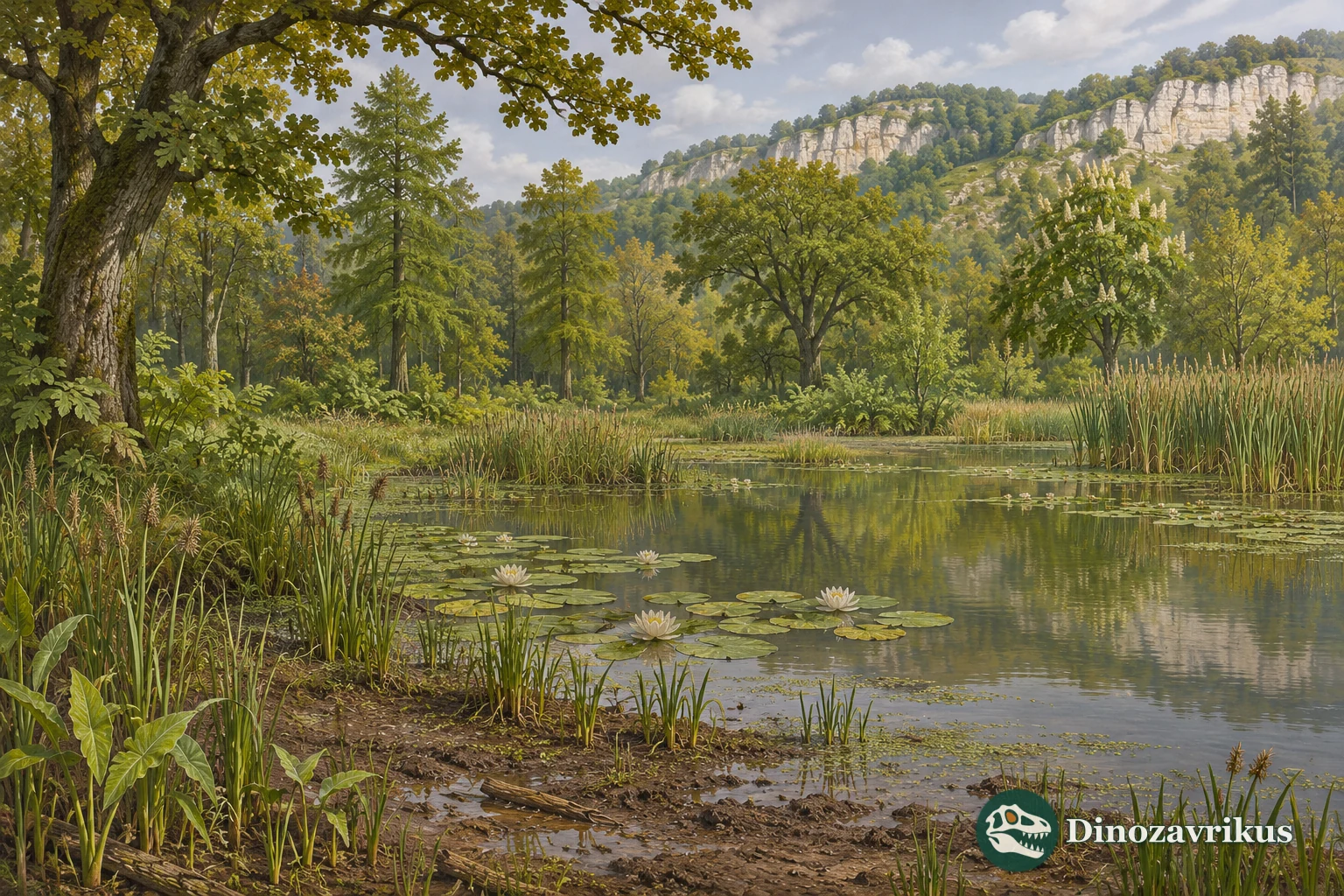
The fossils are consistent with a freshwater life. Some authors have referred central Asian snapping turtle fossils to Chelydropsis, while others distinguish separate European and Asian genera. The available bones have little to say about the diets or hunting tactics of individual species.
Frequently asked questions
What kind of turtle was Chelydropsis?
It belonged to the evolutionary lineage that includes living snapping turtles and their extinct relatives.
What is known of the early European species?
Chelydropsis aubasi was named from middle Eocene shell plates found at Chéry-Chartreuve in France.
What shape was the plastron?
The lower shell was narrow and roughly cross-shaped. Bony projections fitted into sockets on the margin of the carapace.
Why do the names carinata and murchisoni both appear?
Carinata was the species used to establish the genus. Later shell comparisons united it with the previously named species Chelydropsis murchisoni.