

Chupacabrachelys was a side-necked turtle from a Late Cretaceous coastal plain in West Texas. Its slender head sets it apart from close relatives. The type specimen ties that distinctive skull to a shell that would be much harder to identify on its own.
Quick facts
| Group | Turtles, bothremydids (Bothremydidae) |
|---|---|
| Age | Late Cretaceous (Campanian) |
| Region | North America (Texas, United States) |
| Type species | Chupacabrachelys complexus |
| Holotype | TMM 45606-1, skull, shell and additional skeleton |
| Scientific name | Chupacabrachelys |
| Diet | Exact diet unknown |
What can the fossils tell us?
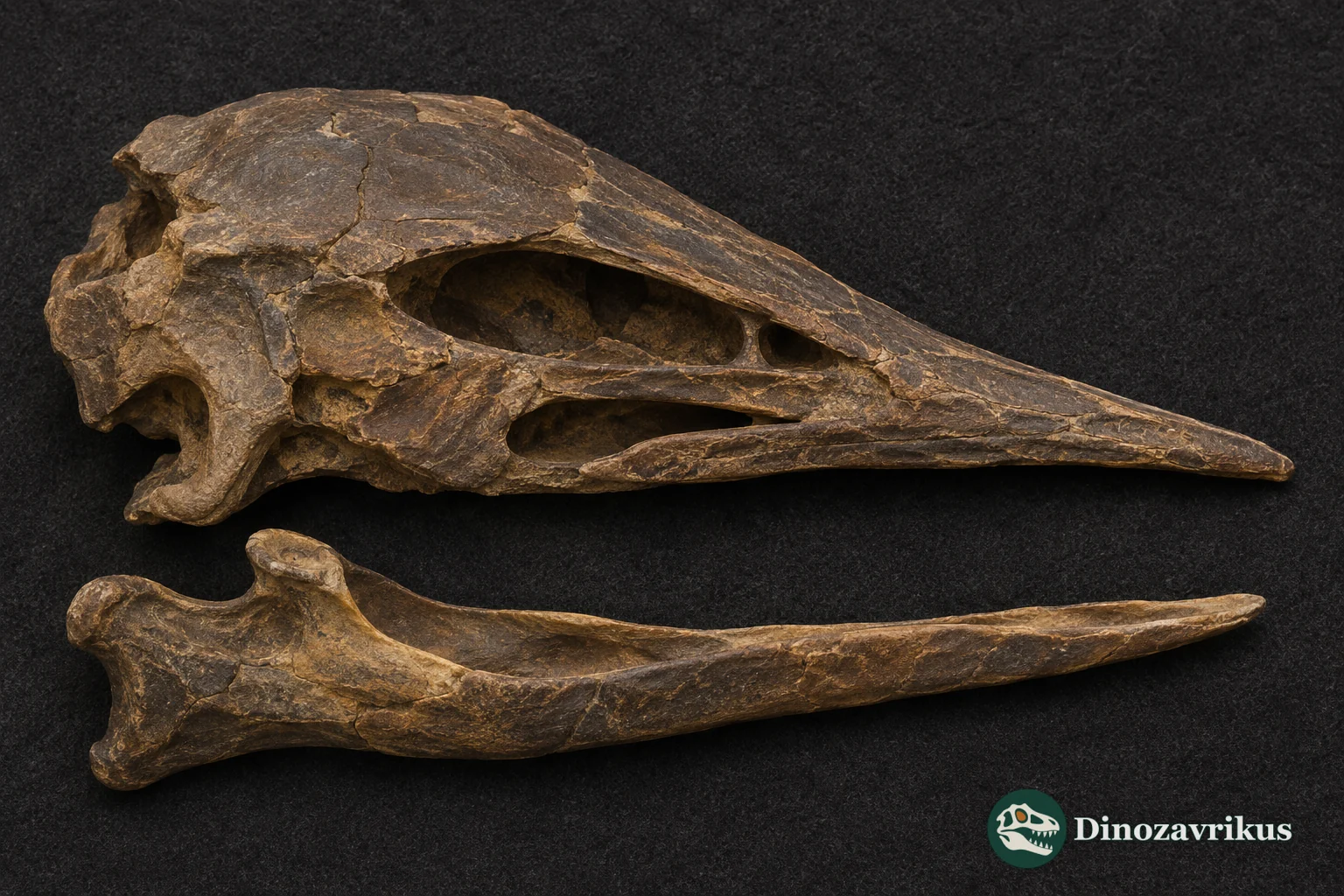
TMM 45606-1 preserves a distinctive skull, an almost complete shell and bones of the limbs and spine. Their association links features that are often found separately.
The low triangular skull has eye sockets extended along the head. The long jaw helps diagnose the species, with its diet still open.
Six neural plates and a deep notch at the front are also seen in related turtles. Skull characters carry much of the evidence for recognising this genus.
An associated skeleton from the Aguja Formation
Thomas Lehman and Steven Wick named Chupacabrachelys complexus in 2010. TMM 45606-1 comes from Campanian sediments north of Study Butte in Brewster County. The skull, lower jaw and nearly complete shell occur with vertebrae, including 20 from the tail, limb bones, and parts of the pelvis and shoulder girdle.
The referred shell TMM 45856-1 preserves additional skeletal material, including parts of the pelvis. The genus name combines the chupacabra of Mexican-American folklore with a Greek word for turtle.
The head carries the clearest diagnosis
Seen from above, the skull and mandible are slender and triangular. The eye sockets stretch along the length of the head, with narrow extensions at the contact between the maxilla and prefrontal. Rough projections occur at their front outer corners. The coronoid process is set behind the midpoint of the lower jaw.
Details at the back of the skull led Lehman and Wick to place the animal with taphrosphyines, a group of bothremydid side-necked turtles. The carapace has six neural bones and a deeply indented front edge. That pattern is also seen in Bothremys and Chedighaii, making the head especially useful in comparisons.
A coastal plain with changing water conditions
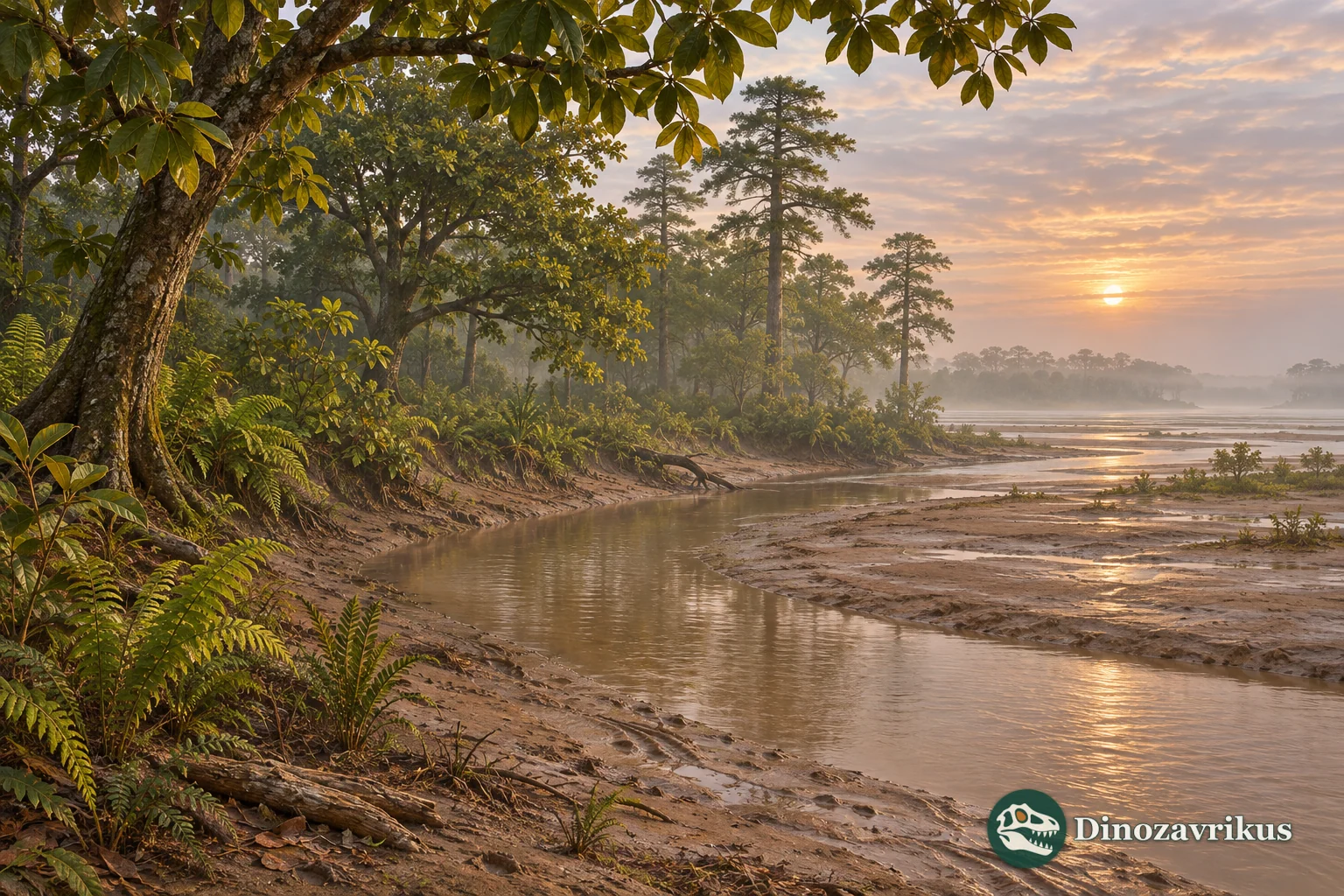
The Aguja Formation includes channel, floodplain and marginal-marine sediments. Its turtle fossils document several branches inhabiting waters along the Cretaceous coast. Chupacabrachelys adds a distinctive set of jaws to this fauna. The deposits establish the wider setting, while the animal’s tolerable salinity and precise diet remain uncertain.
Frequently asked questions
Where did Chupacabrachelys live?
Its fossils come from the Campanian Aguja Formation in Brewster County, Texas, part of a Late Cretaceous coastal plain.
What does the holotype preserve?
It preserves the skull and lower jaw, almost all of the shell and portions of the spine, limbs and girdles.
How can it be told apart from Bothremys?
The skull and jaw supply key differences. Their shell anatomy is much more similar.
Why was it named after the chupacabra?
The genus name refers to the folkloric chupacabra of the Texas–Mexico borderlands and incorporates the Greek word for turtle.