

Cimolestes was a North American mammal of the Late Cretaceous, known chiefly from teeth and jaw fragments. Its name once covered species with striking differences in size and dental specialisation, which made the genus a useful case for testing how fossil mammals are classified.
A 2015 revision retained two species and transferred three others to different genera. Cimolestes has a place in the ancient mammal catalogue; the related fossil genus Procerberus provides another example of how dental fossils shape discussions of early mammal relationships.
Quick facts
| Scientific name | Cimolestes Marsh, 1889 |
|---|---|
| Type species | Cimolestes incisus Marsh, 1889 |
| Group | Mammalia; Cimolestidae in several classifications |
| Age | Late Cretaceous, Lancian interval |
| Range | Alberta, Wyoming, Saskatchewan and Montana |
| Main evidence | Isolated teeth, jaw fragments and limited cranial material |
| Species after revision | C. incisus and C. stirtoni |
| Diet | Inferred from tooth form; no direct stomach evidence is known |
What can the fossils tell us?
Researchers compare tooth-cusp positions, proportions and wear. Isolated teeth do not preserve soft tissues, an exact body size or the full evolutionary relationships of the animal.
Richard Fox retained C. incisus and C. stirtoni. C. magnus, C. cerberoides and C. propalaeoryctes were transferred to Altacreodus, Ambilestes and Scollardius. This was a comparative taxonomic revision, not the discovery of complete skeletons.
Published material comes from Late Cretaceous deposits in Alberta, Wyoming, Saskatchewan and Montana. These are separate formations and horizons rather than a single population or locality.
Some phylogenetic analyses place Cimolestes on the placental stem, while the membership and position of Cimolestidae vary between studies. The result depends on anatomical character sampling and does not identify a direct ancestor of living mammals.
The name and type species
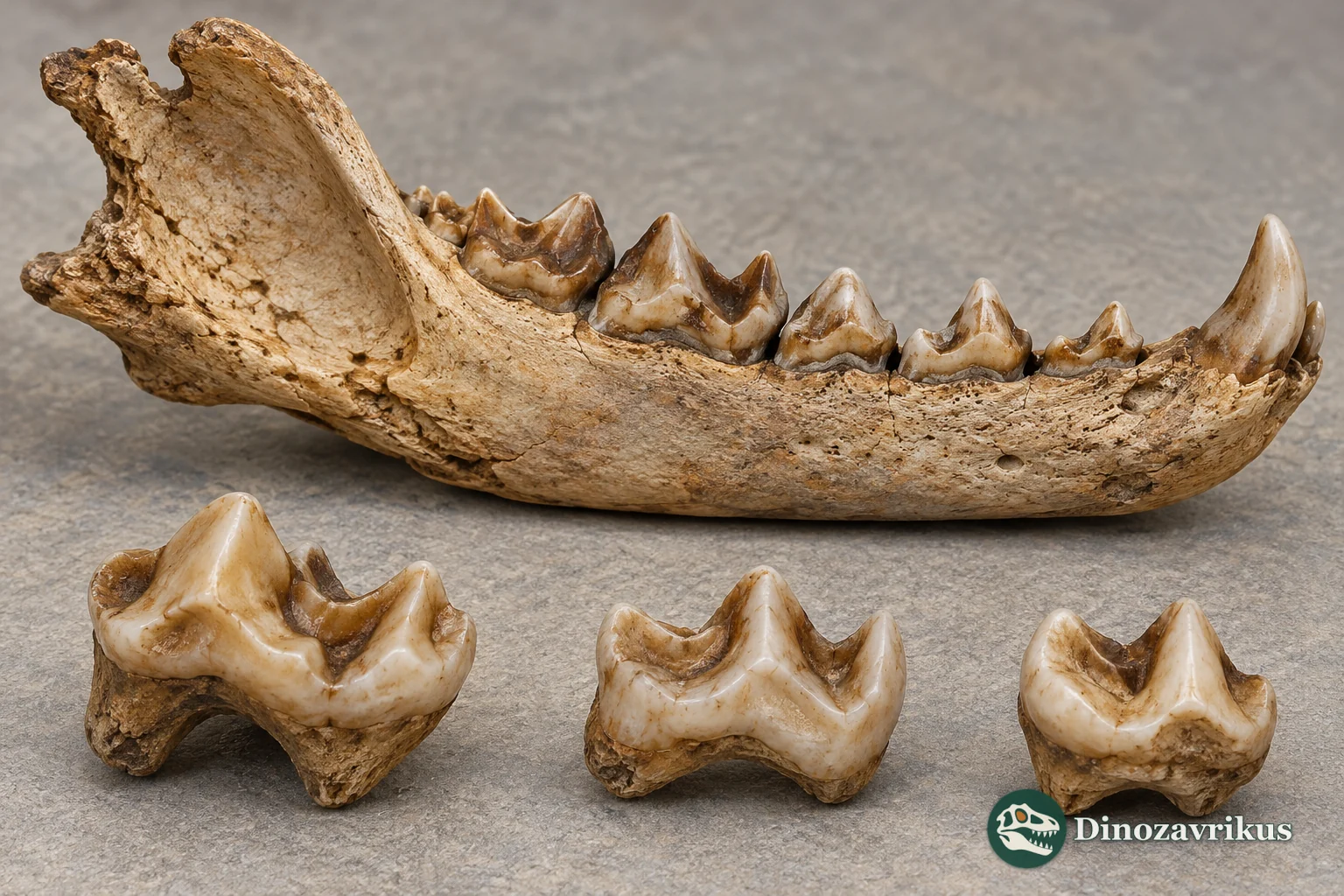
Othniel Charles Marsh named Cimolestes in 1889 from Late Cretaceous mammal material associated with the Lance Formation of Wyoming. The type species is C. incisus. Early descriptions relied on isolated teeth and fragments, so the genus was built through comparison of dental crowns rather than a complete skeleton.
This is common in small fossil mammals. Enamel can survive when delicate bones are scattered or destroyed, and screen-washing sediment often yields teeth without the skull that held them. Identification depends on cusp positions, proportions and wear. One similar tooth alone does not prove that two specimens belong to the same species.
How the genus changed
Before the 2015 revision, five species were often listed in Cimolestes: C. incisus, C. stirtoni, C. magnus, C. cerberoides and C. propalaeoryctes. Their teeth differed substantially in size and specialisation. Richard Fox argued that this broad grouping was a grade taxon: a set of forms sharing a broad dental pattern without necessarily forming one natural evolutionary group.
Fox retained C. incisus and C. stirtoni. He transferred C. magnus to Altacreodus, C. cerberoides to Ambilestes and C. propalaeoryctes to Scollardius. Older books and databases may still use the broader historical classification, so the source and date of a species list matter.
The name Nyssodon punctidens also appears in the history of identifications later associated with C. incisus. These early assignments were based on limited dental material and should be read in light of later revisions rather than treated as an unquestioned separate species.
Teeth and possible diet
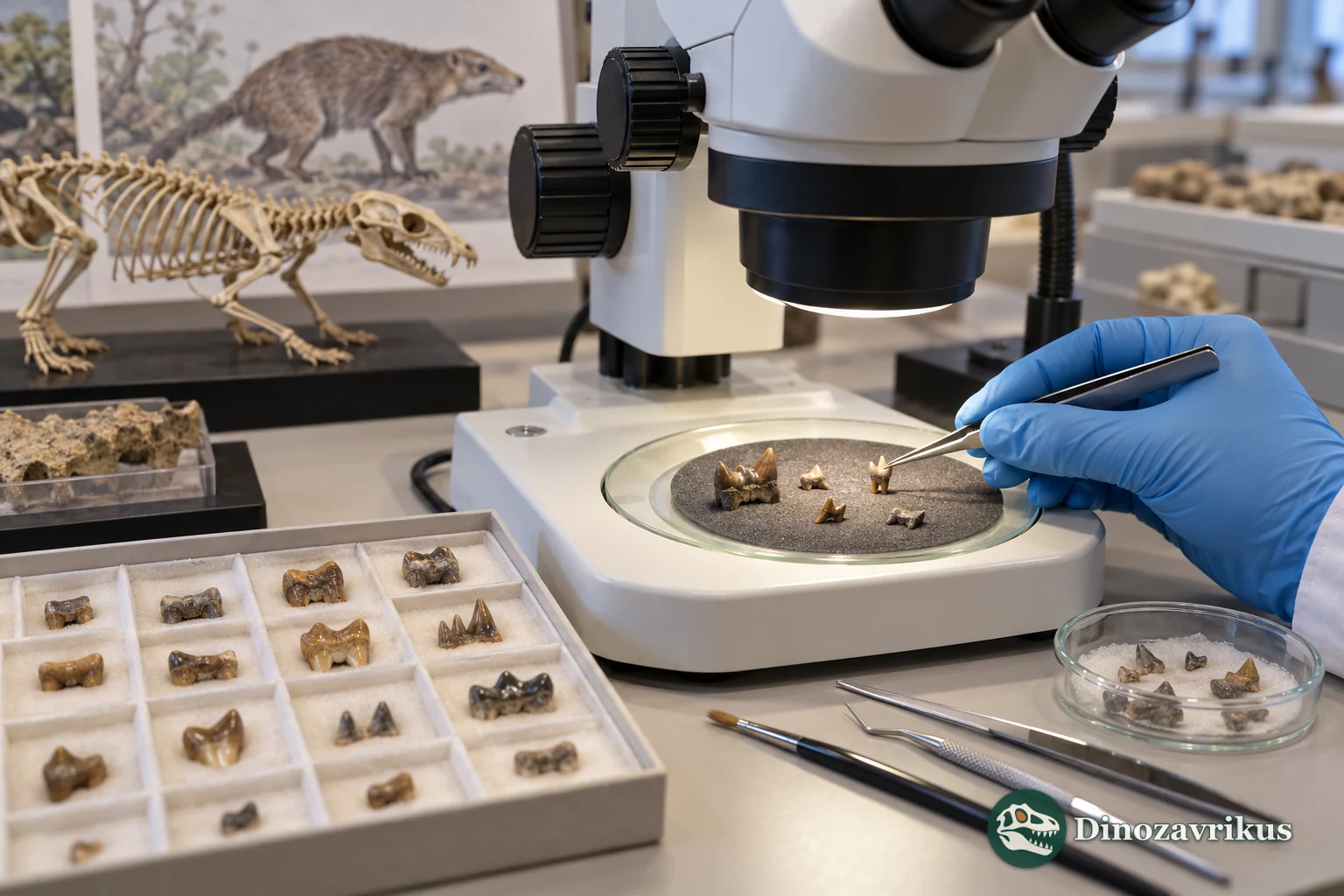
The teeth have sharp cusps and shearing edges of the kind that can process animal matter in many small Mesozoic mammals. But tooth form can reflect different ways of cutting and crushing food, and interpretations differ among the species once grouped in the genus. Fox’s revision highlighted that some former “Cimolestes” species had stronger shearing specialisations, while others showed more horizontal grinding.
Those distinctions cannot simply be transferred to the narrower genus. No stomach contents or direct feeding traces establish a precise menu for C. incisus or C. stirtoni. A diet including small animal prey is plausible from the dental anatomy, but the exact foods and foraging behaviour remain unknown.
Localities and age
Material assigned to Cimolestes comes from Late Cretaceous deposits in Alberta, Wyoming, Saskatchewan and Montana. Many records are associated with the Lancian North American land-mammal interval, near the end of the Cretaceous. These reports do not all come from one formation; the regions include different geological sections and localities.
Some older publications describe Cimolestes as extending into the Paleocene or across the Cretaceous–Paleogene boundary. Much of that range reflects the former broad genus concept, which included forms now placed in other genera. In Fox’s narrower 2015 treatment, the two remaining species are known from the North American Late Cretaceous.

Relationships and limits of reconstruction
Cimolestes is often discussed within Cimolestidae, but the boundaries and evolutionary position of that group vary among studies. Phylogenetic analyses can place mammals with similar teeth on different branches depending on the character set and the taxa included. A supported branch in one analysis would still not prove that Cimolestes was the direct ancestor of a living group.
Teeth and jaw fragments reveal the chewing apparatus but provide little direct evidence about limbs, fur or habits. The cover shows a generalized small mammal in leaf litter. Its exact body outline, coat and behaviour are interpretive because these features are not preserved in the known record.
Frequently asked questions
When did Cimolestes live?
Under the narrower genus concept used by Fox in 2015, its species are known from Late Cretaceous deposits in North America. Paleocene records often reflect the older, broader classification.
Which species remain in Cimolestes?
Fox’s 2015 revision retained C. incisus and C. stirtoni. Three former species were transferred to Altacreodus, Ambilestes and Scollardius.
What fossils are known?
The main diagnostic material consists of isolated teeth, jaw fragments and limited cranial remains. It does not provide a complete skeleton or direct evidence of soft tissues.
Was Cimolestes an ancestor of modern mammals?
There is no such direct evidence. Its placement is debated, and dental similarities help test hypotheses but do not establish a direct ancestor–descendant line.