

Comahuesuchus was a Late Cretaceous notosuchian from Patagonia. The type species had an exceptionally short, wide snout, with one enlarged, fang-like tooth in each tooth row. The second species is known from part of a lower jaw, so comparisons focus on that bone and its teeth.
Quick facts
| Group | Notosuchia |
|---|---|
| Age | Late Cretaceous |
| Region | Neuquén and Río Negro provinces, Argentina |
| Type species holotype | MUCPv 202, partial skull and lower jaw |
| Second species holotype | MUCPv 597, partial right dentary |
| Species | Comahuesuchus brachybuccalis and C. bonapartei |
What can the fossils tell us?
The Río Negro specimen complements the holotype from Neuquén. Together they document a broad, nearly rounded front of the snout and short tooth rows.
The third tooth position of the maxilla and the tenth of the dentary are enlarged in the type species. The lower caniniform lay behind the upper one.
That is the measurement of MUCPv 597. Its enlarged tooth and the bone around it provided characters for comparing the two species.
Skulls from Neuquén and Río Negro
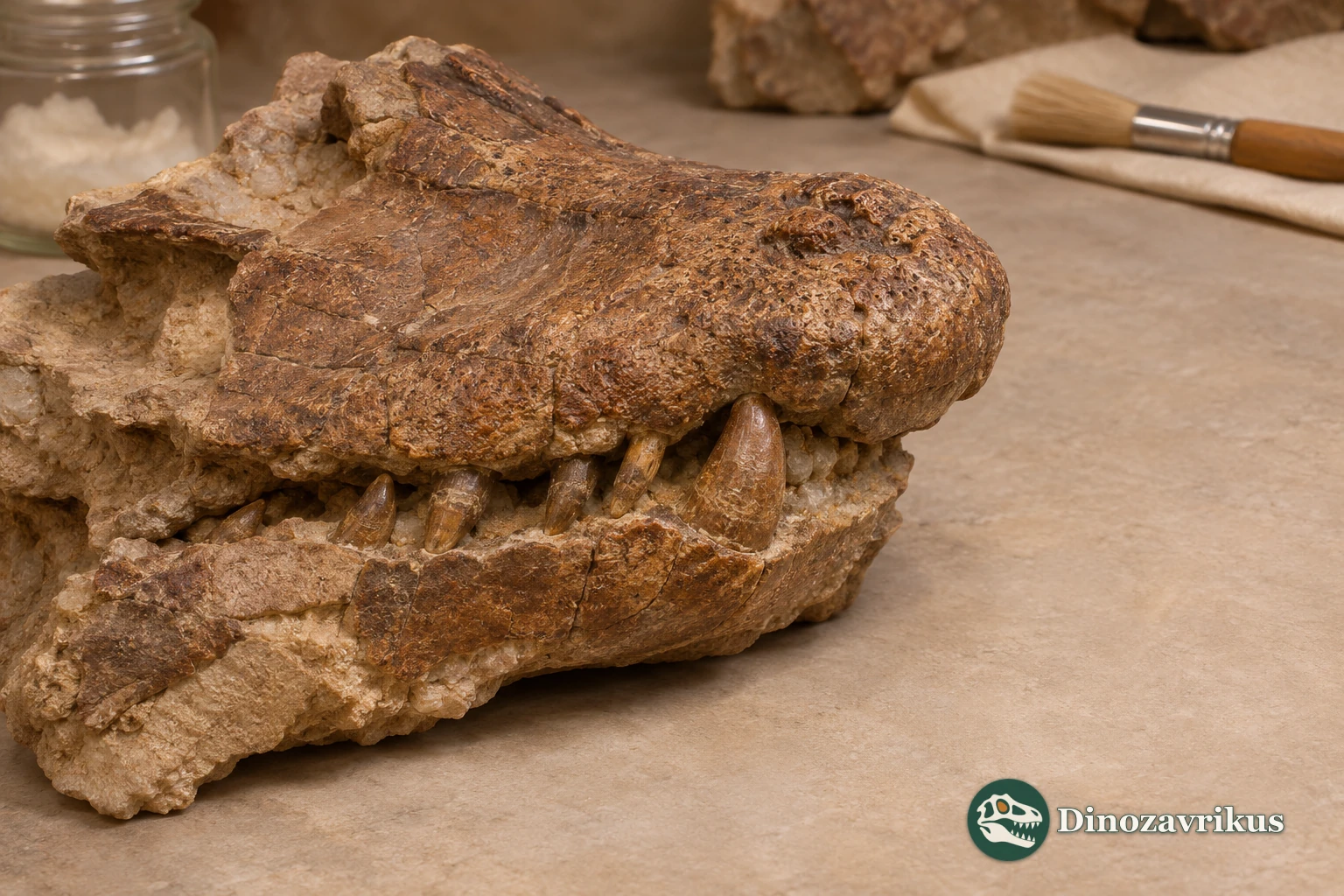
José Bonaparte named C. brachybuccalis in 1991 from material found near the city of Neuquén. The holotype MUCPv 202 preserves part of a skull with its lower jaw. Andrés Martinelli later described MOZ-Pv 6131 from Río Negro Province. Both specimens come from Santonian deposits of the Bajo de la Carpa Formation.
The snout is nearly round at the front when viewed from above. Each maxilla has five tooth positions, of which the third is conspicuously enlarged. The dentary has eleven positions. Its front teeth project forwards, and the tenth position carries the enlarged lower tooth.
A second species from a lower jaw
C. bonapartei was described in 2023 from the Futalongko site on the northern shore of Lago Barreales. Its Portezuelo Formation specimen is older than the finds of the type species. The surviving 44 mm of right dentary include a serrated fang-like tooth and a single small tooth behind it.
The authors compared details of the outer surface of the dentary and of the large crown. A tooth behind the caniniform is an unreliable distinction on its own. One specimen of C. brachybuccalis preserves a tooth in that position, while the holotype has none recorded there.
What the teeth reveal about feeding
The sockets show where the small and large teeth sat in the jaws. Determining what the animal ate and how it processed food needs further evidence. In the South American notosuchian Sphagesaurus, the teeth have a different shape, and wear surfaces give additional clues to jaw motion.
Frequently asked questions
What shape was the snout?
In the type species it was short and wide, with an almost rounded outline when seen from above.
What survives of the second species?
Its holotype is a 44 mm piece of right dentary bearing an enlarged serrated tooth.
Where were the fossils collected?
They come from Late Cretaceous deposits in Neuquén and Río Negro provinces, Argentina.
Did the enlarged teeth line up?
The enlarged lower tooth of the type species lay behind the enlarged upper tooth.