

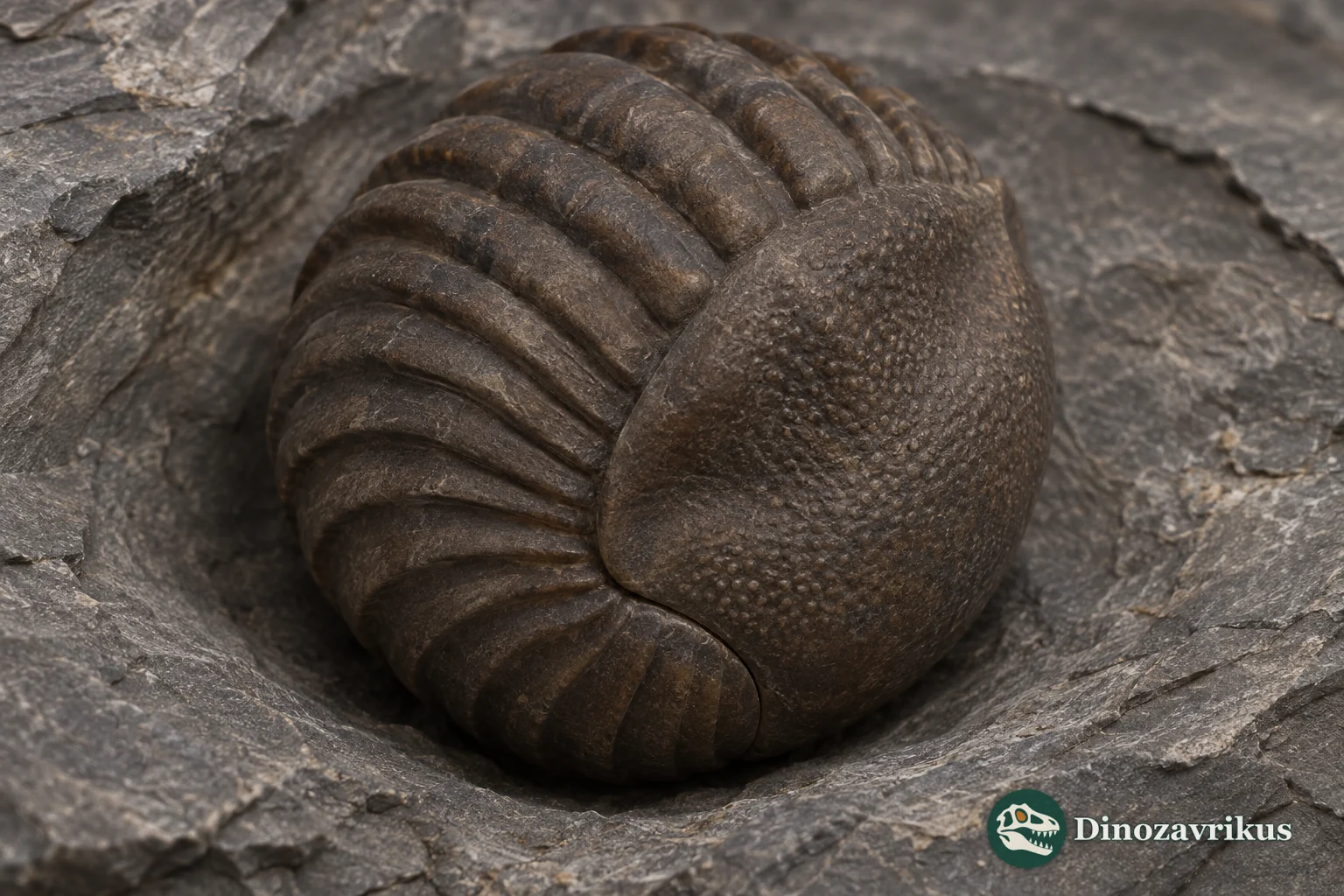
Conocoryphe was a Middle Cambrian trilobite known from articulated exoskeletons. The Czech species Conocoryphe sulzeri lacked eyes. One individual preserves damage to the right side of the head and the first few trunk segments. The margins of the damaged shell indicate that it survived the injury. Fossils from Spain preserve individuals with their shells curled up.
Quick facts
| Group | Trilobites, family Conocoryphidae |
|---|---|
| Age | Middle Cambrian, Miaolingian |
| Region | Europe and Asia: Czech Republic, Spain, France and southern Türkiye |
| Diet | Unknown |
| Type species | Conocoryphe sulzeri |
| Material | Articulated and enrolled exoskeletons, isolated shields |
What can the fossils tell us?
The Spanish species could draw its tail shield near the head while the articulated trunk formed a curved outer shell.
The altered edges of the right cheek and front segments in the Czech specimen are consistent with healing during life.
A failed attack is a plausible explanation. The damage preserves too little information to identify a particular predator.
How Conocoryphe enrolled
An enrolled specimen of C. heberti was described from the Murero Formation in northeastern Spain. The species has 14 thoracic segments. Joints between them enabled the animal to curl up so the tail shield approached the head and the shell formed a rounded capsule. This brought the hard parts of the exoskeleton around the soft underside.
Fossils preserve different degrees of flexure, and researchers compare how the plates meet at the front of the head. For the Czech C. sulzeri, both spheroidal and more spiral forms of enrolment have been reported. Each fossil preserves the position of one individual.
From Bohemia to the Taurus Mountains
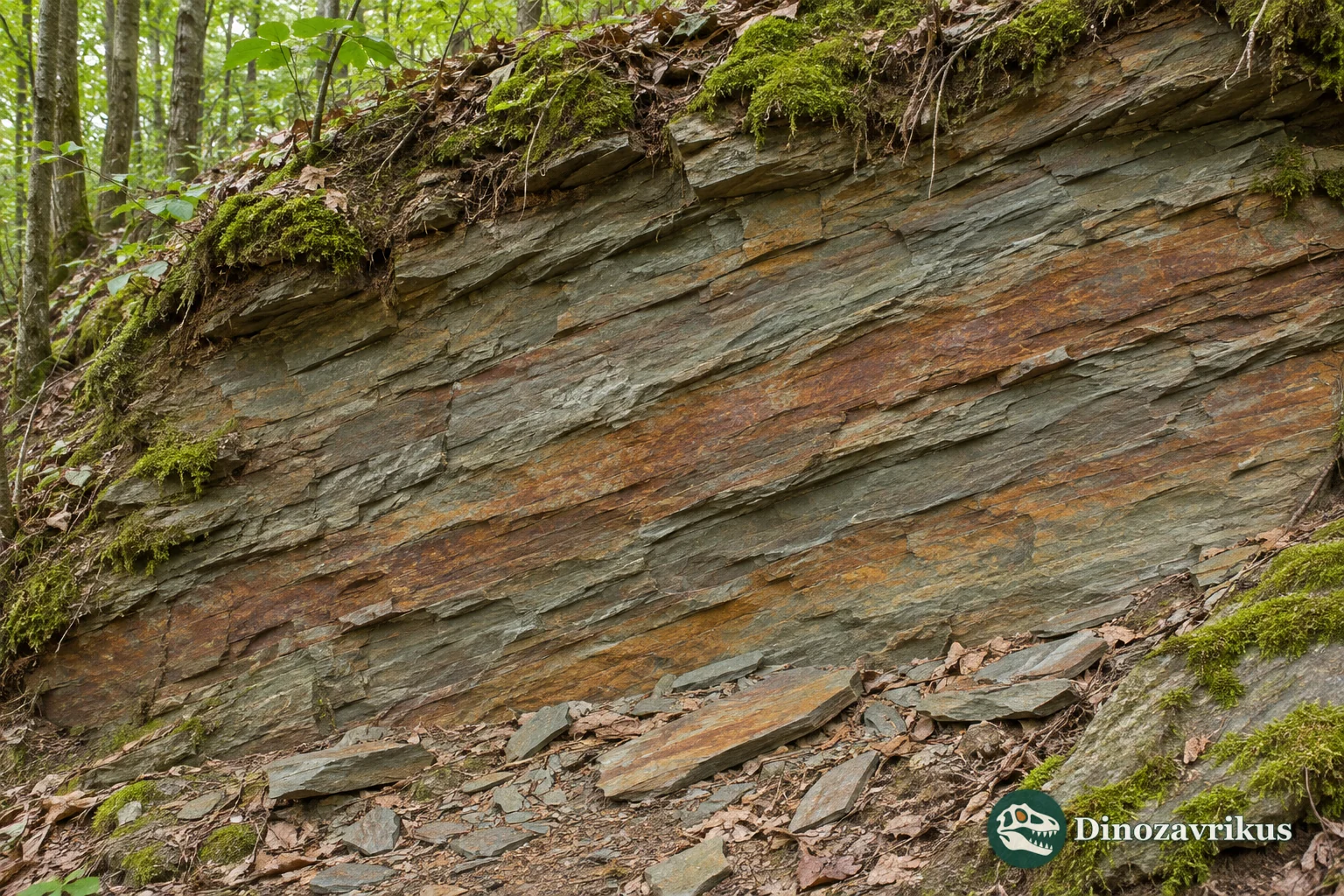
Ignaz Hawle and August Corda established Conocoryphe in 1847. Its type species, C. sulzeri, comes from the Jince Formation in the Czech Republic. C. heberti is known from Spain and the Montagne Noire in France. Conocoryphe material has been described from red nodular limestones of the Çal Tepe Formation in the Central Taurides of southern Türkiye.
In the nineteenth century the genus covered forms that were later moved elsewhere. The Welsh species once called Conocoryphe abdita is now placed in Maladioidella. An old museum label by itself therefore gives limited evidence of the genus's geographic range.
An injury that healed
The Czech specimen CGS VV 003 from near Rejkovice preserves an internal mould of its exoskeleton. Two indentations interrupt the outline of the right cheek and the first three segments on that side have shortened outer portions. The altered margins led researchers to conclude that the animal had healed during life.
The study proposed a failed attack and considered the radiodont Hurdia and the large bivalved arthropod Tuzoia as possible candidates. Those suggestions concern the origin of the damage. The surviving shell is too incomplete to identify either animal as the attacker.
Frequently asked questions
Did the Czech Conocoryphe have eyes?
The type species, Conocoryphe sulzeri, was blind and lacked visible eyes.
How many thoracic segments did the Spanish species have?
Conocoryphe heberti has 14 segments between the head and tail shields.
Where was the injured specimen found?
It came from the Jince Formation near Rejkovice in the Czech Republic. Its collection number is CGS VV 003.
Can the damage identify the predator?
A failed attack is plausible, but the damaged shell does not identify a particular predator.