

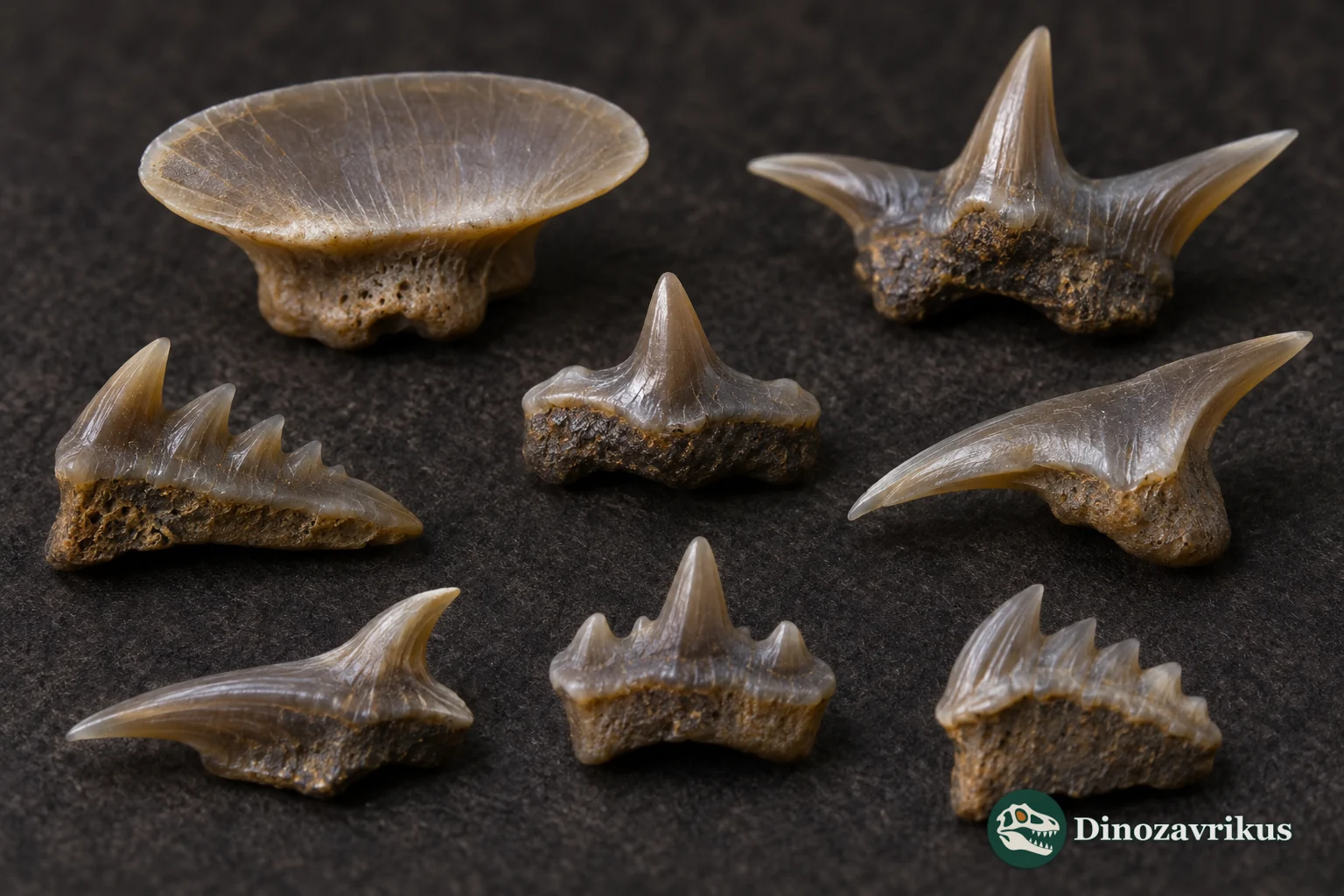
Cooleyella is a Palaeozoic chondrichthyan genus recognized mainly from very small teeth. Some species have a central cusp and blade-like sides; one Grand Canyon species has a broad oval crown. These differences are useful for taxonomy but leave the animal's body proportions unknown. The cover is a comparative reconstruction.
Quick facts
| Genus | Cooleyella Gunnell, 1933 |
|---|---|
| Type species | C. peculiaris from the Late Carboniferous of North America |
| Family | Anachronistidae |
| Fossils | Mostly isolated miniature teeth |
| Grand Canyon species | C. platera, Serpukhovian Surprise Canyon Formation |
| C. platera holotype | MNA V11307, a tooth |
| Oman record | MPUM10945, identified cautiously as C. cf. fordi |
What can the fossils tell us?
Gunnell named C. peculiaris in 1933 from Late Carboniferous microscopic remains. Being the type species does not make every Cooleyella tooth identical.
Holotype MNA V11307 of C. platera came from the Serpukhovian Surprise Canyon Formation. Its crown lacks the pronounced central cusp seen in several other species.
The worn Wordian tooth MPUM10945 resembles C. fordi, but was published as C. cf. fordi because few comparable specimens were available.
Crown and base details distinguish species. These separate teeth do not preserve body length, fin shape, colour or the identity of prey.
A genus built from microscopic fossils
F. M. Gunnell named Cooleyella in 1933. Its type species, C. peculiaris, is known from Late Carboniferous rocks in the Kansas City region. The genus belongs to the Anachronistidae and is recognized primarily by tooth crowns and bases rather than articulated skeletons.
Later finds from Britain, North and South America and other regions include different species, not one species spread without change across all these deposits. The British C. fordi and the American type species differ in dental details. Edestus illustrates another kind of Palaeozoic shark record, with a very different dental structure.
A rounded crown in the Grand Canyon
Hodnett and Elliott described C. platera in 2018 from the lower and middle Surprise Canyon Formation of the western Grand Canyon, dated to the Serpukhovian. Holotype MNA V11307 is one tooth, not a skeleton. The crown is broadly circular or oval and lacks the clear median cusp of several related species.
The tooth base has a small projection, transverse ridge and intervening pit. The diagnosis uses these combined features. The species name refers to the unusually flattened, dish-like crown rather than to a known body shape.
A cautious record from Oman
A tooth catalogued as MPUM10945 was recovered from the Wordian Khuff Formation of Oman. Some characters resemble C. fordi, but the researchers used Cooleyella cf. fordi because the tooth is worn and the sample small. The abbreviation records a comparison, not a definitive species assignment.
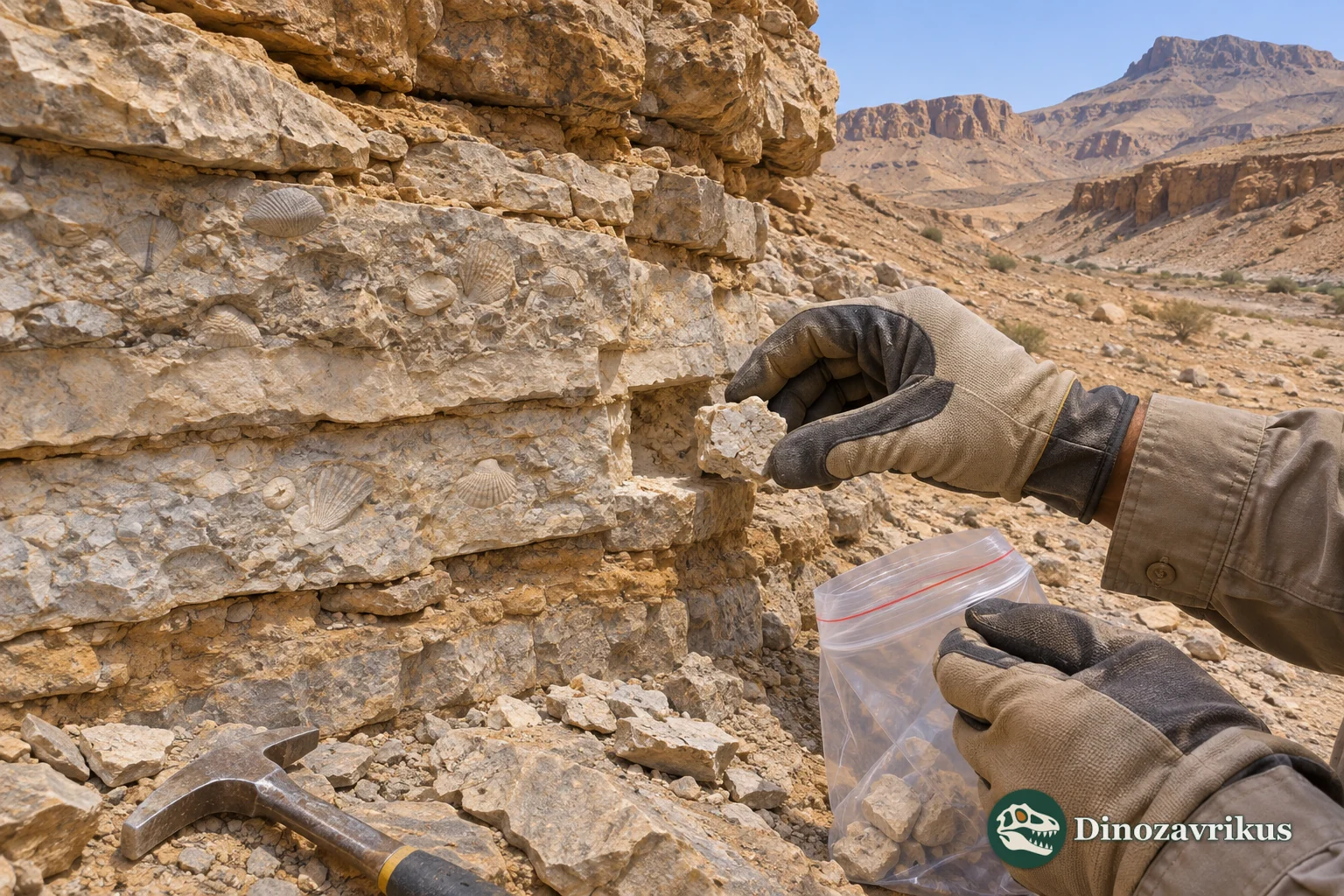
The Khuff fossils come from marine shallow-water shell beds, some redeposited by storms. The dry modern outcrop does not represent the Permian habitat. Geological context fixes the age and setting more securely than it identifies any prey eaten by the shark.
The missing body
Isolated crowns establish diagnostic dental traits but do not preserve Cooleyella's complete head, fins, body length or skin colour. A tooth dimension must not be turned into a whole-animal measurement without independent material. Similarly, sharing a Palaeozoic age with Stethacanthulus does not prove that the two had identical bodies.
The cover and limestone-sampling image are reconstructions. The latter does not document the collection of MPUM10945 by the named field team.
Frequently asked questions
Which species is the type of Cooleyella?
C. peculiaris, named by Gunnell in 1933 from Late Carboniferous North American material.
How does C. platera differ?
Its broad oval crown lacks the pronounced central cusp seen in several other Cooleyella species.
Why is the Oman tooth called cf. fordi?
It resembles C. fordi, but wear and limited material make the species identification provisional.
Is the complete body length known?
No. The discussed fossils are tiny isolated teeth rather than measurable complete bodies.