

Coosella was a North American Cambrian trilobite. Specimens of a Utah species preserve articulated shells of several sizes. A few fossils also preserve parts of the digestive tract, which normally disappears as soft tissues decay.
Quick facts
| Group | Crepicephalid trilobites |
|---|---|
| Age | Cambrian, Miaolingian Series |
| Genus named by | Christina Lochman, 1936 |
| Type species | Coosella prolifica |
| Length of the Coosella kieri holotype | 39 mm |
| Beds preserving gut traces | Weeks Formation, Utah |
What can the fossils tell us?
Specimens show that the proportions changed after the number of trunk segments was established. An isolated tail shield cannot reveal its length relative to the head.
Part of the alimentary canal and its lateral branches can be recognised. Their shape reveals anatomy but does not identify specific foods.
Articulated Coosella kieri occurs in the Weeks Formation. Coosella perplexa is part of the Crepicephalus Zone assemblage in Sonora.
From the type species to articulated Utah shells
Christina Lochman established the genus in 1936. Its type species, Coosella prolifica, is from the Bonneterre Formation in Missouri. Several species are represented chiefly by cranidia and tail shields. The Weeks Formation of Utah yielded articulated shells of Coosella kieri. Richard Robison and Loren Babcock described the species in 2011 and named it for Carlo Kier.
The holotype, UU 10051.26, is 39 mm long. Other illustrated specimens range from 22 to 45 mm. The cheek spines are short, the head margin forms a semicircle, and the articulated trunk carries 11 or 12 movable segments in the specimens examined.
How the tail shield changed with growth
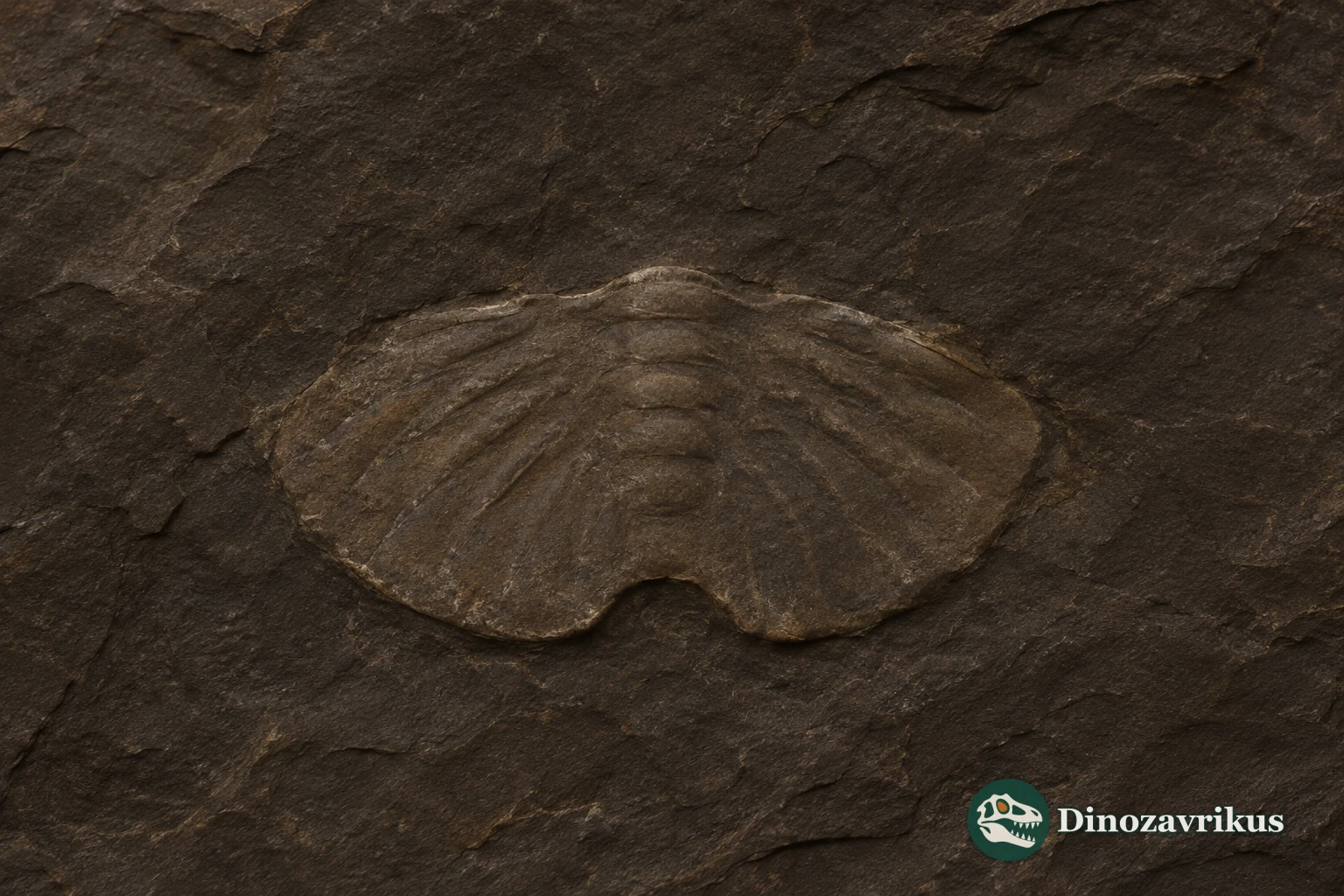
There is a distinct notch midway along the rear edge of the tail shield in Coosella kieri. Comparison of articulated specimens shows that during later growth the tail became longer relative to the head. In smaller specimens it could be less than 65 percent of head-shield length, whereas in larger specimens it exceeded 130 percent. This variation matters when isolated shields are compared as possible clues to species identity.
Mineral traces of the gut
Specimen BPM 1008 preserves a dark trace of the front of the alimentary tract. Short paired branches flank the narrow canal, and the researchers interpreted them as parts of digestive diverticula. Other fossils from the Weeks Formation allowed a study of the phosphate mineralisation that could preserve these delicate structures.
The original description used the preserved structures to suggest that Coosella kieri may have been predatory. The fossils reveal the anatomy of the front of the gut. They have yet to identify particular prey or establish that every species in the genus fed the same way.
Coosella in Sonora
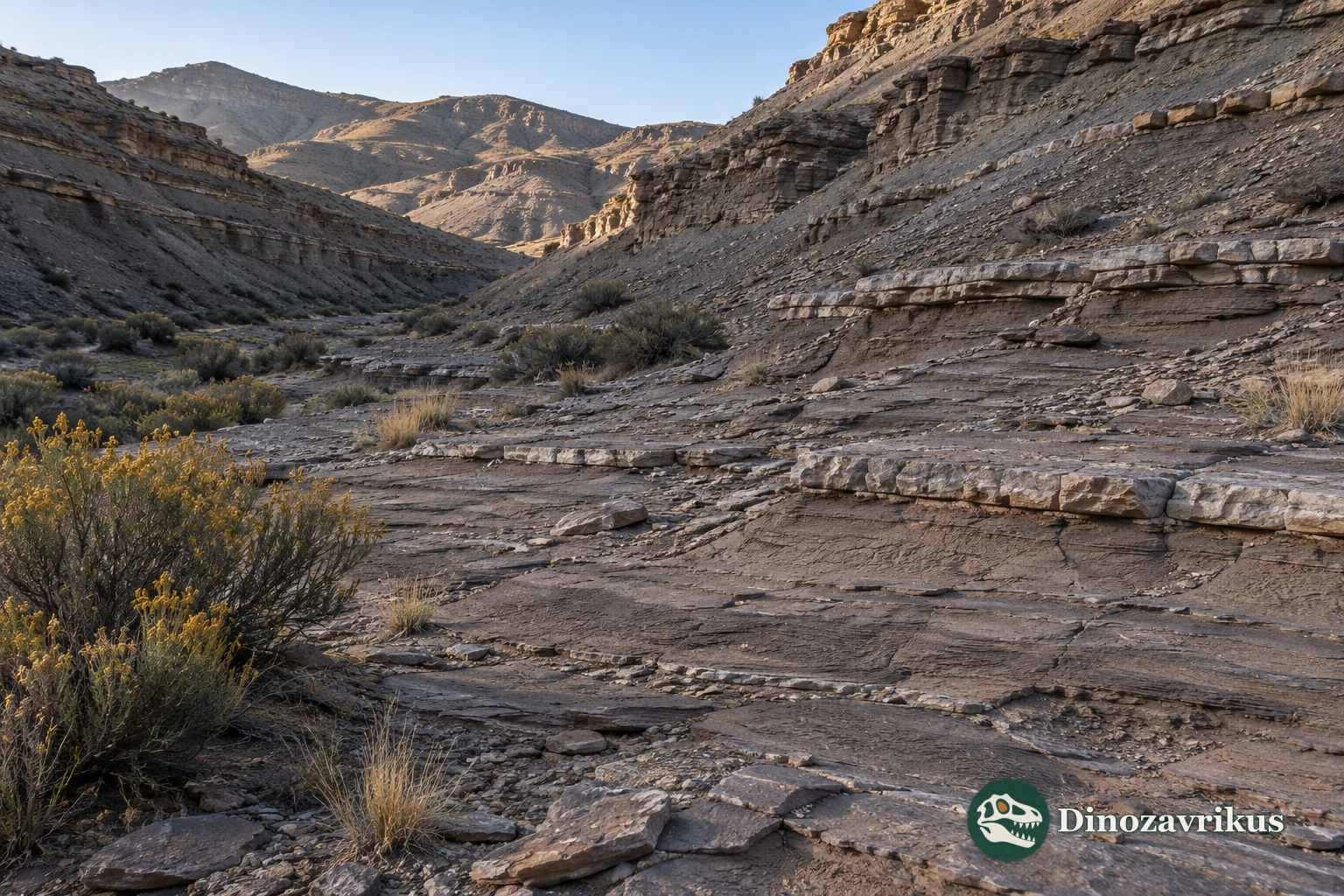
In northern Sonora, Mexico, Coosella perplexa has been found in inner-shelf deposits. It occurs with Crepicephalus and other trilobites of the zone named for that genus. The assemblage helped researchers correlate upper Guzhangian rocks in Sonora, Arizona and Texas.
Frequently asked questions
What is the type species of Coosella?
It is Coosella prolifica from the Bonneterre Formation of Missouri. The specimens with gut traces belong to Coosella kieri.
How many trunk segments did Coosella kieri have?
The articulated specimens described for the species have 11 or 12 trunk segments.
Which digestive structures are visible in the fossils?
Specimen BPM 1008 shows part of the digestive canal and short traces of branches to either side.
What can the Sonora specimens tell geologists?
Together with other trilobites, they help correlate Guzhangian marine beds between Mexico and the southwestern United States.