

Cordichelys lived in what is now Egypt in the late Eocene. The original specimen preserves a shell. Skulls found in other beds of the Faiyum have broad crushing surfaces with a cleft down the middle of the palate.
Quick facts
| Group | Turtles, side-necked, podocnemidids |
|---|---|
| Age | Late Eocene (Priabonian) |
| Region | Africa (Egypt, Faiyum) |
| Type species | Cordichelys antiqua |
| Holotype | CGM 10038, nearly complete shell |
| Carapace length | 269 mm in CGM 42191, a specimen close to the type species |
| Formations | Birket Qarun and Qasr el-Sagha |
| Scientific name | Cordichelys |
| Diet | Exact diet unknown |
What can the fossils tell us?
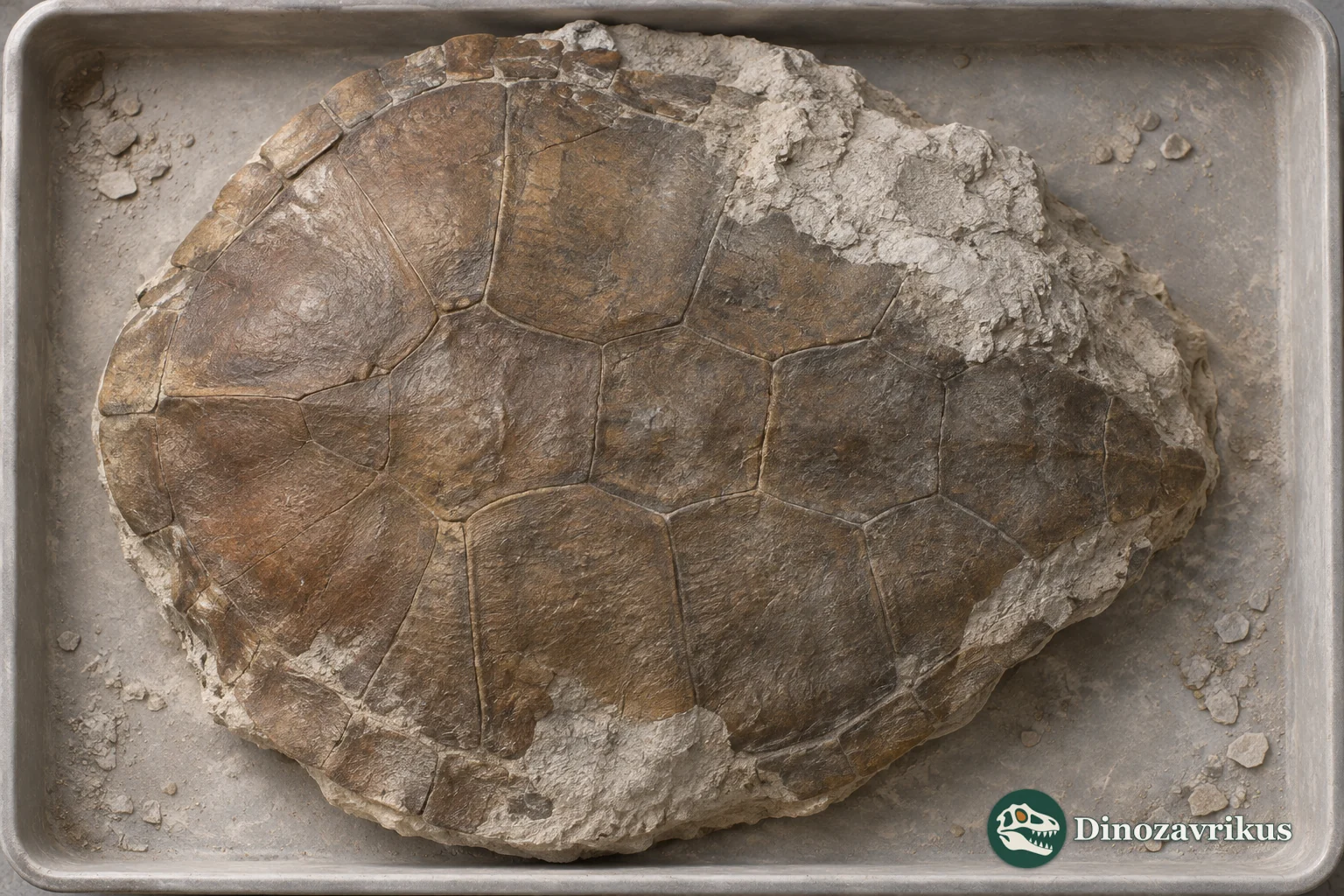
Almost the entire shell survived, but a gypsum coating obscures the scute boundaries. This is the fossil Charles Andrews used to name the species.
Fragments of shell were found around the skull of CGM 42191. The carapace was reconstructed to a length of 269 mm.
MUVP 498 was found north of Lake Qarun. It added to the known skull anatomy and confirmed the presence of the genus in the Qasr el-Sagha Formation.
How the species got a new genus
Charles Andrews named the Egyptian fossil Podocnemis antiqua in 1903. The Egyptian Geological Museum holds CGM 10038, the nearly complete type shell. In 2011 Eugene Gaffney and colleagues moved the species into its own genus, named for the heart-shaped outline of the carapace.
The holotype lacks a skull, so YPM 7457 from the Yale Peabody Museum was especially important when the genus was described. Its skull and shell allowed comparison with other side-necked turtles.
Two formations, several forms
At Wadi Al Hitan an exposed skull, CGM 42191, was found among shell fragments in the Birket Qarun Formation. Its moderately domed, 269 mm carapace closely resembles the type. The Yale specimen differs from the type in several features of both the upper and lower shell.
Another skull, MUVP 498, comes from younger deposits of the Qasr el-Sagha Formation. Its bones differ in proportion from those of other finds. The anatomical variation within the genus is clear, but the identity of individual skulls at species level is still uncertain.
A palate built in two halves
Two bony flanges project towards one another from the upper jaw and the bones of the palate, leaving a cleft down the centre. The same kind of partial secondary palate occurs in the later side-necked turtle Bairdemys.
Wide surfaces would have helped crush resistant food, but the bones alone do not reveal what Cordichelys ate. The Egyptian fossils occur in coastal deposits, which do not establish how far the turtles ranged from shore.
Frequently asked questions
What was the type species originally called?
Andrews named it *Podocnemis antiqua* in 1903. It was moved to Cordichelys in 2011.
Where were the newer skulls found?
In the Birket Qarun and Qasr el-Sagha formations of the Faiyum, Egypt.
What is unusual about its palate?
Two bony flanges form a partial secondary palate with a cleft down the middle.
Do all the fossils belong to one species?
Several skulls and shells differ in shape. Assigning every Cordichelys specimen to *C. antiqua* remains uncertain.