

Cosmopolitodus is a name applied to extinct lamnid sharks with broad, smooth-edged teeth. The species hastalis has also been placed in Oxyrhina, Isurus and Carcharodon. A partial juvenile skeleton from Peru offers more than the usual isolated teeth, including fish remains interpreted as stomach contents. The complete shark shown on the cover is an artistic reconstruction.
Quick facts
| Genus name | Cosmopolitodus Glikman, 1964 |
|---|---|
| Species discussed | C. hastalis, formerly placed in Oxyrhina and Isurus |
| Group | Lamnidae, mackerel sharks |
| Characteristic teeth | Broad triangular crowns with smooth cutting edges |
| Skeletal evidence | Partial juvenile from Cerro Yesera, Pisco Formation, Peru |
| Feeding evidence | Fish remains in the abdominal area of that specimen |
| Adult body size | Not fixed by the juvenile partial skeleton |
What can the fossils tell us?
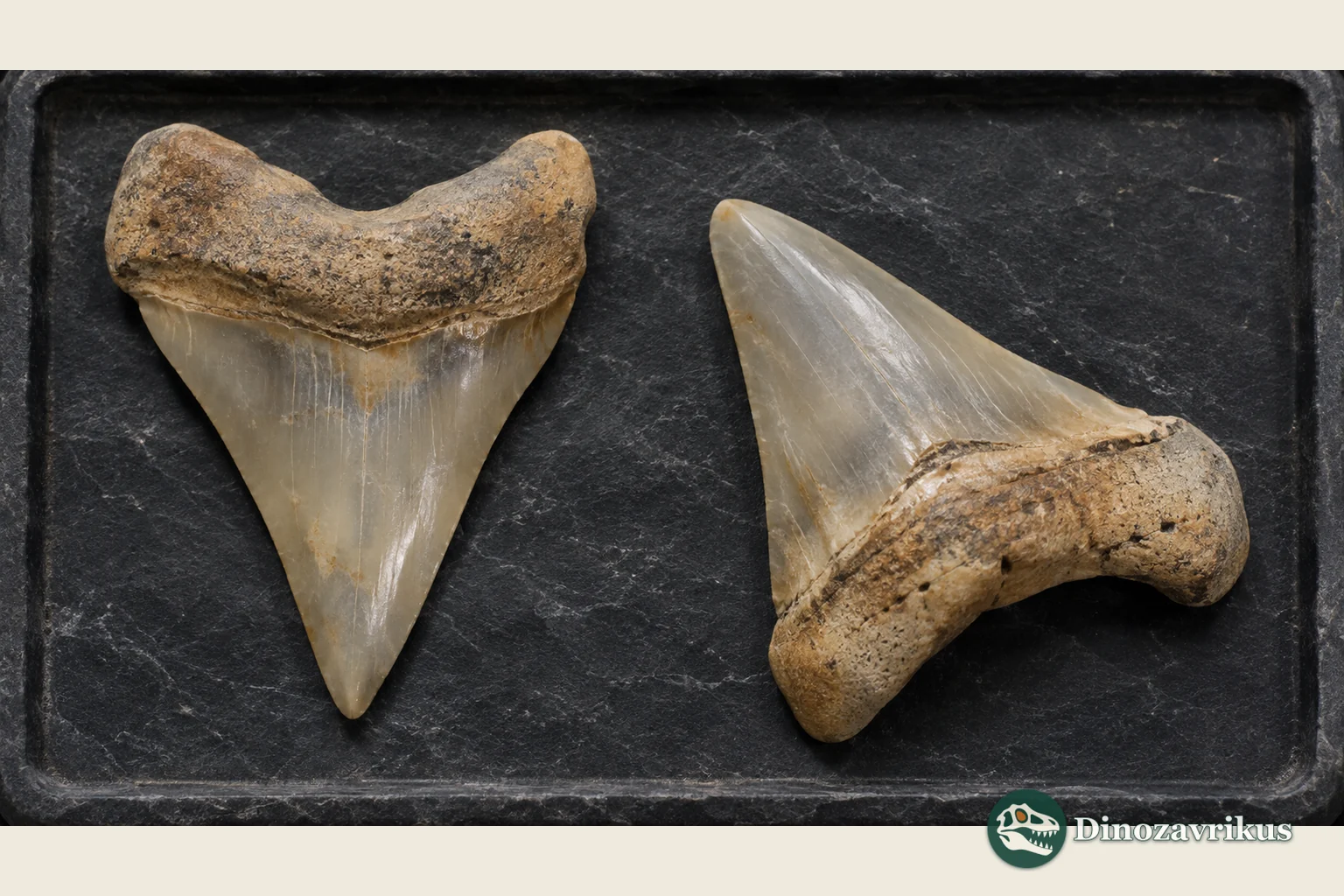
Hastalis teeth are triangular and flattened, with no coarse edge serrations. A loose tooth does not establish the whole tooth row or body length.
The Cerro Yesera fossil includes visceral arches and the anterior vertebral column. It is partial and does not preserve a complete adult outline.
Researchers found remains including a Sardinops-like pilchard in the abdominal area and interpreted them as stomach contents. This concerns one young individual.
Some studies retain Cosmopolitodus; others include hastalis in Carcharodon. Transitional dental traits in C. hubbelli support close kinship but cannot identify the direct ancestry of each fossil.
A species that moved between genera
Louis Agassiz originally used Oxyrhina for hastalis. Later researchers assigned it to the living mako genus Isurus. Glikman proposed Cosmopolitodus in 1964 for smooth-edged lamnids considered close to the white-shark line. The name changes reflect alternative classifications of fossils, rather than separate discoveries each time.
The broad, flattened crown and high root differ from many slender mako teeth. Tooth position affects the outline, however, so single specimens cannot reconstruct a complete dentition. Historical names also complicate the record of Macrorhizodus, another fossil lamnid.
Broad teeth and their limits
The cutting edges of typical hastalis teeth are smooth, unlike the prominent serrations of the modern white shark. This contrast is useful in comparisons, but it does not by itself resolve whether Cosmopolitodus should stand as a separate genus. An isolated tooth has no attached measurement of the shark's body.
The Cerro Yesera juvenile
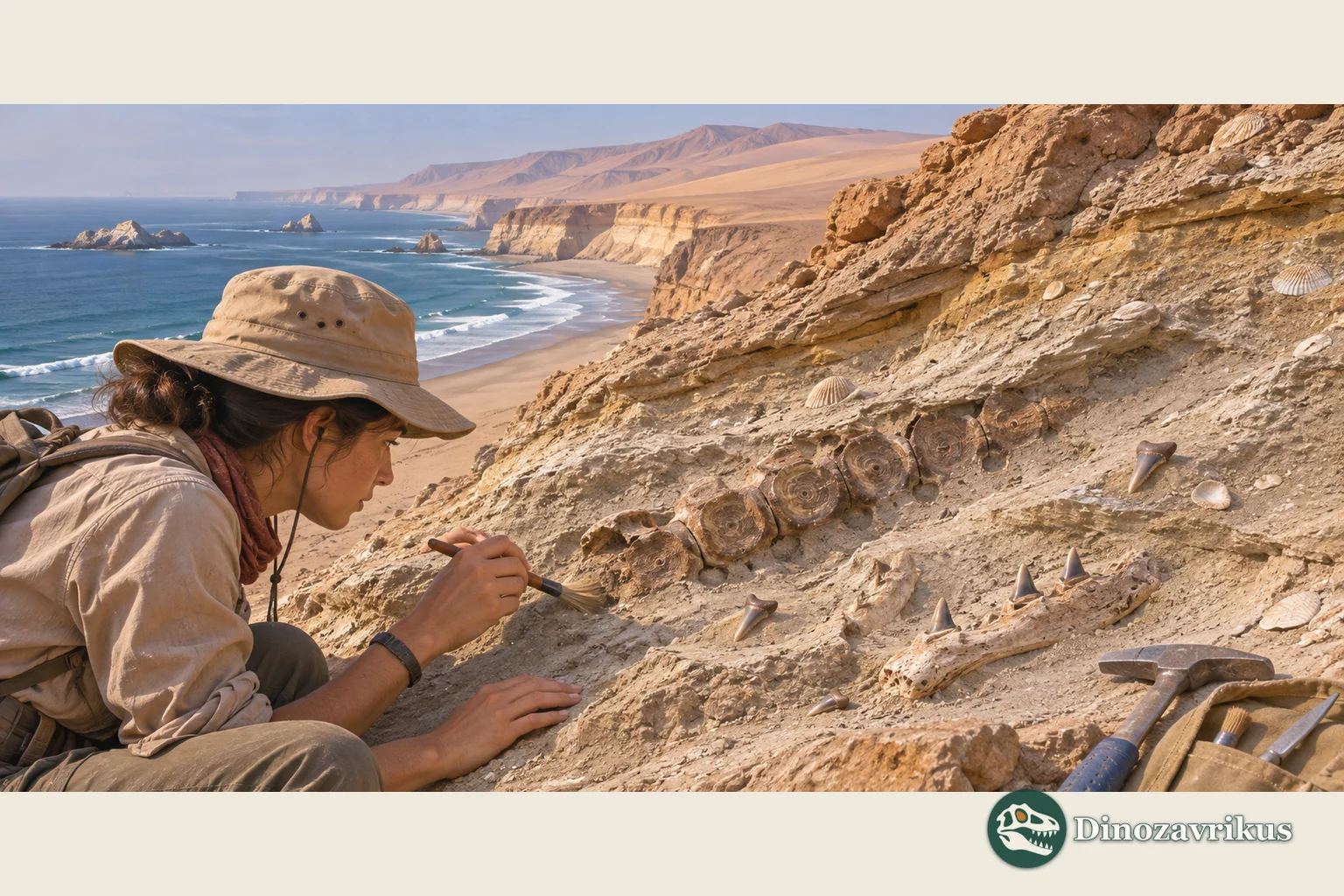
A fossil from late Miocene Pisco Formation beds at Cerro Yesera in southern Peru preserves parts of the visceral arches and the front of the vertebral column. Its teeth support identification as hastalis; the authors identified a juvenile. This specimen is remarkable because shark cartilage seldom fossilizes as readily as hard tooth crowns.
It is still a partial skeleton. Fin proportions, colour and the maximum size of an adult are not measured by the preserved pieces. The difference between isolated teeth and associated skeletal parts also matters for Parotodus.
A clue to feeding in life
Fish remains lie in the abdominal region of the Peruvian fossil, including a pilchard identified as Sardinops sp. cf. S. sagax. Collareta and colleagues interpreted their position as fossilized stomach contents. This directly supports piscivory for that juvenile, while leaving open how the diet changed with age or varied across populations.
The Pisco Formation records productive coastal waters and unusual preservation. Its sedimentary setting gives context for the association, but does not reveal the daily movements of an individual shark.
Relationship to the white shark
Ehret and colleagues described Carcharodon hubbelli with a mixture of dental traits seen in hastalis and the living white shark. They treated Cosmopolitodus as part of a broader Carcharodon. Other authors retain a distinct Cosmopolitodus for the smooth-edged forms. The sequence of fossils supports close relationship, yet taxonomy and a literal ancestor-to-descendant chain are separate questions.
The cover portrays a plausible lamnid appearance. Its exact colour and fin shapes have not been established from the Cerro Yesera juvenile.
Frequently asked questions
Why does hastalis have several genus names?
Researchers disagree about the boundaries of fossil lamnid genera. Glikman used Cosmopolitodus; some later studies include hastalis in Carcharodon.
Was a complete Cosmopolitodus skeleton found?
No. The Cerro Yesera juvenile retains anterior vertebrae, visceral-arch elements and teeth, but not a whole adult skeleton.
What evidence shows that it ate fish?
Fish remains, including a Sardinops-like pilchard, were found in the abdominal region of the Peruvian juvenile and interpreted as stomach contents.
Can one tooth give its exact body length?
Not reliably. A tooth requires an independently justified model, and the discussed partial skeleton belongs to a juvenile.