

Croizetoceros was an extinct European deer known from antlers, teeth, jaws and some limb bones. Its type species C. ramosus lived in the late Pliocene, while a related population from Fonelas P-1 in Spain was present around two million years ago, within the early Pleistocene under today's time scale. Coat color and the precise antlers of the animal on the cover are artistic reconstruction.
At Fonelas, the smaller Croizetoceros occurred alongside the larger Eucladoceros. They are distinct deer, not growth stages of one species. The much later Cervalces also had branching antlers, but that resemblance alone cannot establish a direct ancestor line.
Quick facts
| Family | Cervidae |
|---|---|
| Type species | Croizetoceros ramosus, named as Cervus ramosus in 1828 |
| Age | Pliocene and some early Pleistocene populations |
| Range | Western and southern Europe |
| Fossils | Antlers, jaws, teeth and some limb bones |
| Fonelas P-1 | About 2 million years old; proposed C. ramosus fonelensis |
What can the fossils tell us?
Tine shape and arrangement help compare populations. A single broken antler cannot reveal the age of every animal or the form of a whole genus.
The proposed fonelensis form was described from a metatarsal, jaws with teeth and a tibial fragment. Geological age is evaluated separately from the animal's diagnosis.
C. ramosus and earlier C. proramosus are distinguished in several reviews. Whether pyrenaicus belongs in Croizetoceros remains disputed.
From Cervus ramosus to Croizetoceros
Croizet and Jobert named Cervus ramosus in 1828. Heintz later placed the species in the separate genus Croizetoceros. These combinations record changing taxonomic judgement rather than two animals. Researchers compare antlers and dentitions together because a general deer silhouette cannot diagnose a fossil genus.
The earlier French form was named C. proramosus. The placement of pyrenaicus has varied among authors. A Spanish review retained two secure species while leaving that disputed form open. An inner-ear study supported closeness of some forms but cautioned that too few characters were available for a definitive family-tree position.
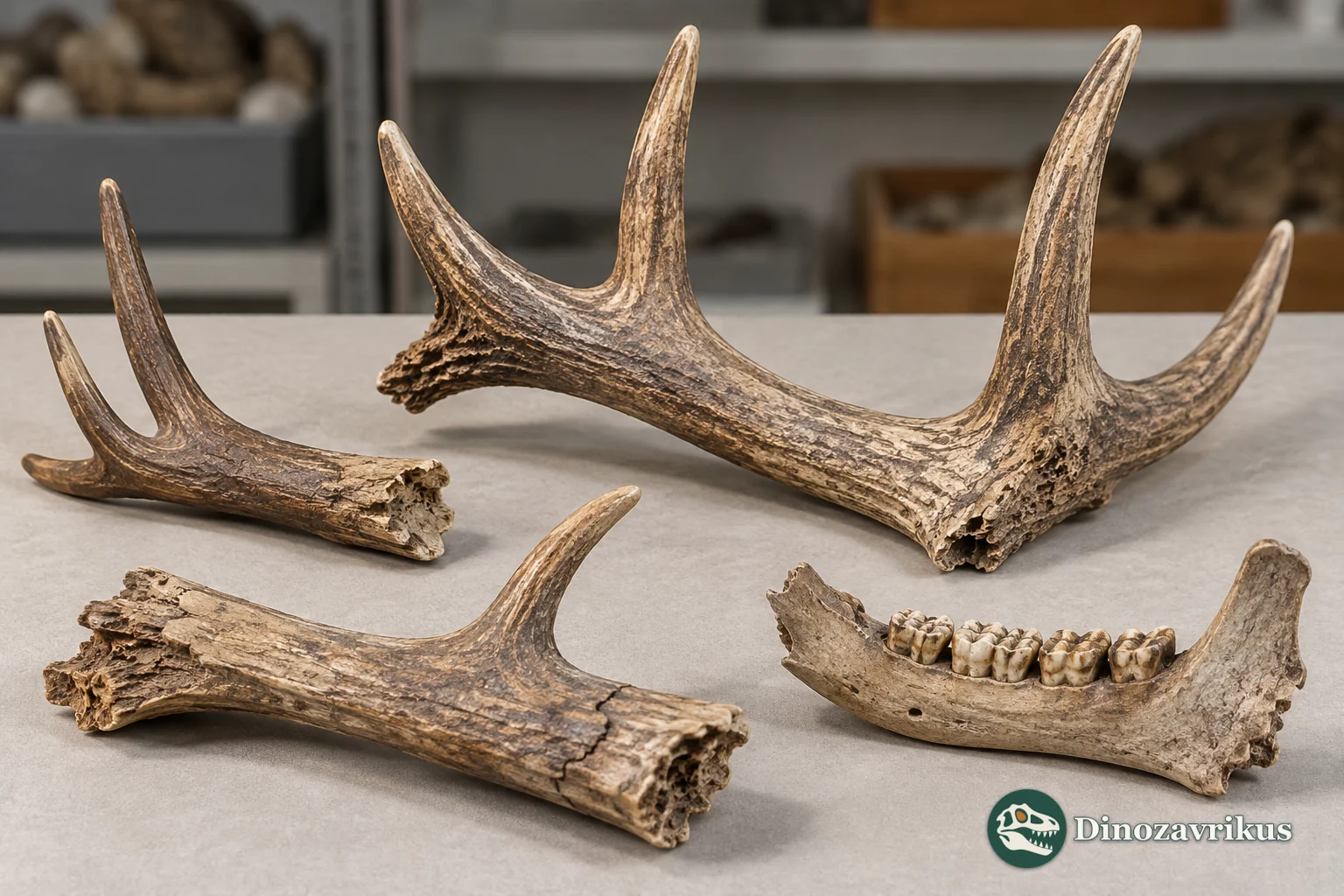
The Fonelas fossils and their geological age
For the Fonelas P-1 population, Garrido proposed the subspecies C. ramosus fonelensis in 2008. Its holotype FP1-2001-0058 is a right metatarsal held in Madrid's Museo Geominero. Referred material includes upper and lower jaw fragments with teeth and a distal tibia. The sample therefore informs more than antler form alone.
The original account called the Fonelas horizon latest Pliocene and estimated its age near two million years. That label reflects an older boundary convention. The current Pleistocene base is about 2.58 million years ago, making a two-million-year-old horizon early Pleistocene. This is the age of a locality, not the origin or extinction date of Croizetoceros.
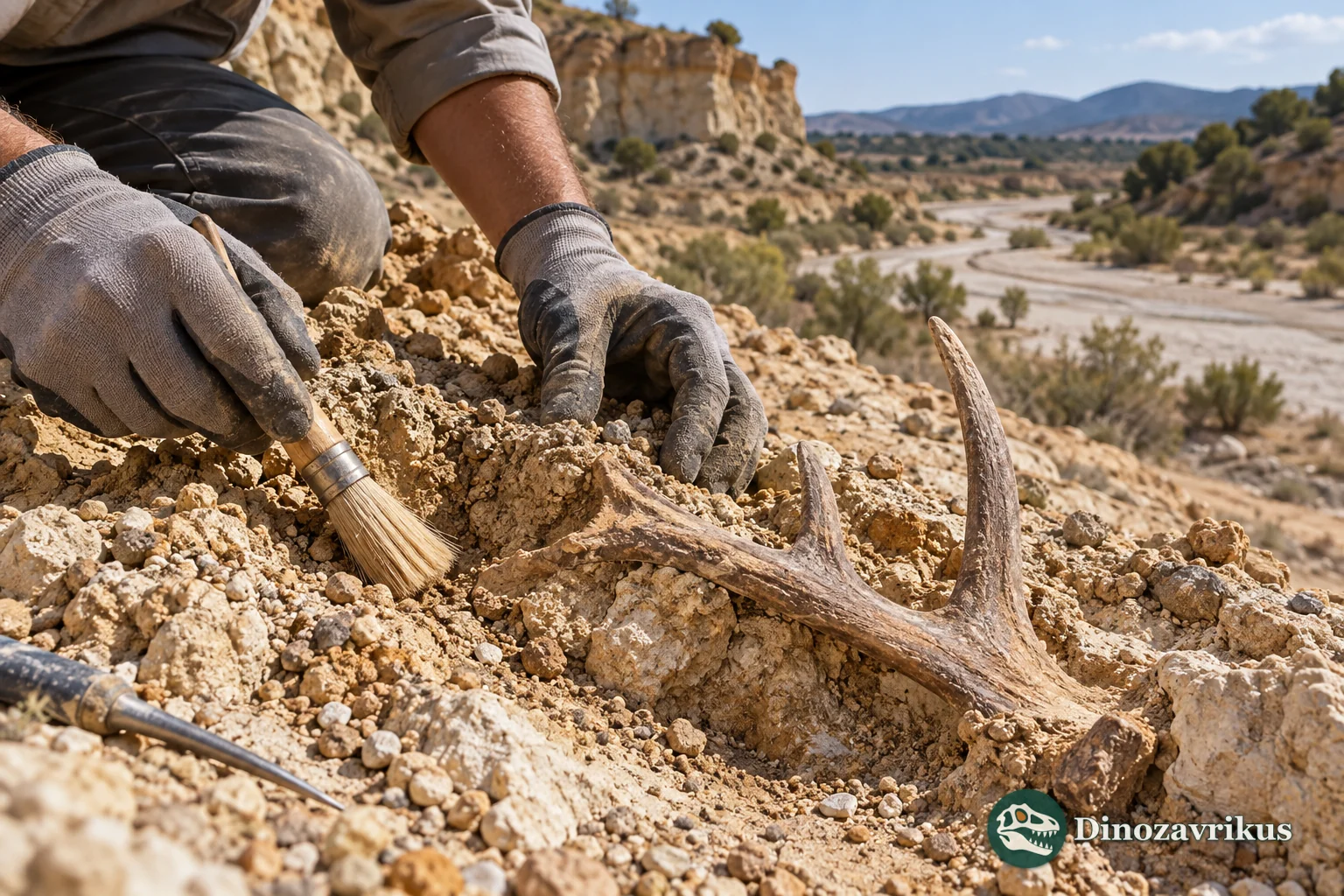
A river-basin assemblage and its limits
Fonelas P-1 accumulated in a river-basin setting that included floodplain and abandoned-channel deposits. This helps explain fossil preservation but cannot identify what killed a particular deer. Teeth support its placement among plant-eating cervids; the exact plants or seasonal movements of this population remain unknown.
Antler outlines vary with preservation and among individuals. The cover and field scene provide a possible appearance and context, not photographs of a named specimen or a documented excavation. They should not replace comparison of the actual fossils.
Frequently asked questions
Did Croizetoceros live only in the Pleistocene?
No. Much of its record is Pliocene. The roughly two-million-year-old Fonelas population falls within the early Pleistocene under the current boundary.
Why do old papers say Cervus ramosus?
Croizet and Jobert originally named the species in Cervus. It was later transferred to Croizetoceros.
What fossils define the proposed Fonelas form?
The type is a right metatarsal, with jaw and tibial fragments also described from Fonelas P-1.
Can the cover show its exact antlers and coat?
No. It is artistic reconstruction; fossil antlers must be assessed from specimens, and coat color is not preserved.