

Palaeontologists named Crossvallia from bones of a large Paleocene penguin found on Seymour Island. Another large penguin later turned up along the Waipara River in New Zealand and was provisionally placed in the same genus. The two fossils preserve different portions of the skeleton, so leg bones are especially important to the comparison.
Quick facts
| Age | Paleocene |
|---|---|
| Group | Early penguins |
| Type locality | Seymour Island, Antarctica |
| Other material | Waipara River, New Zealand |
| Fossils | Partial skeletons |
What can the fossils tell us?
The Antarctic humerus is robust, flattened and lacks an air cavity. It helps identify a penguin, while the outline of the full flipper remains unknown.
The New Zealand type specimen preserves both tibiotarsi, among other bones. Two upper wing fragments from other specimens were referred only tentatively.
The birds resemble one another in size and leg anatomy. Analyses that incorporate more fossils have yet to place the New Zealand species consistently.
The Antarctic species
Claudia Tambussi and colleagues named Crossvallia unienwillia in 2005 from Late Paleocene deposits on Seymour Island near the Antarctic Peninsula. The genus takes its name from the Cross Valley Formation.
The original description identified a partial humerus with associated fragments of the femur and tibiotarsus. The thick, flattened humerus was central to recognising a penguin. The bones leave the complete flipper, bill and plumage unknown.
A large penguin from the Waipara River
In 2019 Gerald Mayr and colleagues published the description of Crossvallia waiparensis. The holotype from Waipara marine deposits, CM 2018.23.9, is at Canterbury Museum. It includes the lower end of the left femur, both tibiotarsi, the right tarsometatarsus and a toe bone. Two partial humeri from the locality were assigned tentatively.
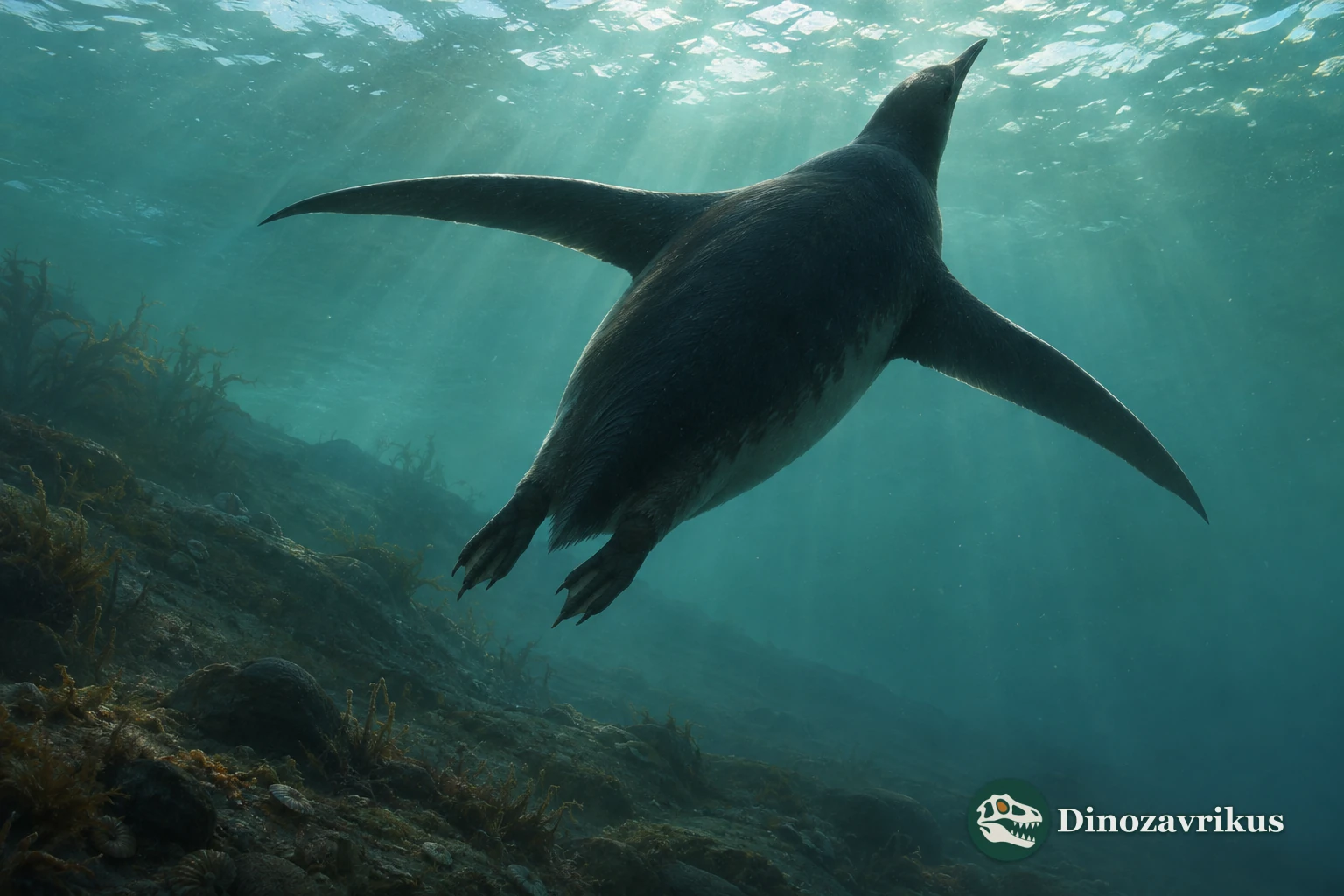
The legs point to a bird larger than a living emperor penguin. Its standing height depends on how the missing proportions are reconstructed. Kumimanu from another part of New Zealand also attained a large size during the Paleocene. Together they show how early large body sizes evolved in penguins.
Swimming and relationships
The humerus of the Antarctic specimen reflects an early penguin wing modified for swimming. The Waipara skeleton tells us more about its legs than its wing stroke. Neither find identifies the food those birds ate or precisely how their limbs worked together under water.
Size and similarities in the legs led the authors to place the New Zealand species in Crossvallia. Analyses that include additional fossil penguins shift its position across different trees. The Antarctic species anchors the genus, and the Waipara assignment remains provisional.
Frequently asked questions
Where does the name Crossvallia come from?
It refers to the Cross Valley Formation on Seymour Island, where the Antarctic species was found.
What survives of the New Zealand specimen?
The type includes several bones of one bird’s legs, notably both tibiotarsi and the right tarsometatarsus.
Could Crossvallia fly?
The strong, flattened humerus of the Antarctic fossil identifies it as an early flightless penguin.
Are the Antarctic and New Zealand birds certainly in the same genus?
The New Zealand species was assigned on the basis of similarities in its bones. That assignment remains provisional.