

Cryopterygius kristiansenae was named in 2012 for a remarkably complete ichthyosaur skeleton from Spitsbergen, Svalbard. Its type specimen, PMO 214.578, includes far more than an isolated skull: articulated trunk bones and both pairs of flippers can also be studied.
The fossil is secure, but its generic assignment is contested. A Russian revision treated it as Undorosaurus gorodischensis, whereas a later re-examination did not accept the species-level merger. The older name is used here to discuss the Svalbard type and its taxonomic history, not to claim the dispute is settled.
Quick facts
| Original name | Cryopterygius kristiansenae Druckenmiller and colleagues, 2012 |
|---|---|
| Type specimen | PMO 214.578, nearly complete articulated skeleton |
| Age | Tithonian, Late Jurassic |
| Rock unit | Slottsmøya Member, Agardhfjellet Formation |
| Place | Spitsbergen, Svalbard, Norway |
| Group | Ophthalmosauridae |
| Later interpretation | Synonymy with Undorosaurus gorodischensis is disputed |
What can the fossils tell us?
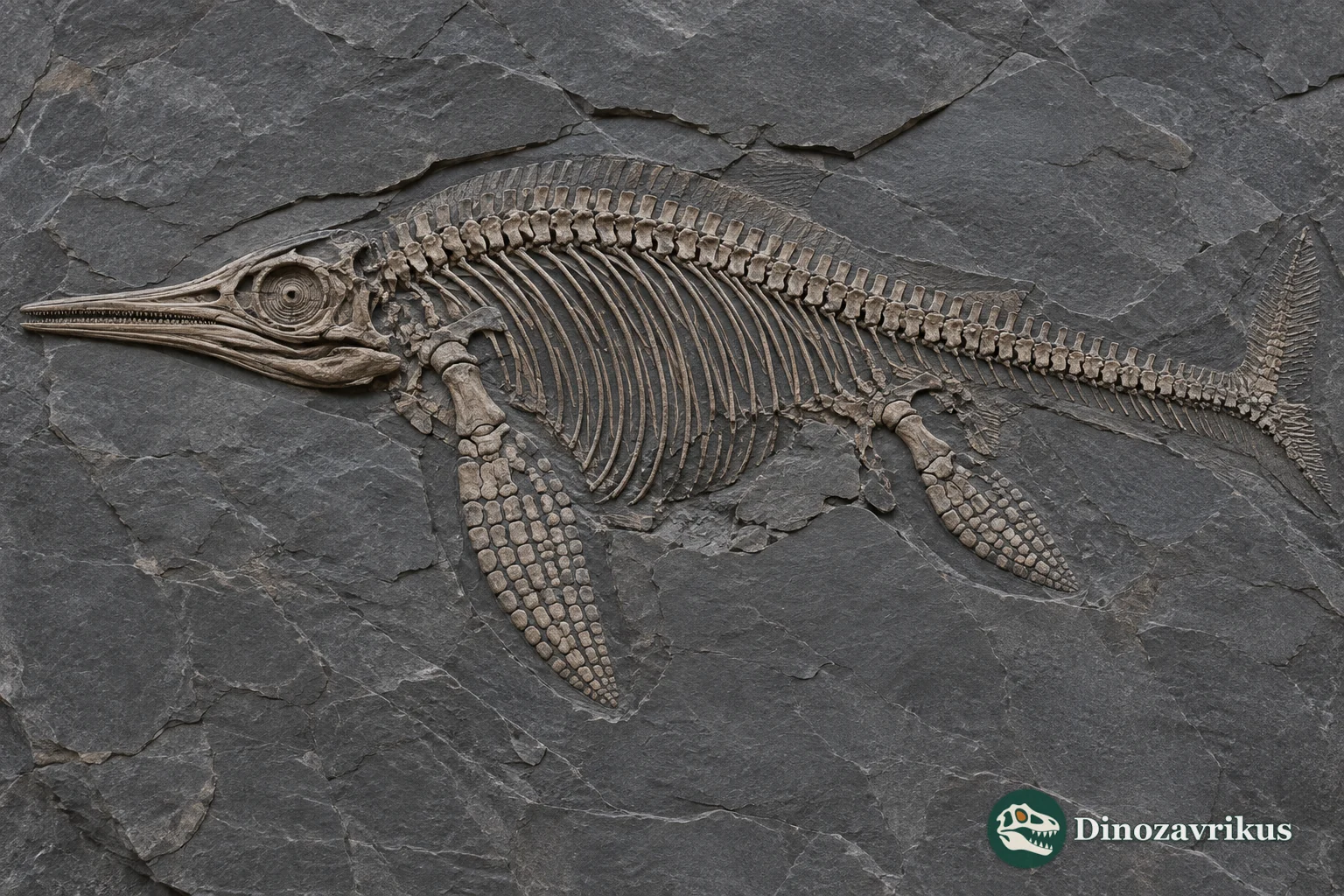
A nearly complete skull, most of the vertebral series, ribs, girdles and flippers survive. The preserved bones still cannot supply original color or an exact soft-tissue outline.
The fossil was excavated from the Slottsmøya Member of the Agardhfjellet Formation. Present ice and landscape are not a direct picture of the Jurassic sea.
Zverkov and Efimov synonymized the species with Undorosaurus gorodischensis. Delsett and colleagues highlighted differences and limited type overlap and did not accept species-level synonymy.
A skeleton from the Slottsmøya Member
Researchers excavated PMO 214.578 in 2009 from marine beds of the Slottsmøya Member, Agardhfjellet Formation. Druckenmiller, Hurum, Knutsen and Nakrem described it in 2012. The species honors Lena Kristiansen, a participant in the Spitsbergen field program.
The type preserves a nearly complete skull, the presacral and preflexural vertebral series, many ribs and gastralia, a shoulder girdle and forelimbs, and part of the pelvic girdle with a hindlimb. The original description counted 52 presacral vertebrae. These are observations from one specimen, not a universal count for all ichthyosaurs.
Why the classification changed
The original diagnosis considered the robust, moderately long rostrum and several skull and forefin characters distinctive. In 2019 Zverkov and Efimov compared the type with Russian Undorosaurus material and proposed that C. kristiansenae was a junior synonym of U. gorodischensis.
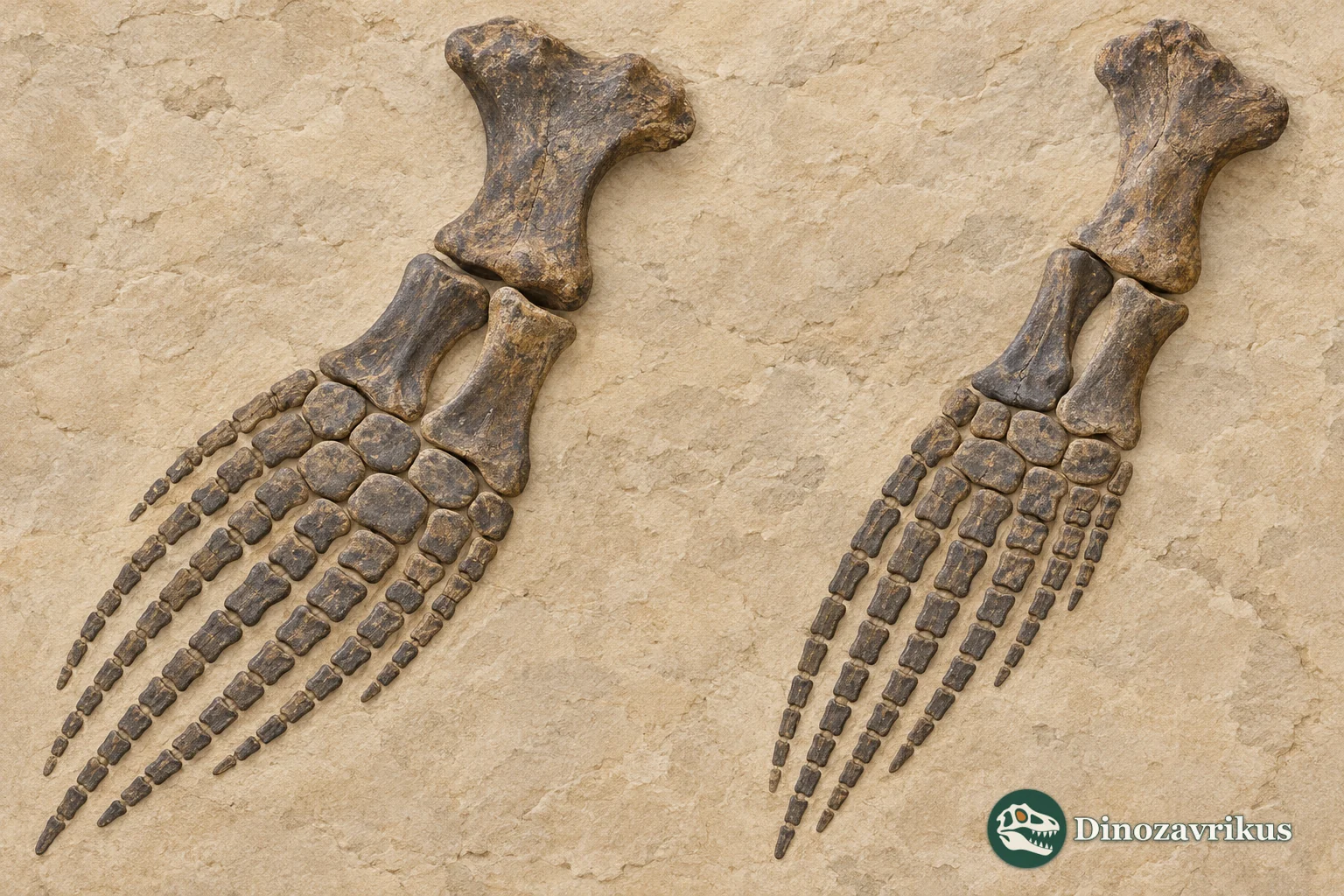
Delsett and colleagues examined the Spitsbergen specimen again later in 2019. They accepted some revised interpretations but found differences in the stapes and the proximal humerus, as well as limited overlapping anatomy between the name-bearing skeletons. They did not endorse species-level synonymy and used the cautious combination Undorosaurus? kristiansenae. Similarities point to a relationship; they do not alone resolve identity.
A marine animal, not a fixed portrait
The specimen documents an ophthalmosaurid in a Late Jurassic high-latitude sea. Comparisons with Ophthalmosaurus help place it among ichthyosaurs, but the art's color and behavior cannot be read from the bones. Nor should modern Arctic ice be placed uncritically in a Tithonian setting.
The Patagonian Caypullisaurus belongs to a different Late Jurassic record. Its fossils broaden the geographic picture of ophthalmosaurids without resolving the Svalbard and Russian type-specimen comparison.
Frequently asked questions
Why is Cryopterygius a disputed name?
A 2019 revision merged its type species with Undorosaurus gorodischensis, but another 2019 study found differences and insufficient type overlap for species-level synonymy.
What does PMO 214.578 preserve?
It includes a nearly complete skull, much of the articulated skeleton, ribs, girdles and flippers.
How old is the Svalbard fossil?
It comes from Tithonian, Late Jurassic marine strata of the Slottsmøya Member.
Is the fossil illustration a photograph of the holotype?
No. It is a composite illustration rather than an exact image of PMO 214.578.