

Caypullisaurus bonapartei is a large ichthyosaur from marine Vaca Muerta Formation strata in Neuquén Province, Argentina. Marta Fernández named the genus and species in 1997 from an Early Tithonian skeleton at Cerro Lotena. Later skulls from younger horizons improved its anatomical record.
The age of the type is Late Jurassic. A referred skull from Berriasian strata indicates that fossils assigned to the species extend into the earliest Cretaceous; it does not redraft the age of MACN-N-32.
Quick facts
| Type species | Caypullisaurus bonapartei Fernández, 1997 |
|---|---|
| Type specimen | MACN-N-32, partial skeleton |
| Type age | Early Tithonian, Late Jurassic |
| Younger skulls | MOZ 6067, late Tithonian; MOZ 6139, Berriasian |
| Formation | Vaca Muerta Formation |
| Region | Neuquén Province, Argentina |
| Group | Ophthalmosauridae in the 2007 revision |
What can the fossils tell us?
MACN-N-32 is an incomplete skeleton from Early Tithonian marine rock. Younger finds do not change the age of this name-bearing fossil.
MOZ 6067 is late Tithonian and MOZ 6139 Berriasian. The latter skull measures 1,515 mm long; that is a skull measurement, not total body length.
A 2007 redescription placed Caypullisaurus among ophthalmosaurids. The new skulls are laterally compressed and do not expose every dental detail.
The original Cerro Lotena material
The holotype MACN-N-32 is an incomplete but informative adult skeleton from Early Tithonian marine deposits. Another partial skeleton from the same locality formed part of the original comparative record. The species honors José Bonaparte, who was associated with discovery of the type specimen.
Preserved vertebrae, girdle and flipper elements allow skeletal comparisons. Several features of the skull and dentition remained harder to assess from the original material. Subsequent work expanded the sample and revised its systematic placement.
Younger skulls and their measurements
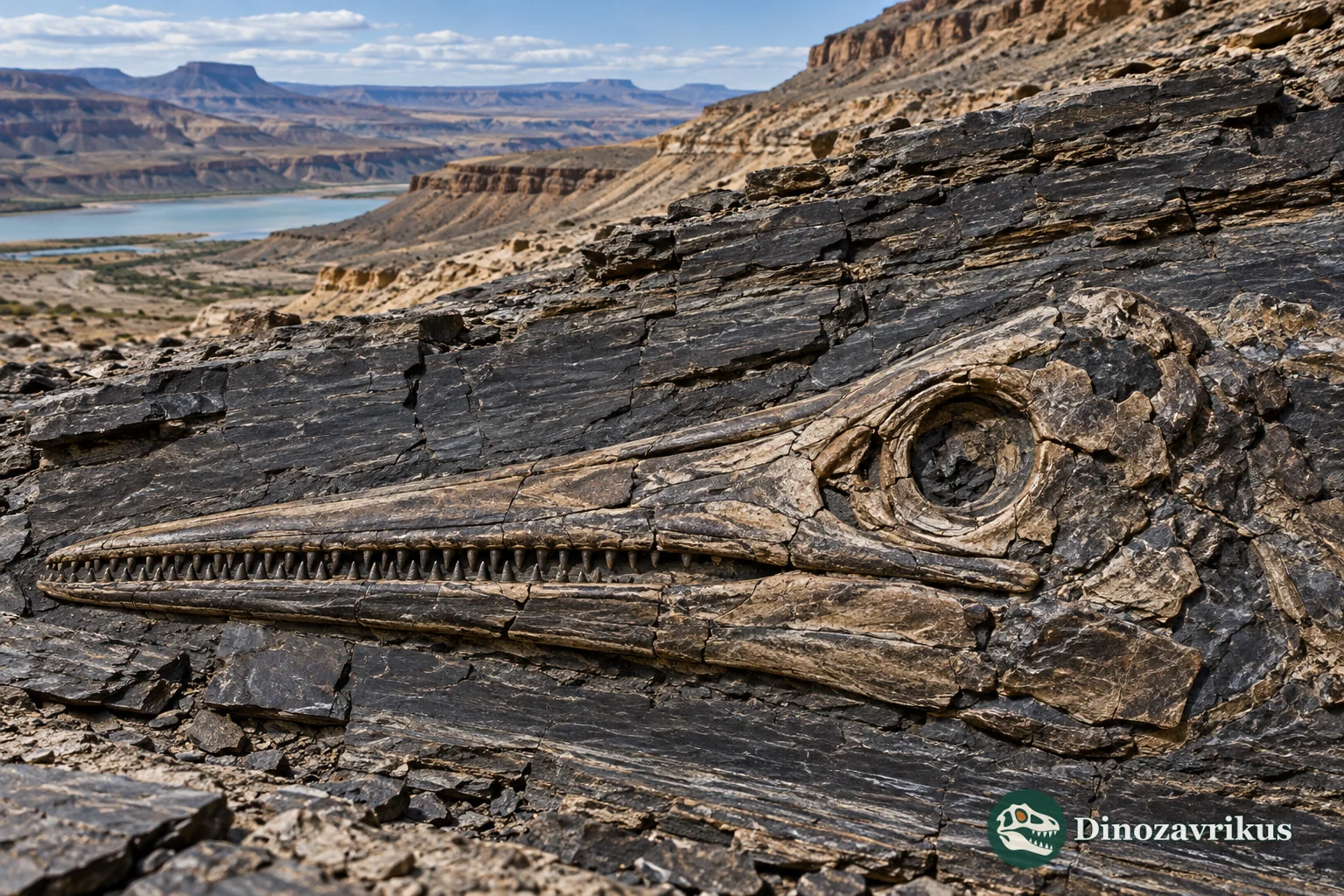
Fernández described two nearly complete but laterally flattened skulls in 2007. MOZ 6067 comes from late Tithonian beds, whereas MOZ 6139 comes from Berriasian beds, both within the Vaca Muerta Formation. The finds therefore span different localities and horizons across the Jurassic–Cretaceous boundary.
MOZ 6139 has a skull length of 1,515 mm. This is not a measured whole-body length. The skull has a deep robust rostrum, a moderately large orbit and a broad region behind the eye. The ventral rostral edges were not fully prepared, so the author could not directly inspect all details of their teeth.
Relationship and inference limits
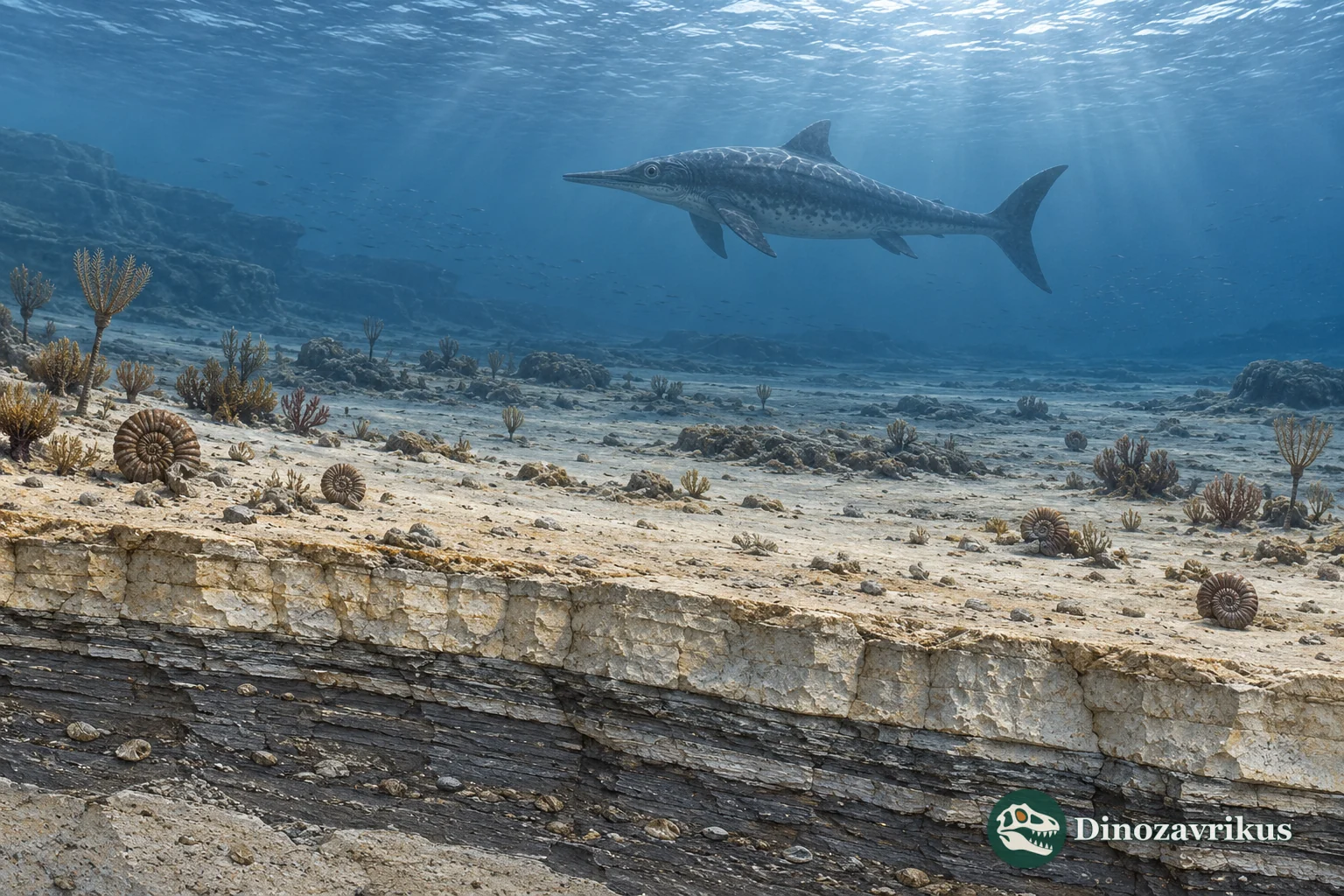
The 2007 reassessment placed Caypullisaurus within Ophthalmosauridae. Comparisons with Ophthalmosaurus, Baptanodon and Aegirosaurus distinguish skull proportions and limbs within the group; similar aquatic lives do not make them one species.
The fossils show this ichthyosaur lived in the Neuquén Basin sea. Exact colors, prey choice and swimming speed are not directly preserved. Illustrated flipper and tail contours include comparison with other ichthyosaurs.
Frequently asked questions
When did Caypullisaurus live?
Its type specimen is Early Tithonian, Late Jurassic. A referred Berriasian skull is from the earliest Cretaceous.
What does the 1,515 mm measurement mean?
It is the length of skull MOZ 6139, not the total length of the animal.
Where was its type skeleton found?
MACN-N-32 came from Early Tithonian Vaca Muerta marine strata at Cerro Lotena, Argentina.
Do the newer skulls show all of the teeth?
No. Their lower rostral margins were not fully prepared when described, limiting direct observation of dental details.