

Dadagavialis gunai was a long-snouted gavialoid from early Miocene Panama. Its type preserves parts of the snout, braincase and skull roof. The sockets record a lengthy row of upper teeth, while details of the palate and eye socket help distinguish it from other gavialoids.
Quick facts
| Species | Dadagavialis gunai |
|---|---|
| Group | Gavialoid |
| Age | Early Miocene, about 19 million years ago |
| Locality | Panama Canal, Panama |
| Principal evidence | Partial skull from the Cucaracha Formation |
| Estimated length | About 2.3 m using proportions of the living gharial |
What can the fossils tell us?
The count concerns the surviving maxillae. The complete tooth row contained more sockets.
The expansion is preserved on the underside of the skull. It helps identify the species, while its function is unclear.
The lower jaw from the other side of the canal is comparable in size and age. It cannot be fitted directly to the type skull, leaving the referral open.
Two fossils from the Panama Canal
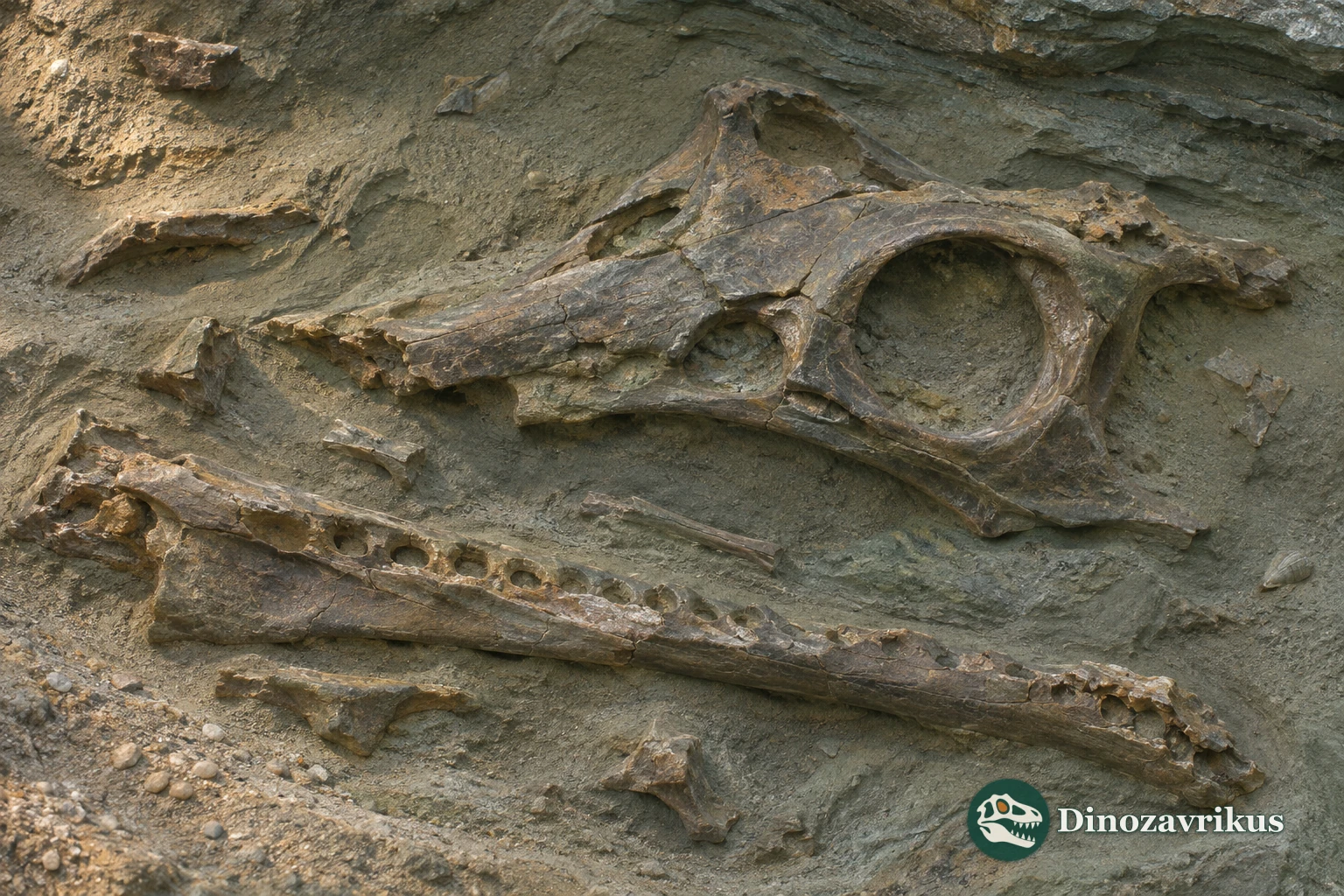
Rodolfo Salas-Gismondi and colleagues described Dadagavialis in a paper first published online in 2018. The type skull, UF 312850, was found on the eastern side of the canal north of the Pedro Miguel Locks, in basal beds of the Cucaracha Formation. It is about 19 million years old. The authors used the Guna word dada, which they glossed as ancient. The species name honours the Guna people.
A lower jaw, UF 280096, came from younger strata near the Centenario Bridge on the western side of the canal. The 19.7 cm fragment preserves part of the joint between the two halves of the jaw and the branches that diverge behind it. Its size and age support a tentative referral to Dadagavialis.
The snout, palate and estimated length
Parts of the maxilla preserve evidence of twenty sockets. They are round and similar in size. Bony collars around the first six visible sockets give that part of the snout a wavy edge. On the underside of the skull an inflated process of the palatine extends into an opening beneath the orbit.
The lower rim of the orbit turns strongly outward. The socket appears broad or nearly circular from above, although displacement during burial obscures its exact outline. The shallow pit in front of the supratemporal opening in Aktiogavialis is absent in the Panamanian skull.
The describing authors applied a regression based on the living Indian gharial and estimated just under 2.3 m in total length. The estimate comes from skull proportions. Body bones that could test that figure are unknown.
From coastal wetlands to river deposits
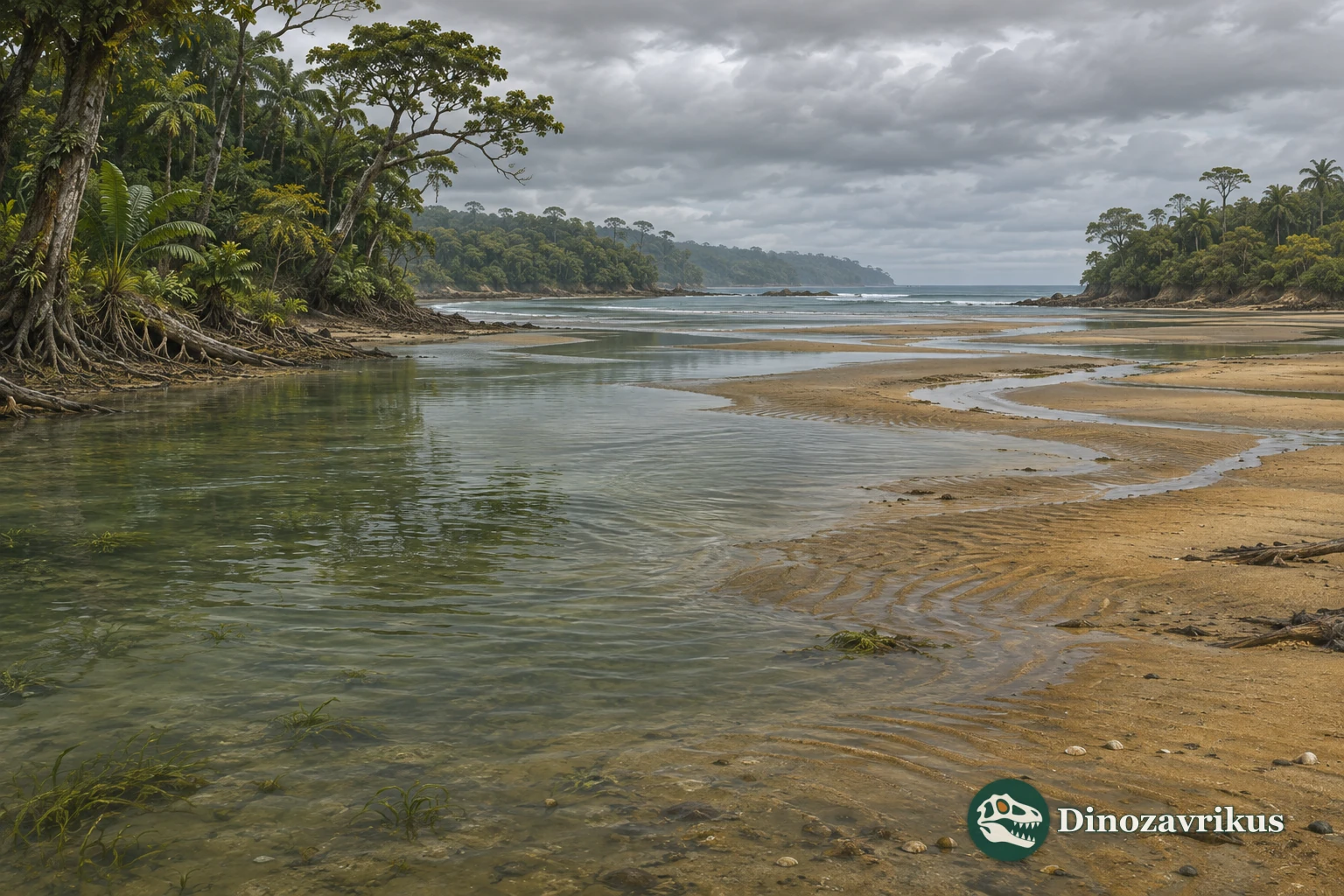
The lower Cucaracha Formation includes delta and coastal wetland sediments. River channels and floodplains dominate farther up the sequence. The lower jaw came from a conglomerate associated with a river channel in the upper beds. These settings support an association with coastal lowlands, while the animal’s tolerance of salt water remains uncertain.
The narrow jaws and row of similarly sized sockets would have been suited to grasping small prey. Fish are plausible candidates. Direct evidence of meals is unavailable.
Frequently asked questions
When did Dadagavialis live?
The type skull comes from early Miocene deposits about 19 million years old.
How large was Dadagavialis?
A regression based on the living Indian gharial gave about 2.3 m in total length. The estimate is based on the skull.
Is the full tooth count known?
The fossil shows twenty upper tooth sockets on preserved parts of the jaw. The original row was longer.
What does the species name mean?
The epithet gunai honours the Guna people. Their language also supplied the first part of the genus name.