

Dallasiella was a Cretaceous lamniform shark known from isolated teeth. The Texas material was initially compared with sand tiger sharks. Younger Swedish fossils revealed a second species with unusually short anterior teeth.
Quick facts
| Order | Lamniformes |
|---|---|
| Type species | Dallasiella willistoni |
| Fossils | Isolated teeth |
| Texas records | Turonian and Coniacian |
| Swedish records | Early Campanian |
| Family | Placement debated |
What can the fossils tell us?
Two listed museum lots contain 620 and 3 teeth. The number of individuals remains unknown.
The identification also uses the small side cusps and the outline of teeth from farther back in the jaws.
A weak or absent groove is one reason this character alone cannot establish a family.
Naming the Texas material
Henri Cappetta and Gerard Case established Dallasiella willistoni in 1999. Similar teeth from Turonian and Coniacian deposits had previously been compared with sand tiger sharks. In 2011 Shawn Hamm and David Cicimurri studied material from the basal Atco Formation of Texas, listing 620 teeth in lot SMU 63138–63147 and three in SMU 76518.
A groove on the inner face of the root had been used to support a sand tiger affinity. However, some other lamniforms show variation in that character. Hamm and Cicimurri left the family open. In Acrolamna from Akkermanovka, for comparison, researchers described a single opening without a groove on the inner root.
Short front teeth from Sweden
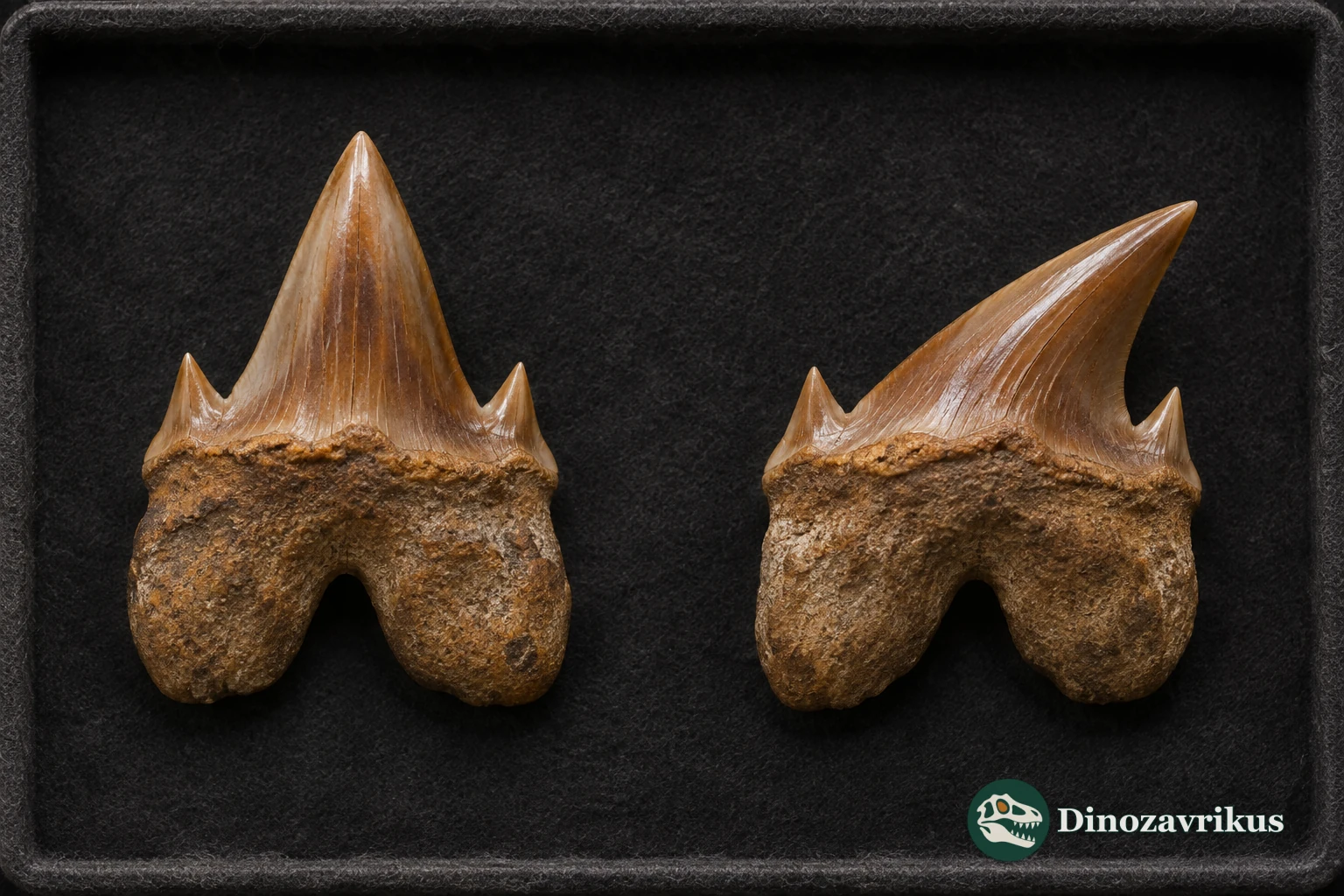
Mikael Siversson, Peter Cederström and Helen Ryan described Dallasiella brachyodon from Early Campanian deposits in Sweden in 2022. Its holotype is NRM-PZ P17064. The front teeth are small and stocky, with a broad triangular cusp. A pair of small, sharp cusplets flanks the main cusp. Where a second pair occurs, it is much smaller.
Upper teeth farther back have a distinctly inclined cusp. Their lower counterparts are more upright. The rearmost teeth can be comparable in width to front teeth. Positions were inferred from shape because a complete jaw is unavailable.
Comparing the two records
The combination of cusplet shape, the outline of rear teeth and a variably developed shallow root groove supported placement of the Swedish species in Dallasiella. The North American and Swedish records document the genus in different Late Cretaceous basins. Neither sample measures the body of the shark or demonstrates a continuous geographic range.
Frequently asked questions
Which species was named first?
Dallasiella willistoni was named in 1999 from Cretaceous material from Texas.
How old is the Swedish material?
It comes from the Early Campanian.
What distinguishes the Swedish front teeth?
They are stocky, with a broad central cusp and small, sharp side cusps.
Does a root groove establish the family?
The feature varies, so it must be considered alongside other dental characters.