

Dearcmhara shawcrossi is an ichthyosaur from the Isle of Skye represented by the distal part of a humerus and three vertebrae. Those bones preserve a distinctive combination of features, but not a skull or complete skeleton. Body size, exact proportions and behaviour therefore cannot be described as if an entire animal had been found.
Quick facts
| Type species | Dearcmhara shawcrossi |
|---|---|
| Age | Late Toarcian to Bajocian; the specimen’s exact stage is unknown |
| Locality | Bearreraig Bay, Isle of Skye, Scotland |
| Holotype | GLAHM 152378/1–4: distal humerus and three vertebrae |
| Discoverer | Brian Shawcross, fossil collector |
| Body length | Unknown; only four bones are known |
Evidence guide
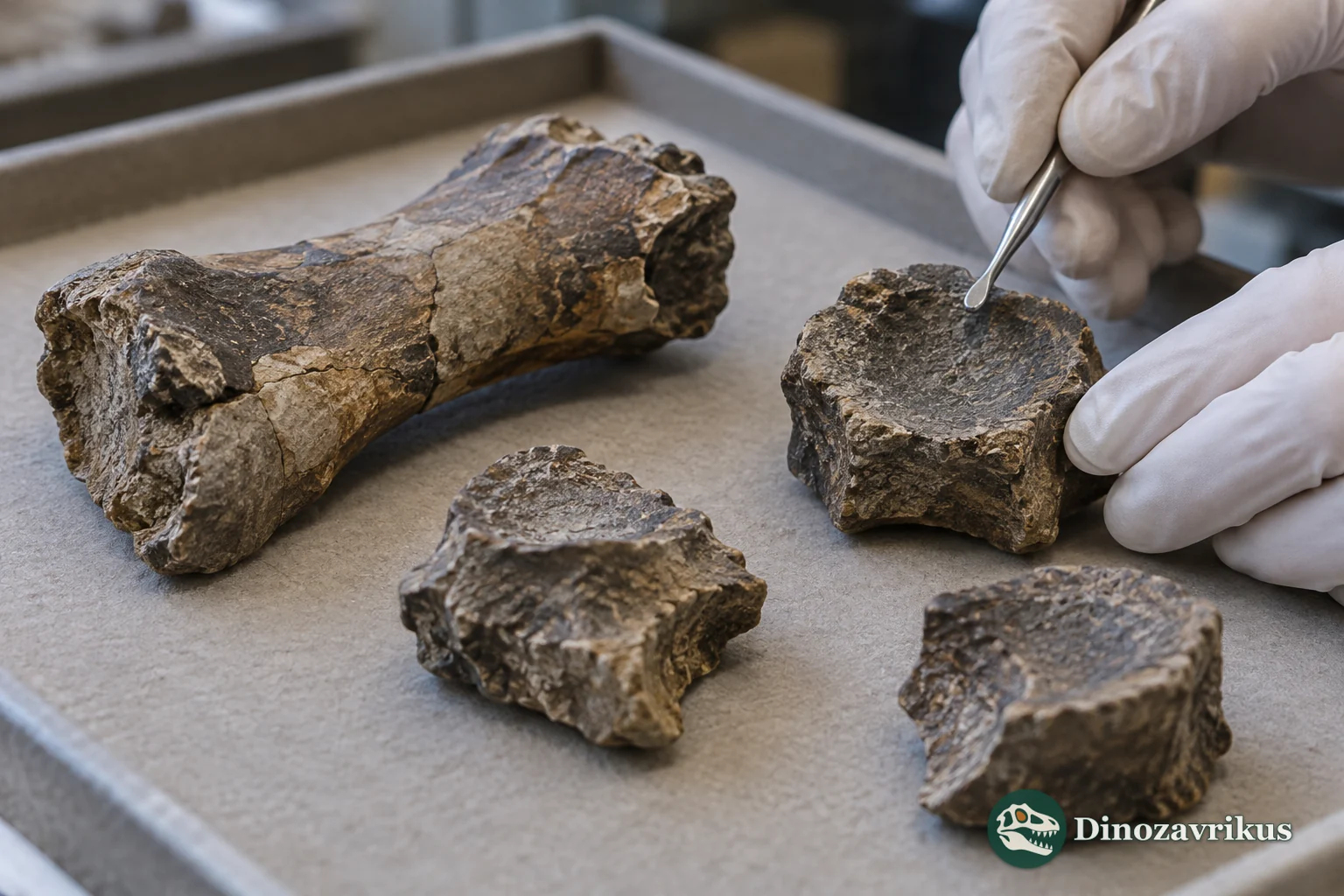
The distal humerus has a deep concavity on its leading edge and a large triangular supraulnar process. The 2015 authors used this combination to diagnose a new genus and species.
Three vertebrae were catalogued with the humerus as parts of the holotype. The authors described them as associated; if later work separates them taxonomically, the humerus remains the name-bearing element.
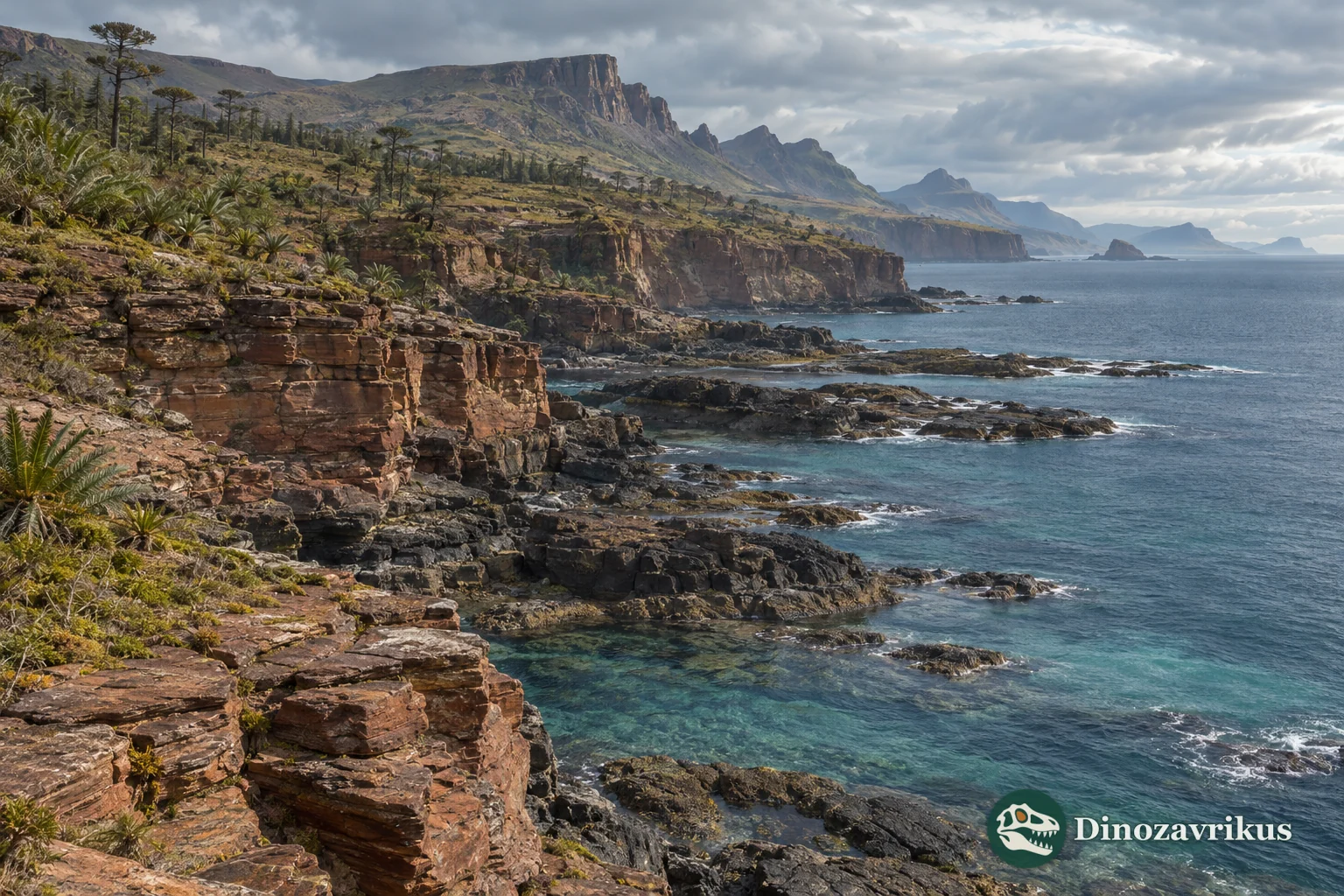
The bones were found out of their original bed but close together after coastal movement. They were referred to the Bearreraig Formation, which spans the late Toarcian to the late Early Bajocian. The specimen’s exact stratigraphic position is unknown.
A forefin element and three vertebrae do not preserve the head or whole skeleton. They cannot establish body length, exact body shape, diet or swimming style; a complete animal in an illustration is a reconstruction.
A collector’s find became a named species
Brian Shawcross found the fossils around 1959 near Bearreraig Bay on Skye’s eastern coast and later donated them to a museum collection. They were discovered out of their original bed, but in association with one another. The genus name combines Scottish Gaelic words for “sea lizard”; the species honours Shawcross.
The holotype is GLAHM 152378: a distal humerus numbered /1 and three vertebrae numbered /2–4, held by The Hunterian in Glasgow. The describing authors treated the elements as associated. They also stated that, if future work shows they belong to different taxa, the humerus alone would remain the name-bearing type.
Bearreraig Formation and uncertain age
The find was referred to the Bearreraig Formation, but the fossils were ex situ and could have moved along the shore. Their precise point in the geological section is unknown. The formation spans from the late Toarcian into the late Early Bajocian, a broad interval crossing the Early–Middle Jurassic boundary.
That range describes the geological context, not an exact date for this specimen. The distinction matters because a coastal collection can recover a fossil away from the bed where it was first buried. The locality and formation are informative, while a precise horizon cannot be assigned from the published association alone.
Anatomy and evolutionary placement
The humerus has a deep concavity in the distal leading-edge facet and a large triangular supraulnar process. The 2015 description treated these as distinctive features supporting a basal neoichthyosaurian outside Ophthalmosauridae. The identification comes from a comparative anatomical analysis of a fragmentary specimen, not a complete skeleton.
The authors considered Dearcmhara important because it comes from a poorly sampled interval in the ichthyosaur record. It adds evidence to comparisons around the Early–Middle Jurassic boundary, but it does not establish that Dearcmhara was a direct ancestor of later genera such as Stenopterygius or Chacaicosaurus.
What four bones can and cannot tell us
No reliable total length or mass has been established. Without the skull, trunk and tail, scaling the preserved bones against another ichthyosaur would require assumptions about unknown proportions. The image of a swimming animal is a general artistic reconstruction for the period, not a portrait measured from this holotype.
The humerus also bears tooth marks. The authors interpreted them as evidence of predation or scavenging. The absence of healing does not reveal whether the bites occurred shortly before death or after it, and the marks do not identify the animal that made them.
Frequently asked questions
How many bones are known for Dearcmhara?
The holotype comprises four elements: the distal part of one humerus and three vertebrae. No complete skeleton is known.
Where was Dearcmhara found?
Brian Shawcross found the bones near Bearreraig Bay on the Isle of Skye. They were ex situ, so their exact position in the geological section is unknown.
How old was Dearcmhara?
The material was referred to the Bearreraig Formation, whose relevant interval spans the late Toarcian to the late Early Bajocian. The exact stage of the specimen is not known.
How long was Dearcmhara?
Its length is unknown. Four bones do not preserve the body proportions needed for a reliable total-length estimate.