

Dege was a penguin from the Early Pliocene of southwestern Africa. Its name rests on a leg bone from Langebaanweg, a site that preserves several penguins of different sizes. Isolated bones help distinguish them, although animals of similar size have sometimes been confused.
Quick facts
| Age | Early Pliocene |
|---|---|
| Group | Penguins |
| Type locality | Langebaanweg, South Africa |
| Holotype | Left tarsometatarsus SAM PQ-L 28455 |
| Other material | Isolated wing and leg bones |
What can the fossils tell us?
The holotype preserves the bone between the lower leg and toes, allowing comparison with other fossil penguins at Langebaanweg.
Fragments from other sites were assigned largely on size. The most diagnostic material is from Langebaanweg.
The first phylogenetic analysis included Dege. The authors excluded it and another one-bone type from the final tree after the initial analysis returned very poorly resolved relationships.
The bone that named Dege
George Gaylord Simpson established Dege hendeyi in 1979. The holotype, SAM PQ-L 28455, is a left tarsometatarsus, the bone immediately above the toes. A later publication illustrated a left humerus, SAM PQ-L 55005, assigned to the species. It is a separate specimen, so the two bones do not provide measured proportions of one individual.
In Storrs Olson’s comparisons, Dege fell between the larger Nucleornis and the penguin tentatively known as Palaeospheniscus huxleyorum in size. Size was the main reason several fragments from Duinefontein and Ysterplaat were attributed to Dege. The most diagnostic fossils come from the type locality.
Penguins at Langebaanweg
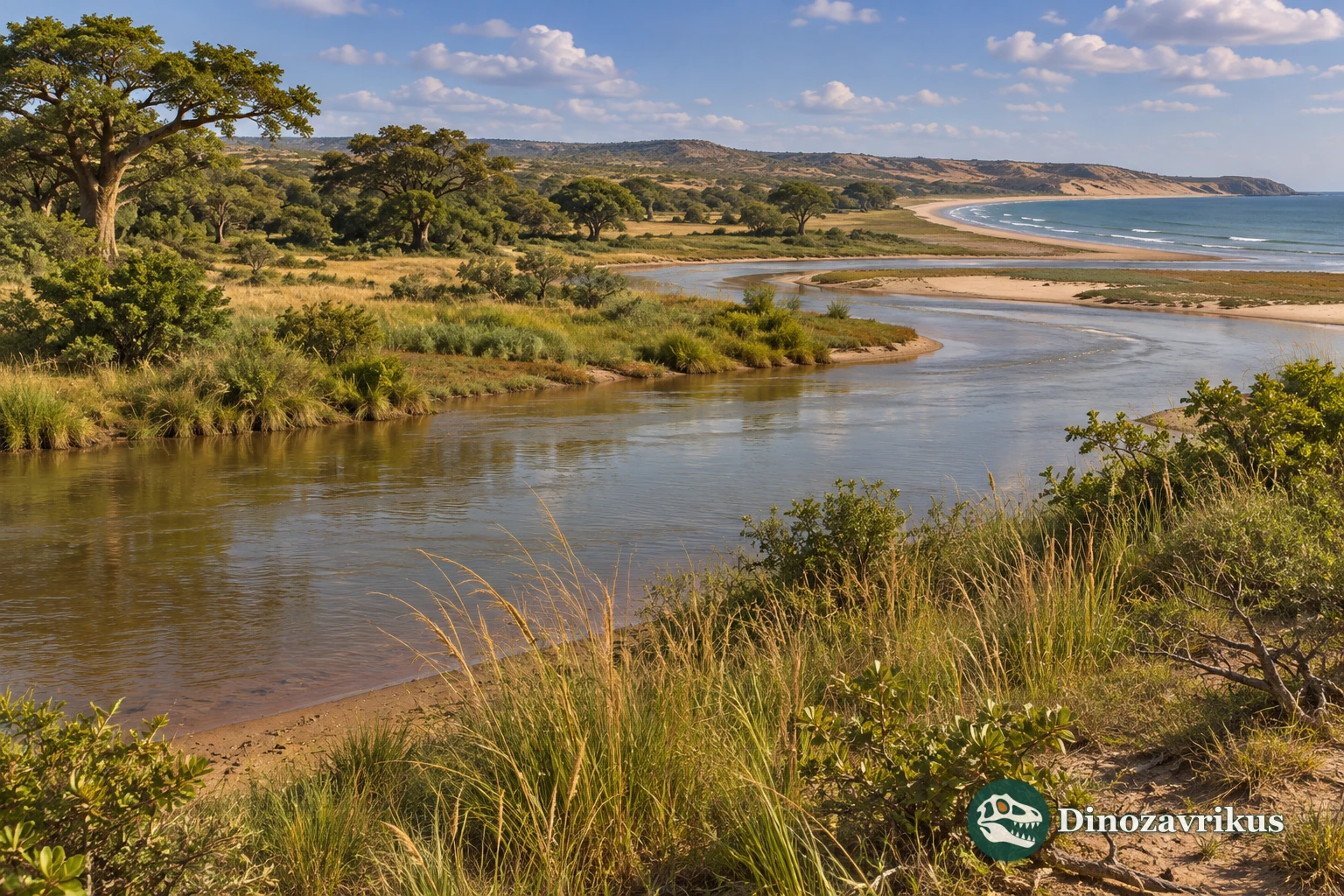
The Early Pliocene Varswater Formation also yielded Inguza and Nucleornis. Researchers used the sediments and the remains of aquatic animals to reconstruct low-lying terrain with a slow river, pools and marshes. Marine birds indicate a nearby coast. The burial setting does not tell us where this penguin fed or bred.
These southern African fossils are much younger than the Paleocene Crossvallia. Langebaanweg preserves evidence of several penguin lineages in the vicinity of one coast.
Why its exact relationships remain unresolved
A study of penguin dispersal to Africa initially included Dege and another fossil species based on a single bone. Both were removed from the final analysis after their inclusion produced very poorly resolved relationships. The finding that penguins colonised Africa more than once rests on better-known taxa. It does not establish a direct relationship between Dege and the living African penguin.
Frequently asked questions
When did Dege live?
Its Langebaanweg fossils come from Early Pliocene deposits of the Varswater Formation.
Which bone is the holotype?
The left tarsometatarsus SAM PQ-L 28455 from Langebaanweg.
Is a complete skeleton known?
The type is an isolated foot bone. Other bones assigned to the species are also separate finds.
Do the bones reveal what it ate?
No direct dietary evidence has been reported. The known wing and foot bones do not identify its prey.