

Dellea was a Late Cambrian trilobite from North America. The genus was established from Texan material. Detached shields preserve the features used to distinguish it from similar trilobites.
Quick facts
| Group | Dokimocephalid trilobites |
|---|---|
| Age | Late Cambrian, Furongian |
| Genus named by | James Lee Wilson, 1949 |
| Type locality | Morgan Creek Member, Texas |
| Type specimen | USNM PAL 185702 |
| Other records | Abrigo Formation, Arizona |
What can the fossils tell us?
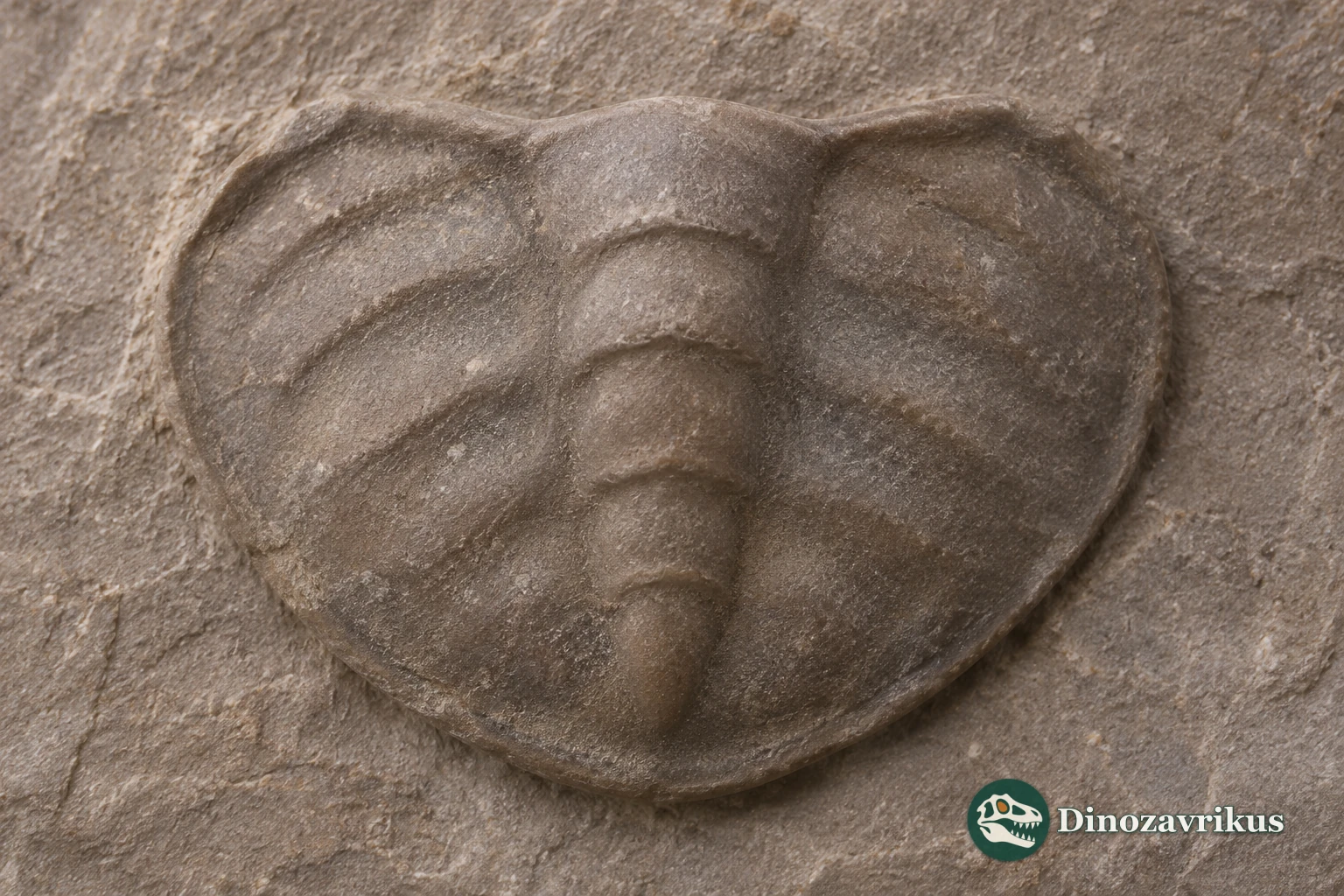
Cranidium USNM PAL 185702 is the type of Dellea wilbernsensis, a species Wilson later synonymised with Dellea suada.
Tail shields assigned to Dellea suada display four axial segments. Those of Bartonaspis have three.
Four cranidia from the Abrigo Formation were assigned to Dellea suada. They occur in the Elvinia Biozone.
The Texas holotype and two species names
In 1949 James Lee Wilson established the genus and designated Dellea wilbernsensis as its type species. Holotype USNM PAL 185702 comes from the Morgan Creek Member of the Wilberns Formation, Llano County. It is a cranidium, preserving the central head shield and areas to either side for comparison with other specimens.
In 1951 Wilson synonymised the Texan species with Ptychoparia suada, which Walcott had named in 1890. This gives priority to the older species name, which subsequent studies combine with Dellea as Dellea suada.
Sculpture and the edge of the tail
Dellea and the related Bartonaspis have similar central head outlines and eye-lobe positions. Where the external surface is preserved, Dellea may be smooth or finely granular, while Bartonaspis has pitted sculpture.
The tail shields Wilson assigned to Dellea suada have four axial segments and a narrow, concave border. Bartonaspis has three axial segments. The count offers a further way to discriminate between them when the head is too incomplete for comparison.
Arizona specimens in marine beds
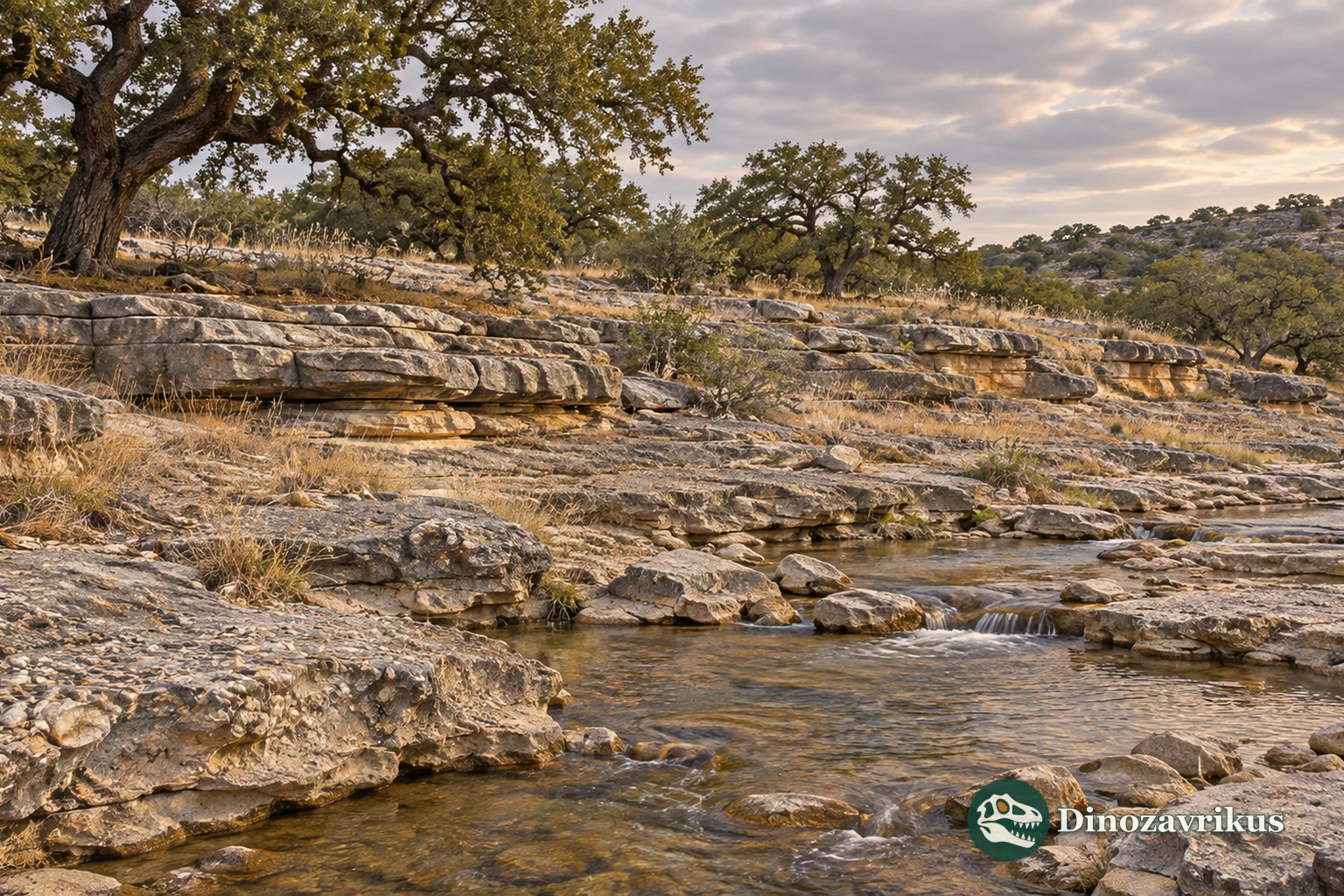
Four cranidia assigned to Dellea suada were described from the Abrigo Formation of Arizona. They occur in the Elvinia Biozone, a Late Cambrian interval also recognised with the help of other trilobites, including Cliffia. Geologists use the whole fossil assemblage to refine correlations because an individual genus or species may range through more than one part of a section.
Frequently asked questions
Where was the holotype of Dellea wilbernsensis found?
In the Morgan Creek Member of the Wilberns Formation in Llano County, Texas. The Smithsonian holds it as USNM PAL 185702.
Why is the name Dellea suada used?
Wilson concluded that Dellea wilbernsensis and a species named earlier by Walcott belonged to a single species. The older name has priority under that interpretation.
How many axial segments does the Dellea tail shield have?
Four on the tail shields Wilson assigned to Dellea suada. The related Bartonaspis has three.
Which parts of Dellea are known from the Abrigo Formation?
Four cranidia, the central portions of head shields. They come from the Elvinia Biozone.