

Derwentia warreni was a temnospondyl from Tasmania’s Early Triassic Knocklofty Formation. The genus was named for a broad, rounded skull. A separate palatal fragment adds evidence about the bones at the front of the head.
Quick facts
| Group | Temnospondyls, rhytidosteids (Rhytidosteidae) |
|---|---|
| Age | Early Triassic |
| Region | Australia (Tasmania) |
| Type species | Derwentia warreni |
| Scientific name | Derwentia |
| Diet | Exact prey is unknown |
What can the fossils tell us?
UTGD 87784 is a nearly complete skull. The paratype UTGD 87783 preserves an anterior section of the palate, including parts of both vomers.
Comparisons used skull shape, the palate and the absence of a separate lacrimal. A 2011 analysis grouped Derwentia with rhytidosteids.
The skull material leaves body proportions and the exact diet unresolved.
A fossil from Old Beach
John Cosgriff named Derwentia warreni in 1974 from material at Old Beach, on the eastern bank of the Derwent River north of Hobart. The site is part of the Knocklofty Formation. Its fauna has been correlated with Induan to early Olenekian assemblages. Alongside the type skull, UTGD 87783 preserves part of the front of the palate. The published material tells us little about the skeleton behind the skull.
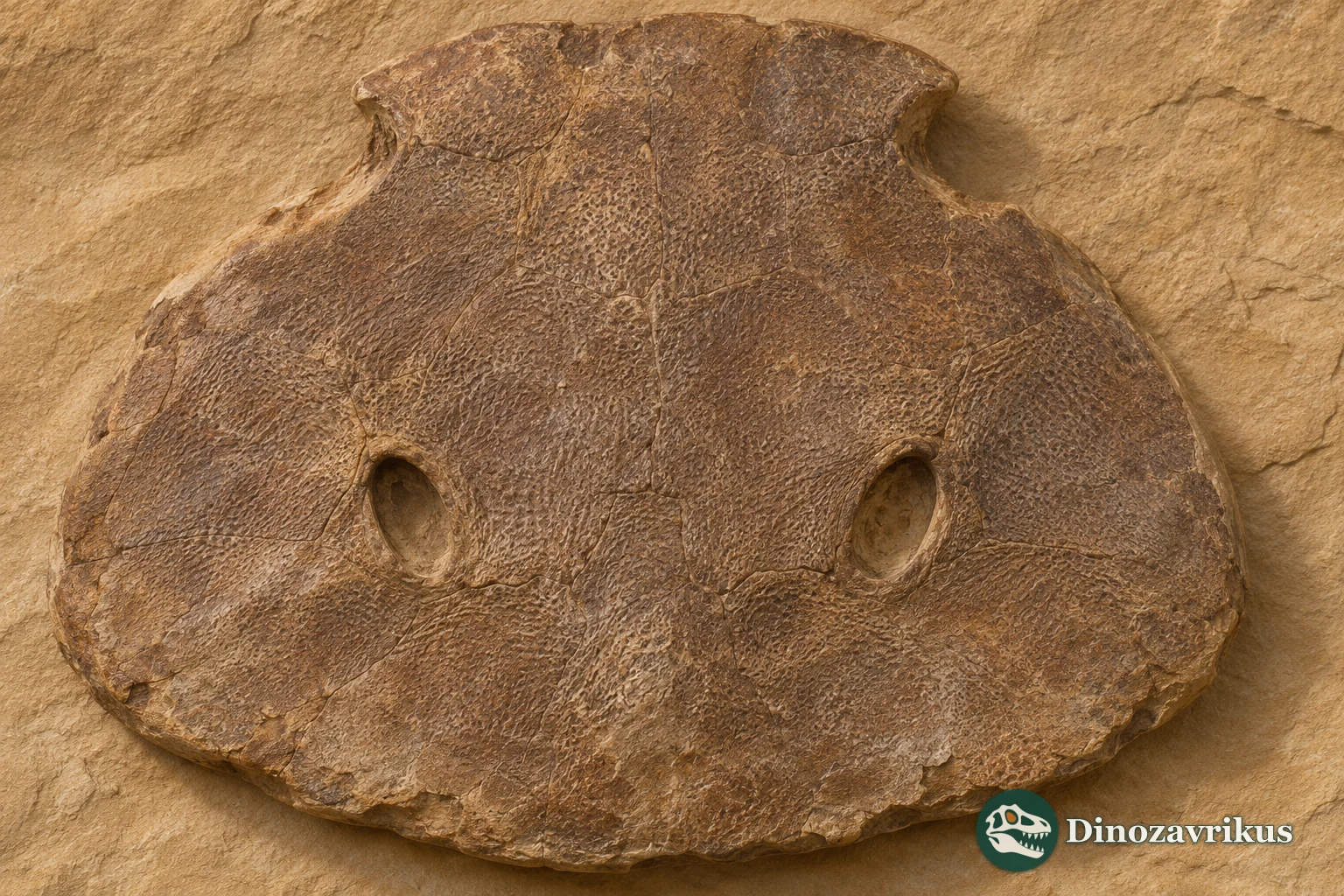
The surface of the skull
The skull is broad with rounded sides. The roofing bones bear very fine net-like sculpture. The descriptions also record the absence of a separate lacrimal at the front of the eye socket. These areas can be compared with other Early Triassic temnospondyls, such as Mahavisaurus. Anatomical comparisons use characters from several bones because individual traits can evolve independently.
Changing views of its family
Cosgriff originally placed Derwentia among the rhytidosteids. Later works referred it to Indobrachyopidae or Derwentiidae. Sérgio Dias-da-Silva and Claudia Marsicano examined the material for their 2011 analysis and recovered the genus within Rhytidosteidae. The 2023 Australian checklist follows that placement.
Frequently asked questions
What is the holotype?
UTGD 87784, a nearly complete skull from Old Beach, Tasmania.
When did Derwentia live?
During the Early Triassic. The Knocklofty Formation is correlated with Induan to early Olenekian beds.
What does the paratype preserve?
UTGD 87783 preserves an anterior part of the palate and portions of the two vomers.
How long was the whole animal?
The published fossils are from the skull, so they give too little evidence for a reliable estimate of total body length.