

Desmatochelys is a genus of Cretaceous marine turtles with large front paddles. The type species comes from Nebraska. An older Colombian species is known from skulls and shells, including a specimen that preserved dozens of eggs within its body cavity.
Quick facts
| Group | Turtles, protostegids (Protostegidae) |
|---|---|
| Age | Early and Late Cretaceous |
| Region | North America (United States), South America (Colombia) |
| Type species | Desmatochelys lowii |
| Type species holotype | KUVP 1200, skull and parts of the skeleton |
| Carapace length | Estimated at about 2 m for the Colombian holotype |
| Scientific name | Desmatochelys |
| Diet | Exact diet unknown |
What can the fossils tell us?
CT data from KUVP 1200 showed that the supposed pineal opening was damage to the bone.
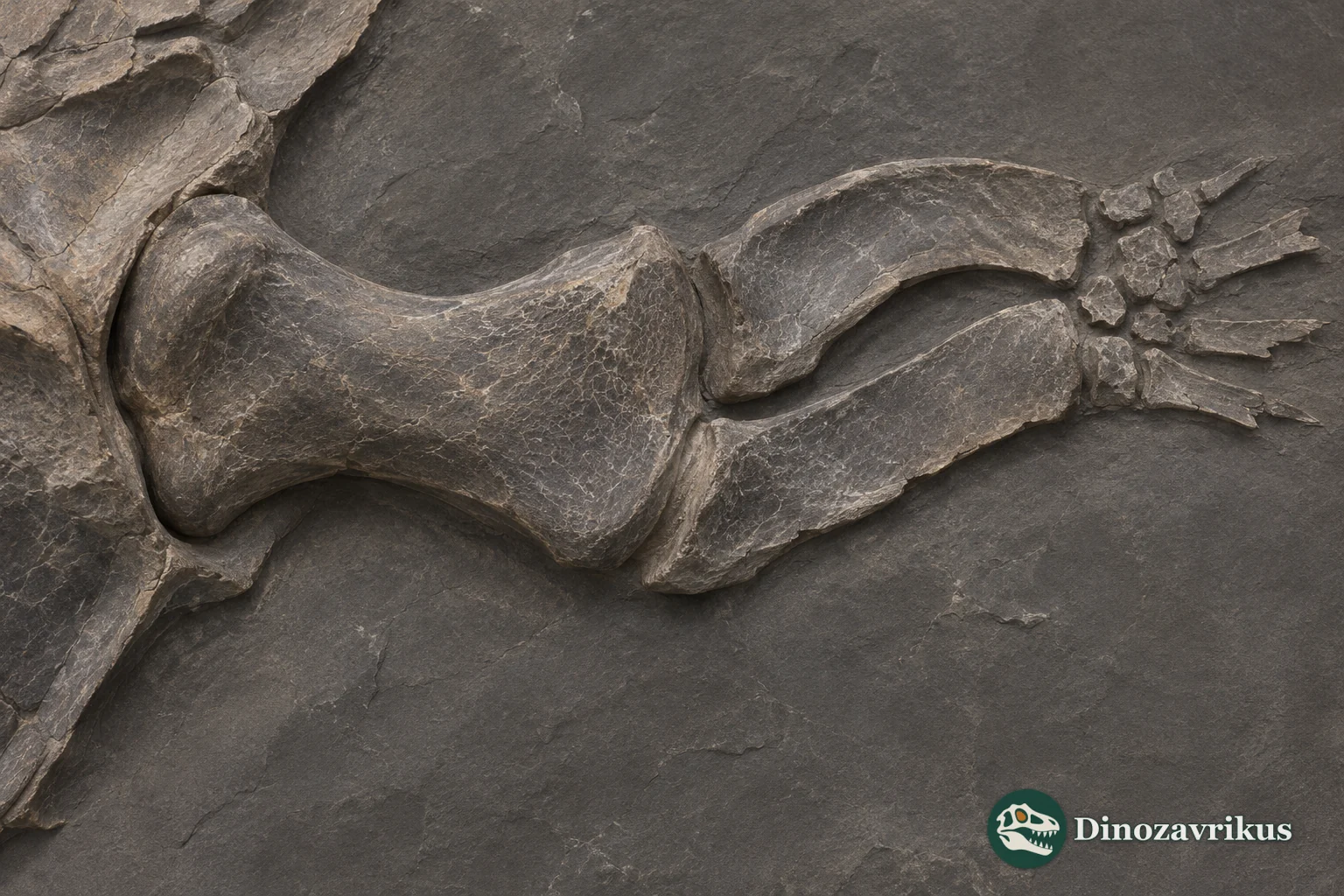
FCG–CBP 01 preserves the shoulder region and front limbs as far as parts of the hands. Most phalanges are missing.
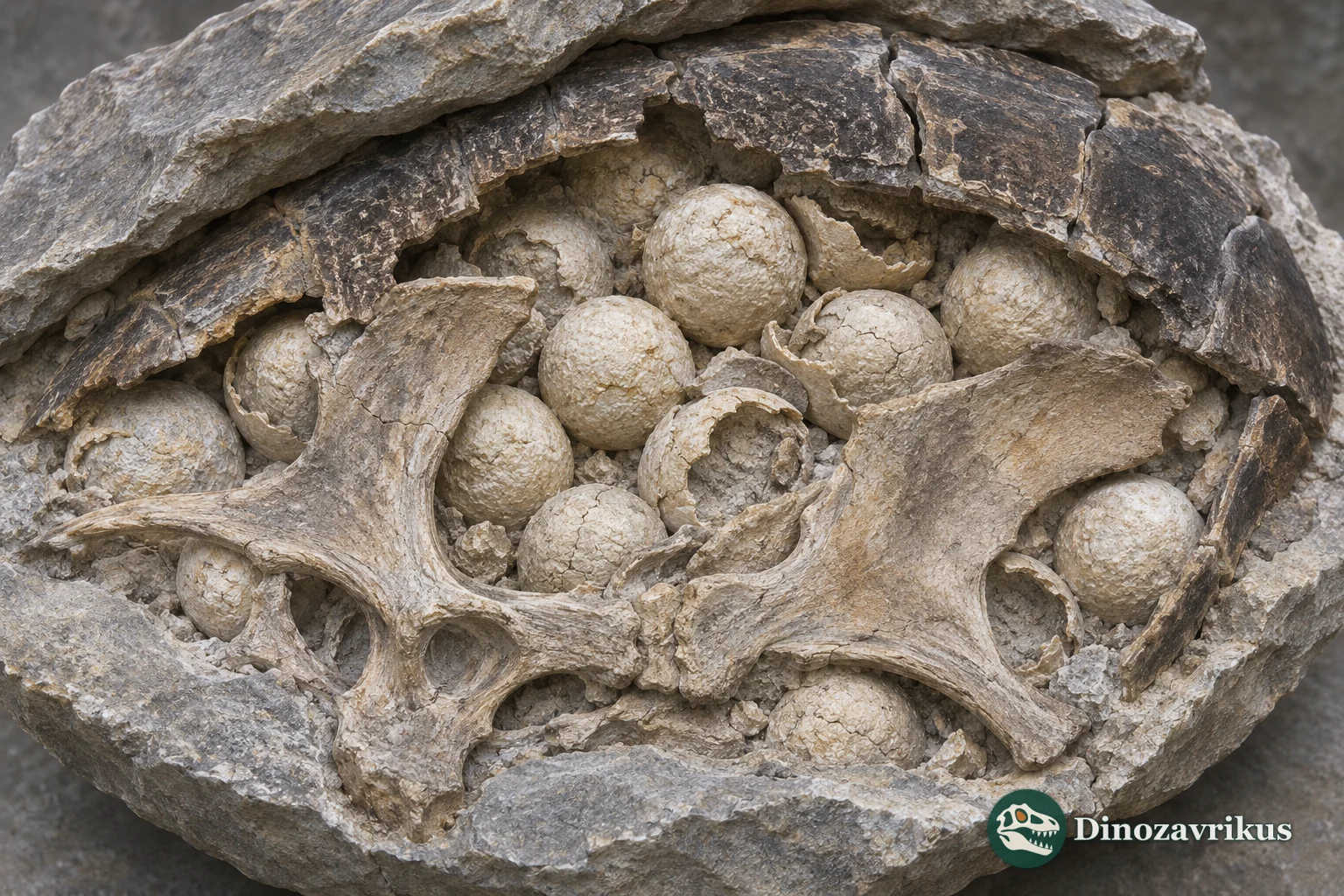
At least 48 eggs were detected inside FCG-CBP-75. Their mineral structure points to rigid shells, while the actual nesting site remains unknown.
The skull that named a genus
Samuel Wendell Williston received an unusual skull in 1893 from near Fairbury, Nebraska. A railroad employee named Schrantz found it, and M. A. Low passed it to Williston. In 1894 he named Desmatochelys lowii for Low. The type specimen KUVP 1200 includes additional remains of the limbs, vertebral column and shell from the Late Cretaceous.
I. Raselli used computed tomography to re-examine the skull in 2018. The scans exposed internal features and showed that an apparent opening in the skull roof was caused by damage. The anatomical work also tested alternative positions for protostegids relative to other marine turtles.
A large older species from Colombia
Edwin Cadena and James Parham named D. padillai in 2015 from fossils in the Paja Formation near Villa de Leyva. The deposits date to the upper Barremian or lower Aptian, about 120 million years ago. The type specimen, FCG–CBP 01, includes a skull, jaws, neck vertebrae, both forelimbs and much of the shell. Several other skulls represent individuals of different sizes.
The preserved carapace is 1.66 metres long. The researchers estimated an intact length of about two metres. Bones of the front limbs are modified into paddles. The later Protostega provides another example of this marine adaptation.
When the Colombian species was described, it was the oldest well-supported example of a fully marine turtle. More ancient Valanginian beds in Colombia have since yielded shell and limb bones of large protostegids. Those remains have yet to receive a secure genus assignment.
Rigid shells in an egg-bearing fossil
The separate specimen FCG-CBP-75 preserved at least 48 spherical eggs inside the visceral cavity. They measure about 32 to 43 millimetres across. Computed tomography helped resolve their positions, while microscopy showed a mineral layer about 0.8 millimetres thick.
The structure points to rigid eggshells. Living sea turtles lay eggs with flexible shells, so the fossil records a different strategy within the wider marine turtle lineage. The discovery records the eggs before laying and leaves the character of the nesting ground open.
Frequently asked questions
Where was the type species found?
Desmatochelys lowii came from Late Cretaceous deposits near Fairbury, Nebraska. The Colombian material represents a different species.
How large was the Colombian holotype?
Its carapace preserves 1.66 metres of length, with the full carapace estimated at about two metres.
How many eggs were preserved?
At least 48 were detected within the body cavity of FCG-CBP-75. Their shells were rigid.
Are there older marine turtles?
Older Valanginian deposits in Colombia have yielded large protostegid remains. Their genus-level identity is unresolved.