

Diacoryphe is a proetid trilobite known from rocks around the Devonian–Carboniferous boundary and the Early Carboniferous. Some species had reduced eyes. Individual head and tail shields preserve differences in outline and relief that make comparison possible even when the trunk is missing.
Quick facts
| Group | Proetida |
|---|---|
| Age | Late Devonian to Early Carboniferous |
| Type species | Diacoryphe pfeifferi |
| Genus established | Rudolf and Emma Richter, 1951 |
| Type area | Thuringia, Germany |
| Fossil evidence | Head shields, tail shields and an articulated exoskeleton |
What can the fossils tell us?
A broadly shaped juvenile tail from the Sauerland was tentatively compared with D. pfeifferi. Its front is broken.
The Wuppertal species D. incisa has well-defined axial furrows and a sharp furrow in front of the occipital ring.
Related forms occur on either side of the Devonian–Carboniferous boundary. An isolated shield is compared with well-dated collections.
The type species and a juvenile tail
Rudolf and Emma Richter named the genus in 1951. Its type species, D. pfeifferi, comes from Thuringia. A juvenile tail shield from the Sauerland, WMfN P 17604/2, was compared with young individuals from Pfaffenberg. It shares their broad outline, short axis and fine ribs. A break across the front limited the assignment.
A different damaged tail shield, WMfN P 17569, measured about 5.5 mm long with an axis about 4 mm long. These dimensions apply to the isolated shield. Damage made the width harder to measure.
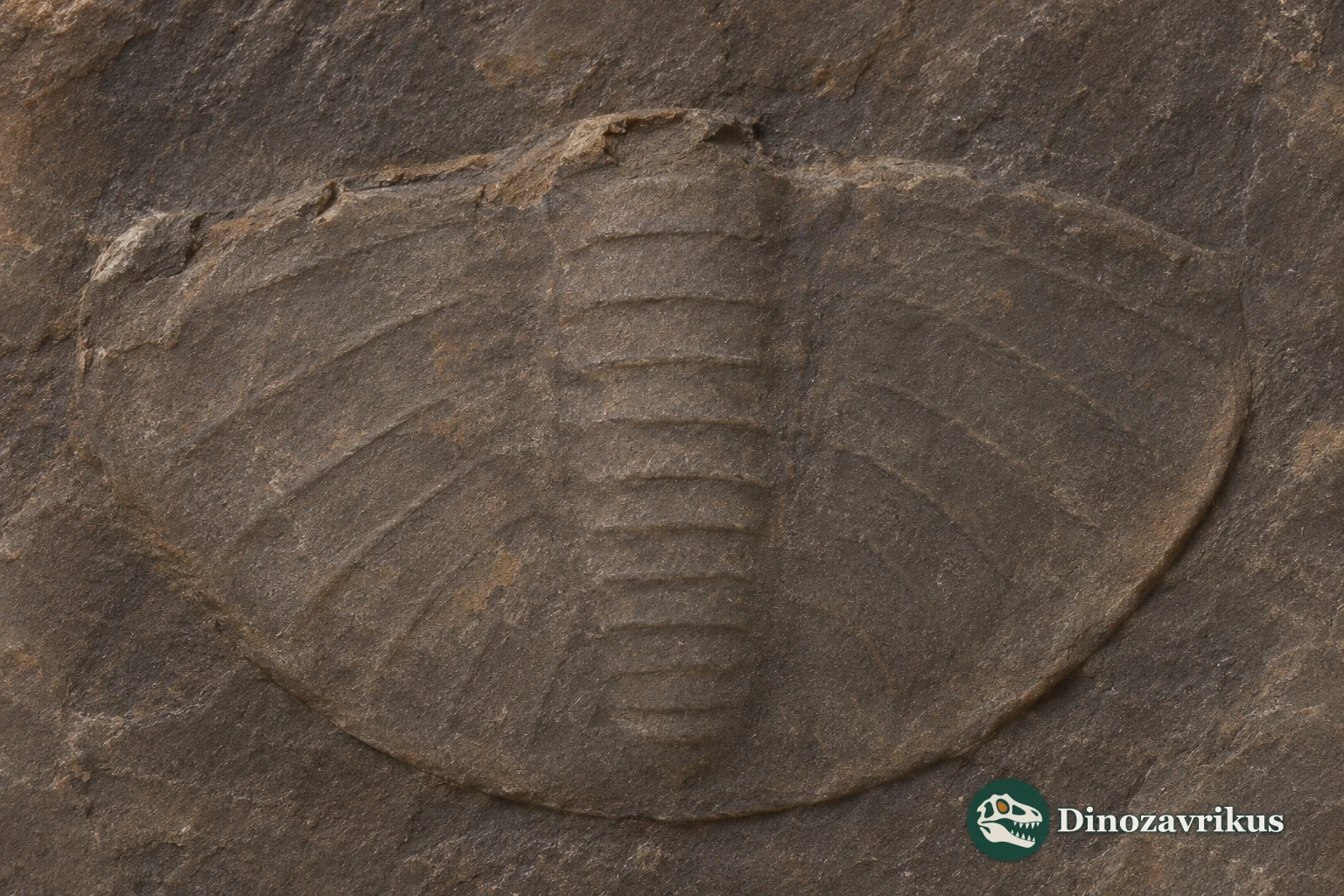
Head features in the Wuppertal material
In D. incisa, from Early Carboniferous shale near Wuppertal, the axial furrows and occipital furrow remain distinct. The holotype is a cranidium, the central portion of the head shield. A separately picked free cheek was designated a paratype. It preserves a broad, tubular genal spine.
Eye development varies among species attributed to Diacoryphe. Weak relief and distortion can obscure the finer distinctions. Eye position and facial sutures are also important when identifying detached head parts of the roughly contemporary Liobole.
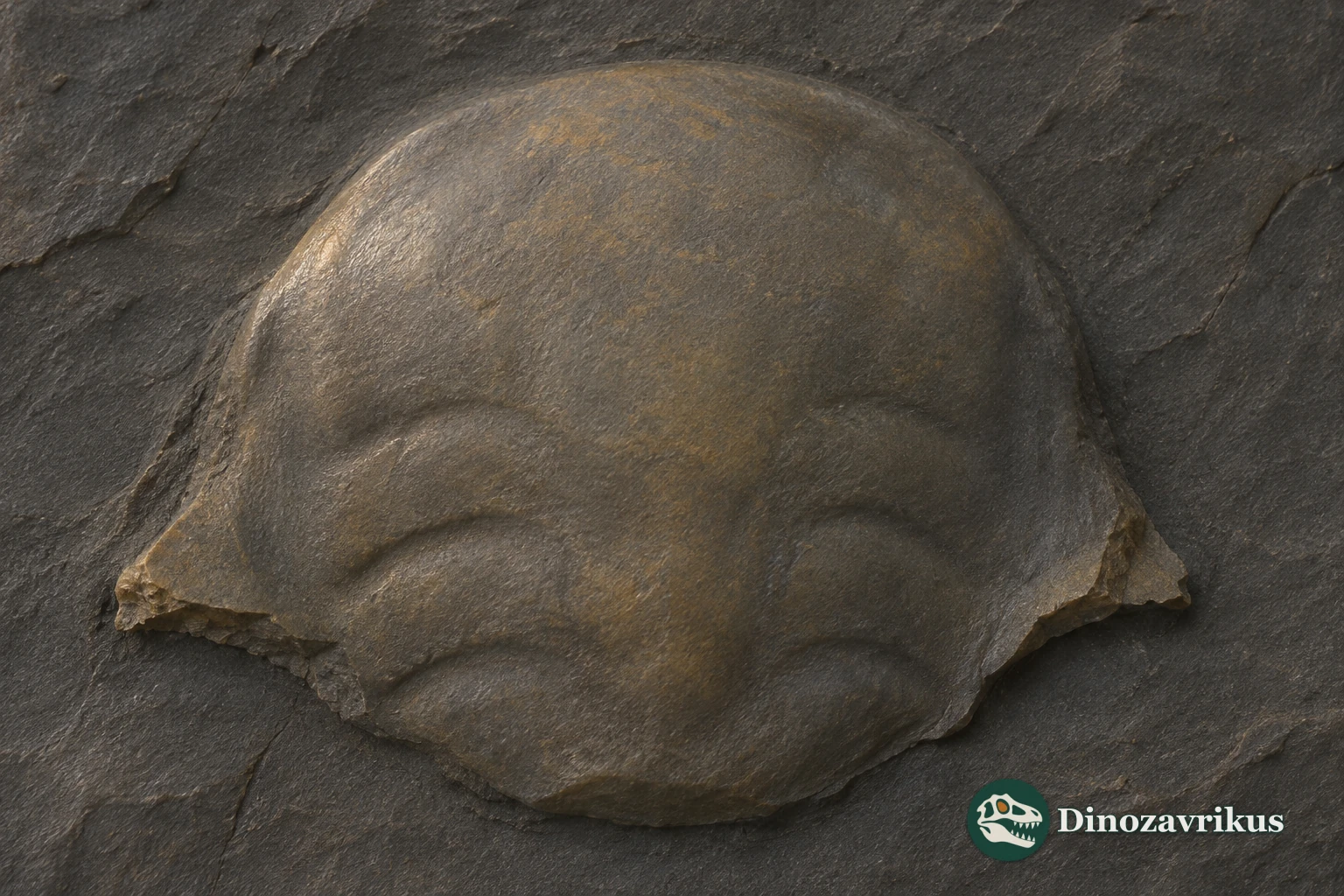
What an articulated shell adds
A complete shell of D. gloriola from Pfaffenberg provided a comparison for detached tails, including one from the Lower Carboniferous of the Sauerland. The species has a short, broad tail with fine ribs that fade before the outer edge. The nearly complete view gives isolated shields a firmer point of reference.
The sediments and associated trilobites suggest a relatively deep marine setting for several members of the genus. An individual shell seldom fixes water depth.
Frequently asked questions
Which species anchors the genus name?
Diacoryphe pfeifferi, named from Thuringian material.
Was every species blind?
Recognition of the group includes small-eyed and blind forms. Eye reduction varied among its species.
What distinguishes D. incisa?
Its cranidium preserves clear axial and occipital furrows. A separately described cheek carries a broad genal spine.
Does 5.5 mm describe a complete animal?
It is the approximate length of an isolated damaged tail shield. It does not establish the full length of that individual.