

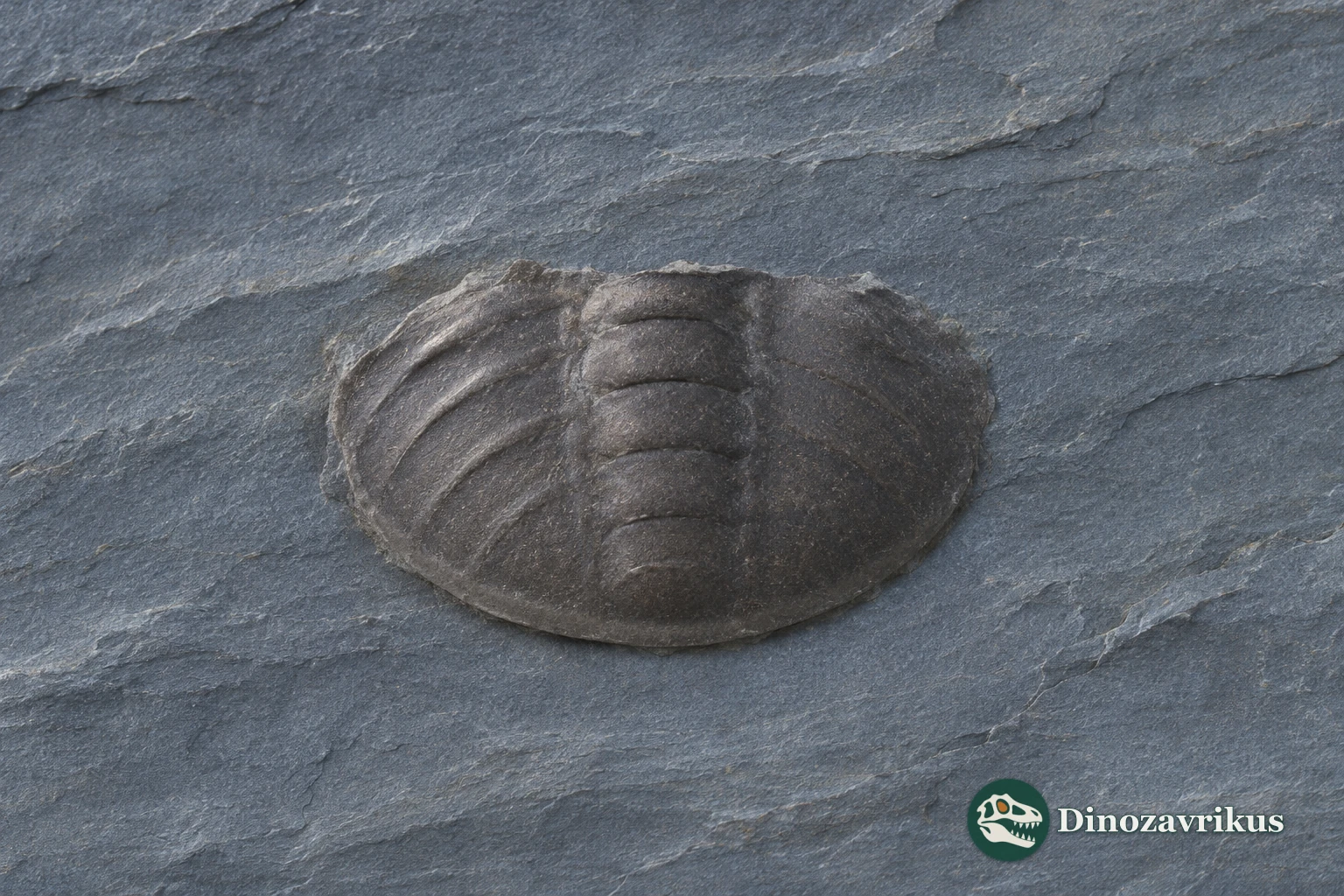
Liobole was an Early Carboniferous trilobite. Shales in Moravia have yielded both juvenile and adult material. The head shields preserve the position of the eyes and the course of the facial sutures. Separate tail shields show how the outline, convexity and segmentation vary.
Quick facts
| Group | Proetida |
|---|---|
| Age | Early Carboniferous |
| Genus named | Rudolf and Emma Richter, 1949 |
| Type species | Liobole glabra |
| Records include | Germany and the Czech Republic |
| Březina type material | Cranidium ICh 2120 |
What can the fossils tell us?
In the glabra group the eye sits forward and the suture behind it runs outward toward the side of the shield.
The Czech Geological Survey holds ICh 2120. It is the central portion of the head shield, with the free cheeks detached.
A series of fourteen additional tail shields helped clarify their outline, segmentation and convexity.
Eye position and the facial suture
Rudolf and Emma Richter established Liobole in 1949. Holzapfel originally described its type species in 1889 as Phillipsia glabra. That older combination records its original placement in Phillipsia.
Palaeontologists comparing Liobole with Phillibole looked at the position of its visual lobe and the course of the facial suture. In the L. glabra group, the eye lies forward and the suture diverges behind it. Some other species assigned to Liobole have a different suture. A useful fossil therefore preserves enough of the head to show both features.
The Březina specimens
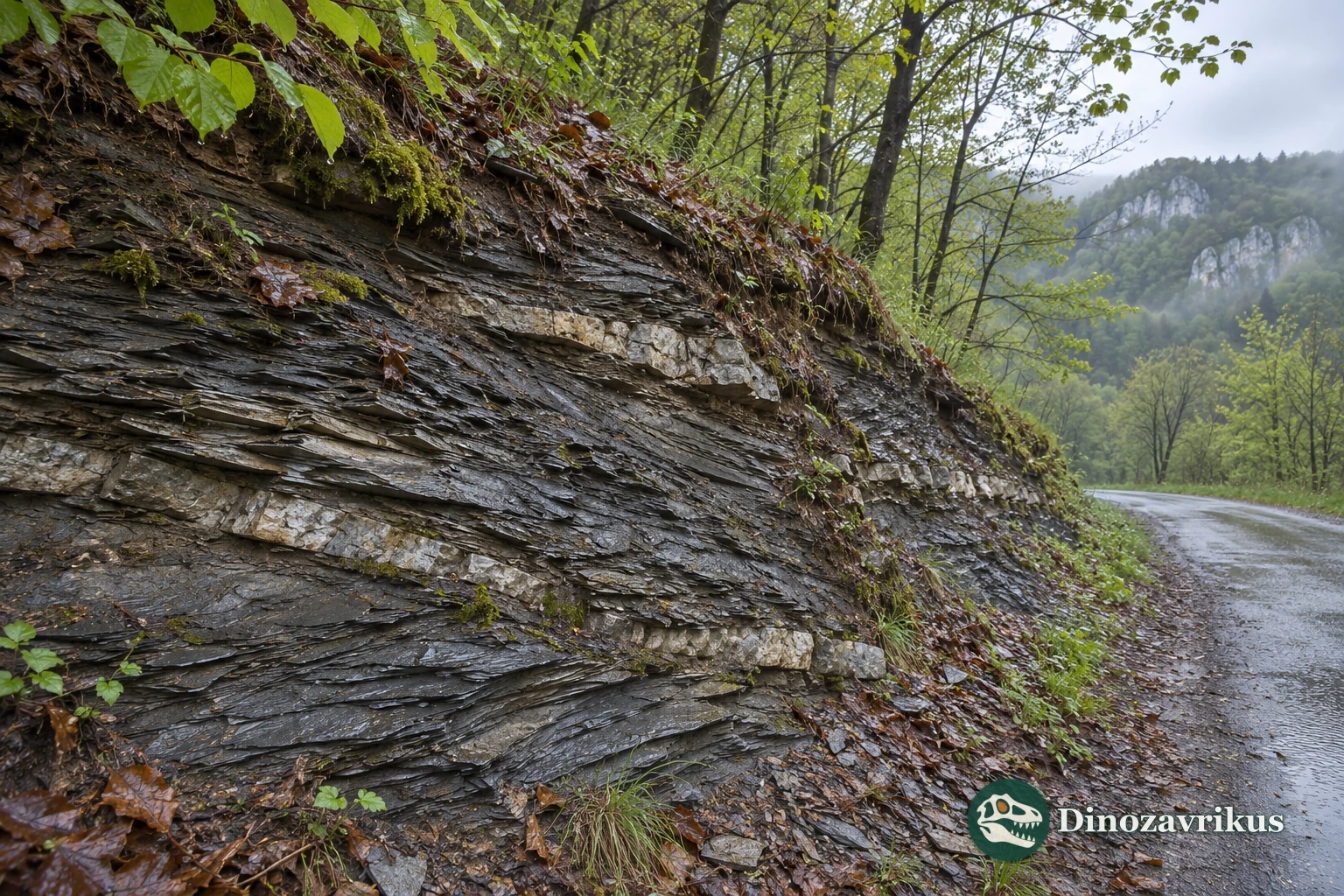
Ivo Chlupáč named Liobole glabra proxima from Lower Viséan rocks near the Moravian village of Březina. Its holotype, cranidium ICh 2120, is held by the Czech Geological Survey. The original material included five adult and seven juvenile cranidia, a free cheek, three thoracic segments and eight tail shields.
Štěpán Rak and colleagues described twelve more cranidia, two cephala, one free cheek and fourteen tail shields. The additional pygidia clarified the shape of the rear of the exoskeleton. The formation's shales also contain brachiopods and other trilobites. Different beds may preserve different parts of the exoskeleton, which affects comparisons between samples.
Frequently asked questions
When did Liobole live?
It lived during the Early Carboniferous. The subspecies from Březina is Lower Viséan.
What was the original name of its type species?
Holzapfel named it Phillipsia glabra in 1889.
Where is the Březina holotype held?
The Czech Geological Survey holds the cranidium ICh 2120.
Which features of the head are useful for identification?
Palaeontologists look at the position of the eye together with the course of the facial suture behind it.