

Diamantinasaurus was a long-necked herbivore from Cretaceous Queensland. Its bones show how an early member of the titanosaur radiation was built. One specimen also preserves pieces of the plants it swallowed, encased in rock between the trunk ribs and pelvis.
Quick facts
| Group | Sauropods, diamantinasaurians (Diamantinasauria) |
|---|---|
| Age | Early Late Cretaceous (Cenomanian to earliest Turonian) |
| Region | Australia (Queensland) |
| Diet | Herbivorous |
| Type species | Diamantinasaurus matildae |
| Holotype | AODF 0603, partial skeleton |
| Formation | Winton Formation |
What can the fossils tell us?
Shoulder, forelimb and pelvic bones anchored the original description. Later preparation revealed further material, including jaw fragments.
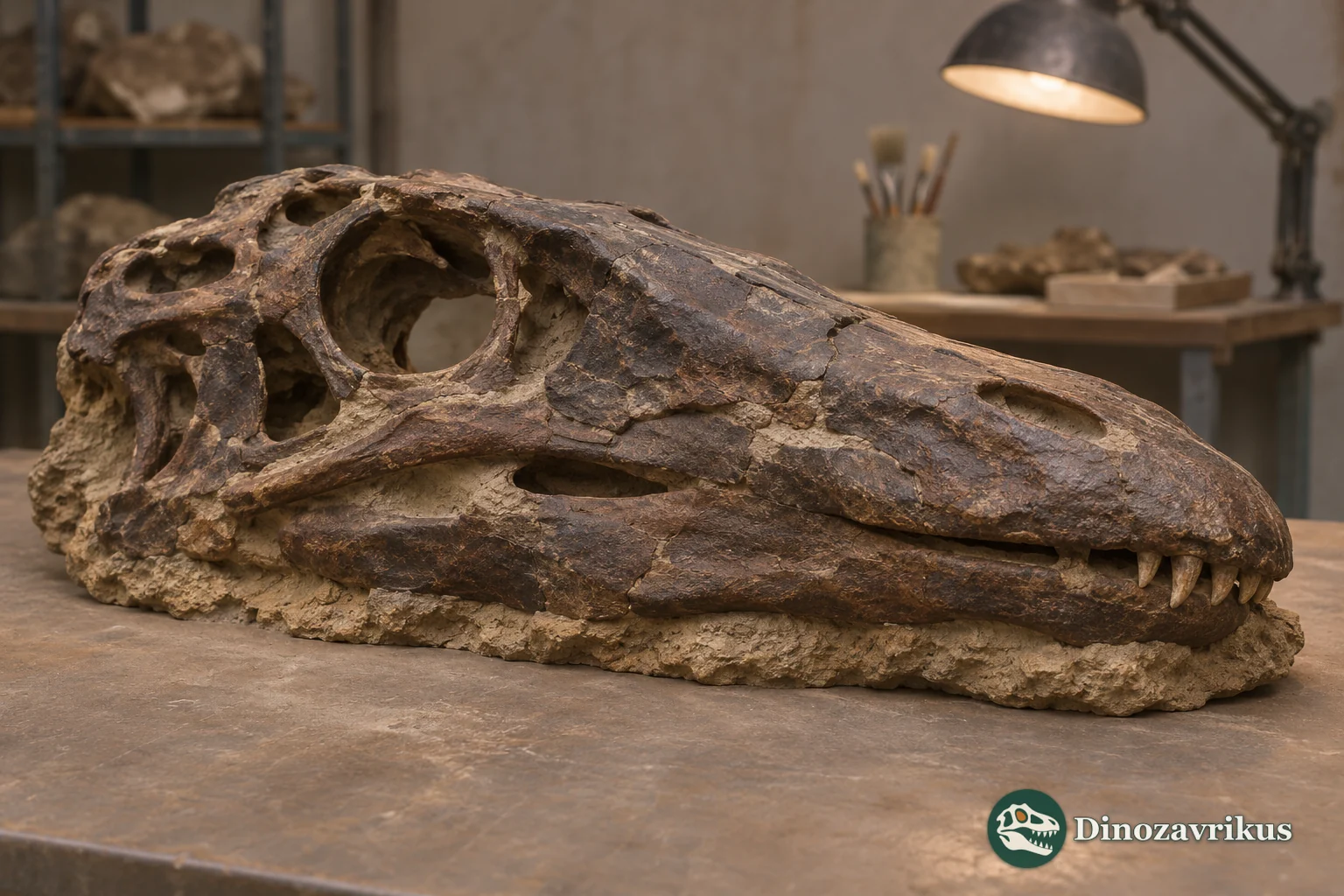
The preserved pieces allowed a three-dimensional skull reconstruction roughly 50 cm long. The teeth and skull bones can be compared with those of other sauropods.
An indurated layer inside the body held plant fragments. Its position, rock texture and composition helped determine how it formed.
Matilda and the Winton Formation
Scott Hocknull and colleagues named Diamantinasaurus matildae in 2009 from a partial skeleton nicknamed Matilda. The genus name refers to the Diamantina River and the species name alludes to the song Waltzing Matilda. The Australian Age of Dinosaurs Museum in Winton holds the specimen.
The Winton Formation also yielded Wintonotitan. Matilda preserves both shoulder blades, upper arm and forearm bones, as well as parts of the hands and pelvis. Later preparation clarified the composition of the sacrum, where five vertebrae had fused.
A skull about half a metre long
Stephen Poropat and colleagues described another specimen, AODF 0906, in 2023. Many of its skull bones were recovered separately. Enough were present to reconstruct a skull roughly 50 cm long. The tooth row occupies the front of the jaw, and several details of the skull and teeth resemble those of the South American Sarmientosaurus.
Analyses place this group close to the origin of titanosaurs. A 2024 revision found that bones named Australotitan cooperensis might represent Diamantinasaurus. The authors retained a more cautious identification at the level of Diamantinasauria, leaving the species assignment open.
A meal caught in stone
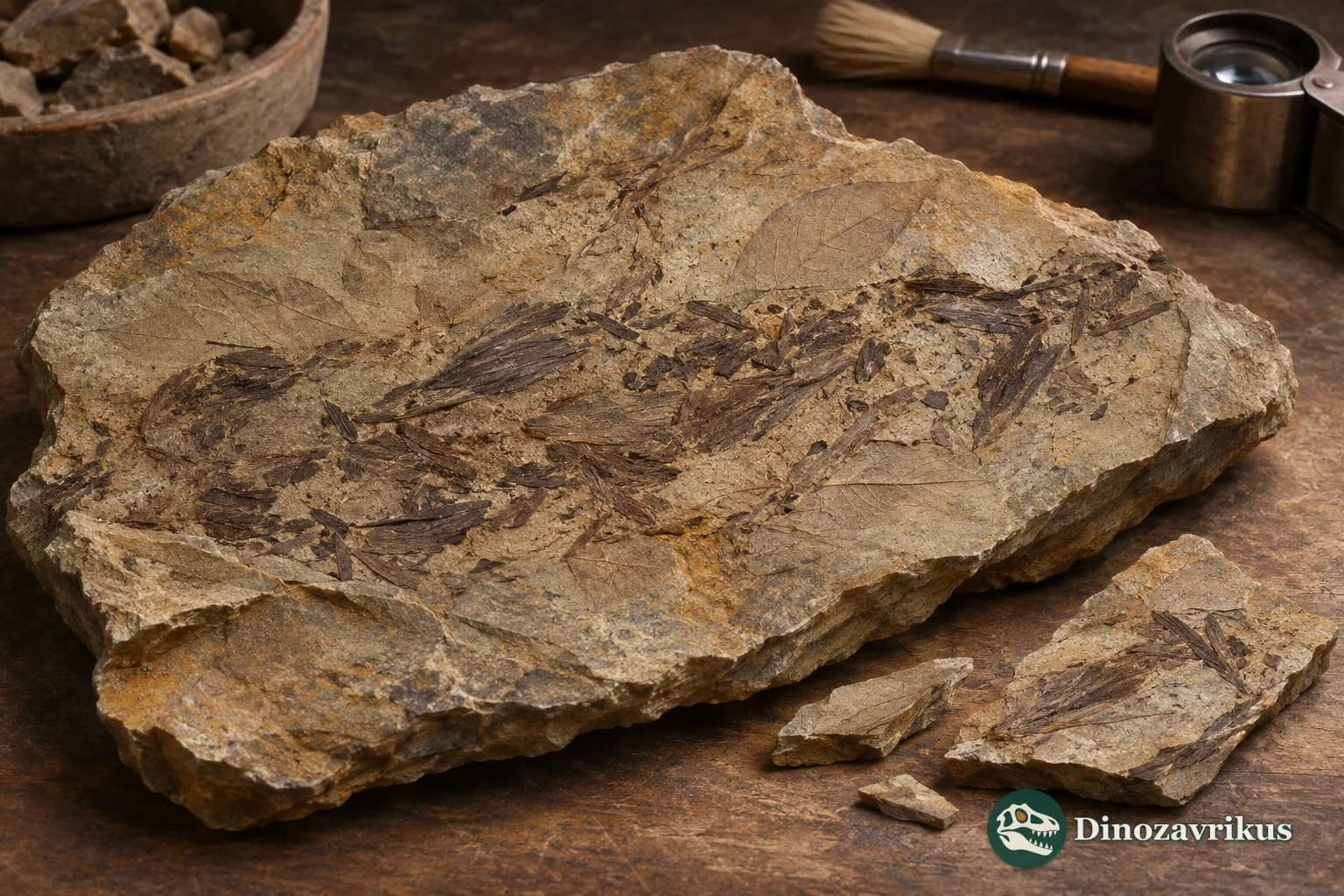
The partly articulated skeleton AODF 0888, nicknamed Judy, was excavated in 2017. An indurated, fractured layer lay between the rear ribs and pelvis. The researchers examined its position, the mineral and chemical properties of the rock, and the plant material inside. In 2025 they reported it as a cololite, fossilised contents of the digestive tract.
The contents include remains of conifers, seed ferns and flowering plants. Recognisable pieces of foliage are consistent with the animal swallowing plant matter with limited processing in the mouth. The specimen supplies direct evidence of plant eating. A single preserved meal leaves the seasonal composition of the diet open.
Frequently asked questions
Where did Diamantinasaurus live?
Its fossils come from the Winton Formation of Queensland, Australia. The type skeleton and referred fossils are housed in Winton.
What does matildae refer to?
It alludes to Waltzing Matilda. The genus name refers to the Diamantina River.
What did Diamantinasaurus eat?
Plant remains associated with Judy include conifers, seed ferns and flowering plants.
How long was its skull?
The bones of specimen AODF 0906 yielded a reconstructed skull length of about 50 cm.