

Dimekodontosaurus was a scincoid lizard from Cretaceous Utah. Its lower jaw preserves tall, slender front teeth, low crowns in the middle, and taller, sturdier teeth toward the rear.
Quick facts
| Group | Scincoids (Scincoidea) |
|---|---|
| Age | Cretaceous, early Cenomanian |
| Region | North America, United States, Utah |
| Type species | Dimekodontosaurus madseni |
| Scientific name | Dimekodontosaurus |
| Diet | No direct evidence |
What can the fossils tell us?
Holotype OMNH 34560 is a left dentary with 27 tooth positions and 23 preserved teeth.
Slender, recurved front teeth give way to low crowns. Several teeth rise higher again near the back of the row.
The material provides no direct record of diet. More of the skeleton would be needed to estimate body length confidently.
A dentary from Emery County
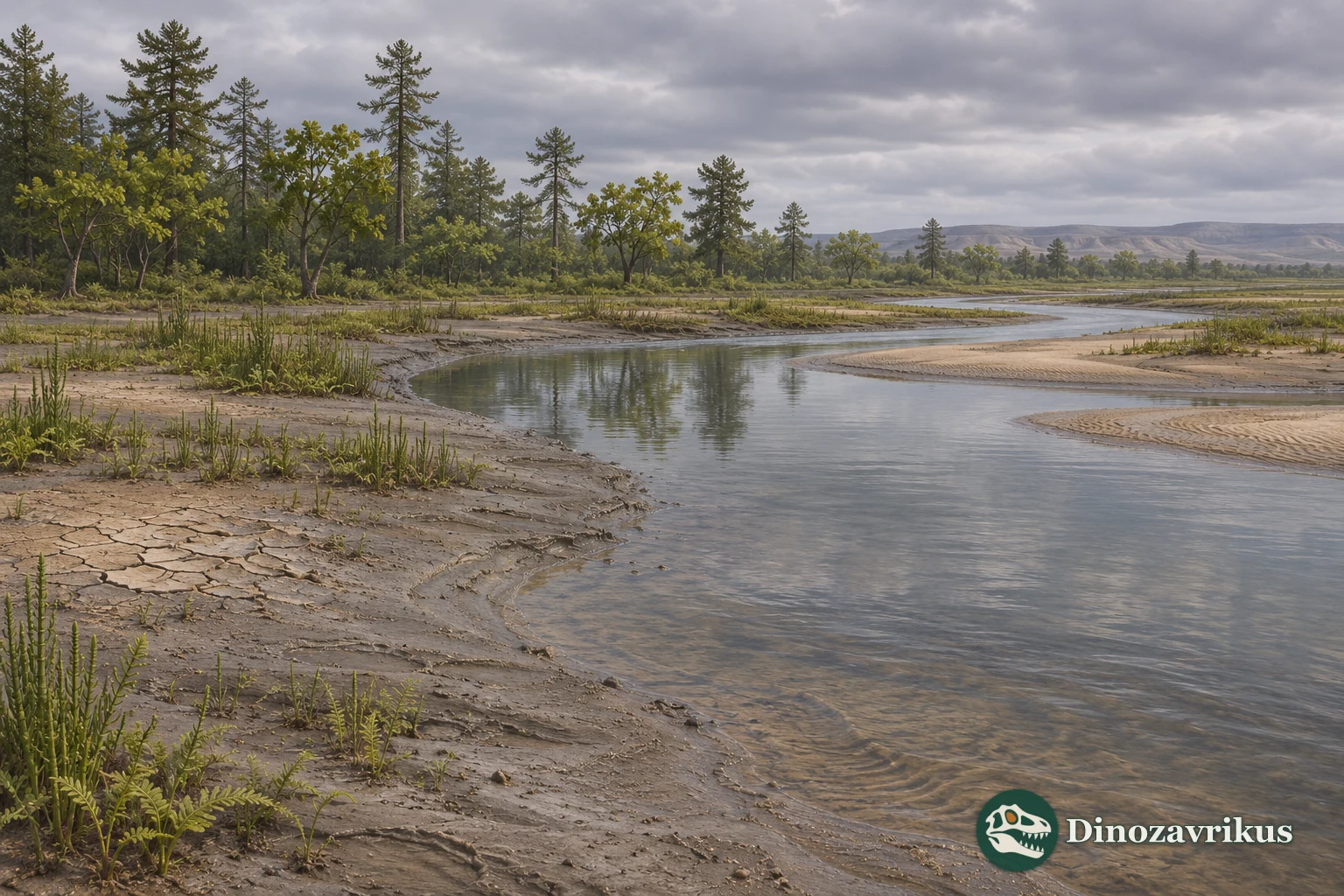
Randall Nydam described the species in 2002 from a complete left dentary, OMNH 34560, recovered from locality V695 in the Mussentuchit Member of the Cedar Mountain Formation. The description placed the deposits near the Albian–Cenomanian boundary. Radiometric dates from the member refine its age to the early Cenomanian. The species name honours Scott Madsen, who prepared the holotype.
A tooth row with a dip in the middle
Twenty-three teeth survive across 27 positions. The front crowns are tall, slender and curved backwards. Farther along the jaw, the teeth are shorter and broader. Crowns at positions 23–25 grow taller again. Near the end of the row, the jaw preserves a developing replacement crown.
Other lizards of the Mussentuchit
The jaw and teeth place Dimekodontosaurus among scincoids. Jaw bones from the same deposits reveal a wider range of lizards. The dentary of Bothriagenys, for example, bears a distinctive groove and differs from the jaw of Dimekodontosaurus in overall shape.
Frequently asked questions
Where was the holotype found?
It came from locality V695 in Emery County, Utah.
What distinguishes its teeth?
Tall front teeth give way to low middle crowns, followed by several taller teeth toward the back.
Who was the species named after?
The name honours Scott Madsen, who prepared the type specimen for study.
Is there direct evidence of its diet?
There is no direct dietary evidence. The jaw documents crown shape and a developing replacement tooth.