

Dioplotherium was an extinct dugongid sirenian known from fossils on both sides of the Americas. Its large tusks are striking, but the type specimen is only a premaxillary fragment and a tusk from South Carolina. More complete skull material from other localities has clarified the animal’s anatomy without resolving every question about species boundaries, age or feeding behaviour.
The genus belongs in the ancient mammal catalogue. Comparisons with earlier sirenians such as Protosiren help place it in the group’s history; they do not establish a direct ancestor–descendant relationship.
Quick facts
| Scientific name | Dioplotherium Cope, 1883 |
|---|---|
| Group | Sirenia, Dugongidae; commonly placed in Rytiodontinae |
| Time | Late Oligocene to Miocene records, with locality-specific uncertainty |
| Region | South Carolina and Florida, Baja California, and other reported American localities |
| Type material | ChM PV2896, a premaxillary fragment and tusk from South Carolina |
| Named species | D. manigaulti and D. allisoni are generally recognised separately |
| Size | No dependable genus-wide body length or mass estimate from a complete skeleton |
What do Dioplotherium’s tusks and skulls tell us?
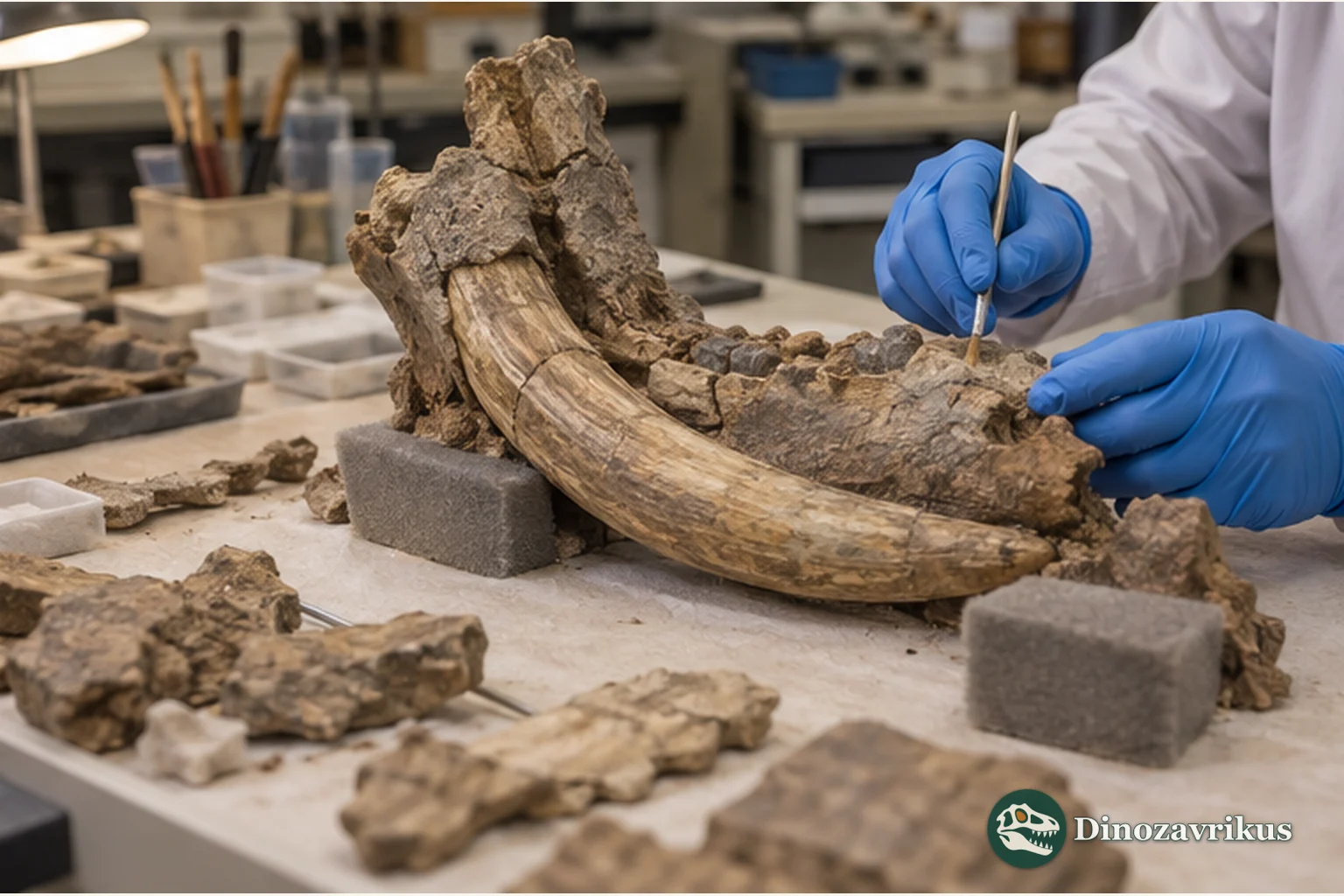
ChM PV2896 consists of a premaxillary fragment and tusk reported from the bed of the Wando River. It documents the front of the upper jaw, but not a complete skeleton; the age of its source deposits is uncertain.
Daryl Domning compared available material, including a skull from Lower Miocene Florida. The comparisons support a tusked dugongid affinity, but do not make every fragment a specimen of the same species.
The holotype UCMP 47250 includes an incomplete mandible and other fragments from the Ysidro Formation. Its history includes the combinations Halianassa(?) allisoni and Metaxytherium allisoni; the species remains based on limited material.
Tusk form and comparisons with other rytiodontines have suggested feeding on large seagrass rhizomes. No stomach contents or other direct food remains are known for Dioplotherium.
Naming and museum specimens
Edward Drinker Cope named Dioplotherium manigaulti in 1883 from material collected in South Carolina. The species honours George E. Manigault, who reported the unusual find from the Wando River. The Charleston Museum lists the type as ChM PV2896: a fragment of the premaxilla with a tusk, not a complete skull or skeleton.
The species was later placed in Metaxytherium. Daryl Domning’s 1989 revision restored Dioplotherium and compared the available material, including a more complete skull from Lower Miocene Florida. The Baja California species D. allisoni was first named Halianassa(?) allisoni, later combined as Metaxytherium allisoni, and transferred to Dioplotherium by Domning in 1978. These changes reflect revised comparisons, not the discovery of several complete skeletons.
Fossil localities and age
The South Carolina type came from the bed of the Wando River near Cainhoy. Its precise formation is unknown, and the age has been discussed as Late Oligocene or Early Miocene. A more exact date for this particular specimen would overstate what the locality record can support.
Other D. manigaulti material comes from Florida, including a skull from Lower Miocene deposits. The holotype of D. allisoni, UCMP 47250, was collected near La Purísima in Baja California Sur, Mexico, from the Ysidro Sandstone Member of the Ysidro Formation. It is generally assigned to the early or middle Miocene, depending on local correlation. These records come from different formations and do not define one continuously dated population.
What the fossils preserve
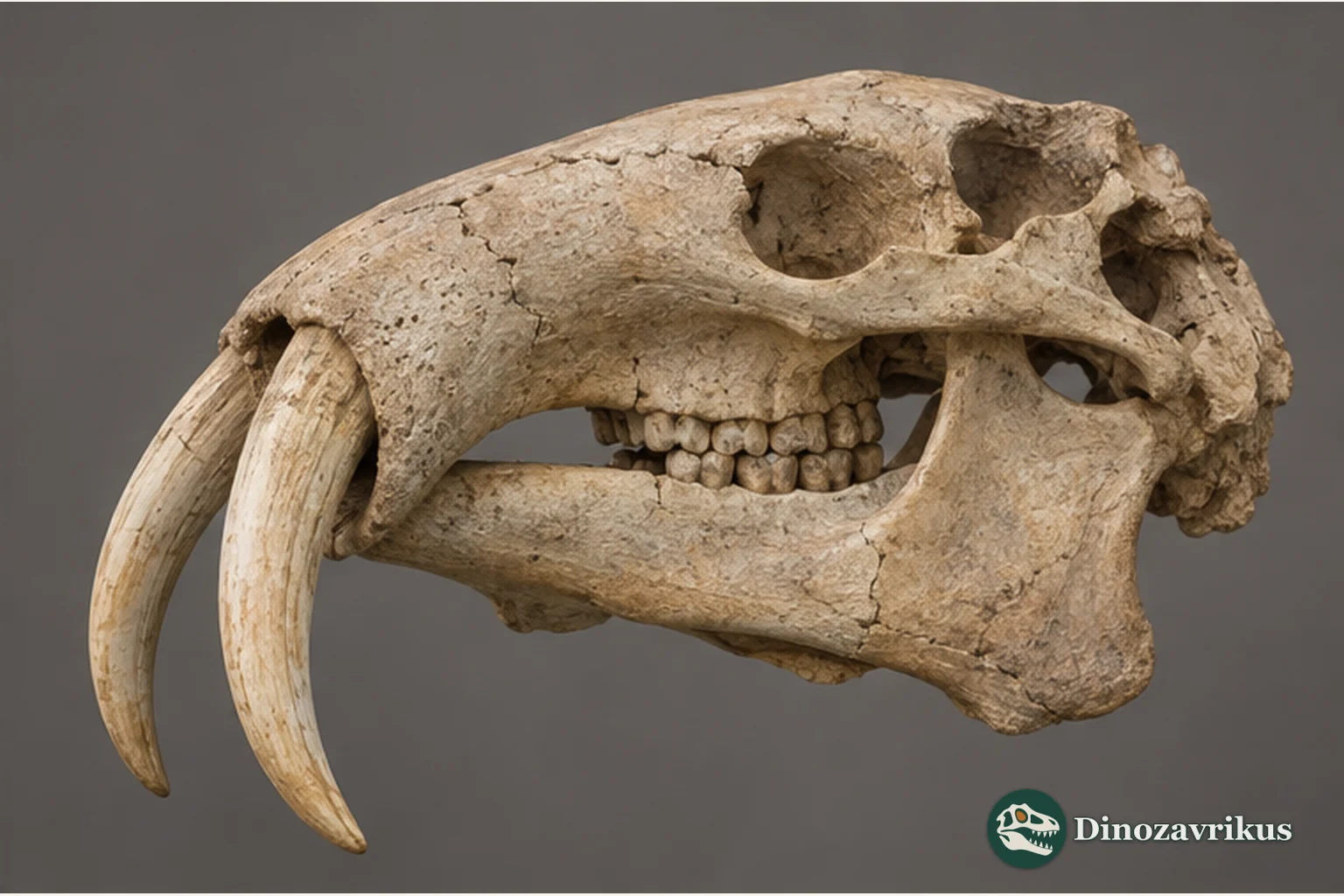
The large front tooth and premaxillary fragment of the type show that D. manigaulti had prominent upper tusks. Additional skulls provide evidence about the proportions of the snout and the relation of the teeth to the skull. The original material of D. allisoni includes an incomplete lower jaw and other fragments. The evidence differs between species, so claims about a complete skeleton cannot be based on one isolated element.
Domning placed Dioplotherium among rytiodontine dugongids and compared it with other fossil sirenians. The tusks helped motivate a hypothesis that the animals could uproot or tear large seagrass rhizomes. This functional interpretation fits the skull and tooth anatomy, but no diagnostic stomach contents or direct feeding traces have been reported for the genus.
Feeding, movement and life history
The sirenian anatomy supports an aquatic animal, while details of the forelimbs and swimming posture are inferred from the broader group. Fragmentary skulls cannot establish swimming speed, diving depth or how long an animal remained offshore. Direct evidence for reproduction, social grouping, disease and injury is also lacking for Dioplotherium.
The proposal that it fed on large rhizomes does not mean that these were its only food. Seagrasses and their underground parts are familiar in living ecosystems, but transferring the behaviour of modern dugongs to a fossil genus remains a comparison. The stronger conclusion is narrower: its front teeth and skull differed from forms with less pronounced tusks and may have broadened the food it could reach.
Taxonomic and chronological caveats
Older literature uses combinations such as Metaxytherium manigaulti and Halianassa(?) allisoni. A later revision restored Dioplotherium for the first and established D. allisoni for the second. The spelling “Diplotherium” appears as a historical error and does not denote a separate genus.
The fossil record should not be compressed into a single precise range. The age of the Wando River type locality is less secure than that of some Florida deposits, and the Mexican species comes from a separate geological sequence. “Late Oligocene to Miocene” summarises records assigned to different species and localities; it does not show that one species lived continuously through the entire interval.
Frequently asked questions
How did Dioplotherium differ from the living dugong?
Fossils assigned to the genus show larger, more prominent tusks and other differences in skull anatomy. The incomplete record does not allow a full comparison of every skeletal feature or prove exactly how the tusks were used.
Which species are assigned to Dioplotherium?
Dioplotherium manigaulti from the eastern part of North America and D. allisoni from Baja California are generally recognised. Both are represented by incomplete material, so additional fossils could refine their diagnoses.
What is the type specimen?
The type of D. manigaulti is held by the Charleston Museum as ChM PV2896. It is a premaxillary fragment and tusk found in the Wando River bed in South Carolina.
Did Dioplotherium dig up seagrass rhizomes?
This is a hypothesis based on the large tusks and comparison with other dugongids. No stomach contents or other direct evidence of the animal’s food have been found.