

Dipturus is a genus of skates with living species and a fossil record. Teeth from Late Oligocene deposits in northern Germany belong to an extinct species now assigned to it. Younger teeth have been found on the Pacific coast of Chile. Living skates reveal features the fossil teeth leave open, from the outline of the disc to the long development of a hatchling inside its case.
Quick facts
| Family | Rajidae |
|---|---|
| Oligocene species | Dipturus casieri |
| Oligocene locality | Sülstorf Beds, Germany |
| Miocene locality | Bahía Inglesa, Chile |
| Fossil material | Isolated teeth |
| Living species | Egg-laying skates |
What can the fossils tell us?
The fossil species described in 1978 as a species of Raja was transferred to Dipturus in 2015.
The Chilean teeth were assigned at genus level. They do not identify a second population of the German species.
The measured interval applies to one captive egg and its temperature history. A fossil tooth cannot provide equivalent information.
A Late Oligocene skate from the North Sea Basin
Étienne Steurbaut and Jacques Herman published the fossil species as Raja casieri in 1978. Thomas Reinecke reassigned it in 2015 while revising rays from Mecklenburg in northeastern Germany. The Sülstorf Beds encompass Chattian marine sediments of Late Oligocene age. Bulk samples from fossil-rich storm deposits yielded teeth of six species of rajiform skate, including the species now called Dipturus casieri.
A transverse ridge on the outer face of the crown base bears short ridges of its own. That feature helped distinguish D. casieri from other skate teeth, including material from the Middle Miocene of Hungary. Its purpose and arrangement differ from the raised ornament on the interlocking crushing plates of Leidybatis.
A much younger find from Chile
In 2025 Jaime Villafaña and colleagues described a Late Miocene microfossil assemblage from Bahía Inglesa, northern Chile. More than 300 kg of sediment was collected to search for cartilaginous fish remains less than a centimetre across. The authors reported 19 taxa and identified a record of Dipturus, which they presented as the first for the genus in the Neogene.
The German and Chilean finds occur in marine deposits separated by millions of years and an ocean. The Chilean material was identified at genus level. The two records show that teeth assigned to Dipturus occur in distinct basins, but do not provide a geographical range for a single species.
One historical name covered two living species
For much of the twentieth century large long-snouted skates in the northeastern Atlantic were grouped under Dipturus batis. Morphological and genetic research distinguished two species. The name D. batis is now used for the common blue skate and D. intermedius for the flapper skate. Comparative studies report individuals at least 143 cm and 229 cm long respectively. These are total lengths measured to the tip of the tail.
Both living forms have a pointed snout and pectoral fins that create a diamond-shaped disc. The old use of a single name complicates reading records of size, habitat and reproduction. An isolated Oligocene tooth cannot show the shape of the fossil disc or establish that the extinct species matched either modern skate in size.
An egg that hatched after 534 days
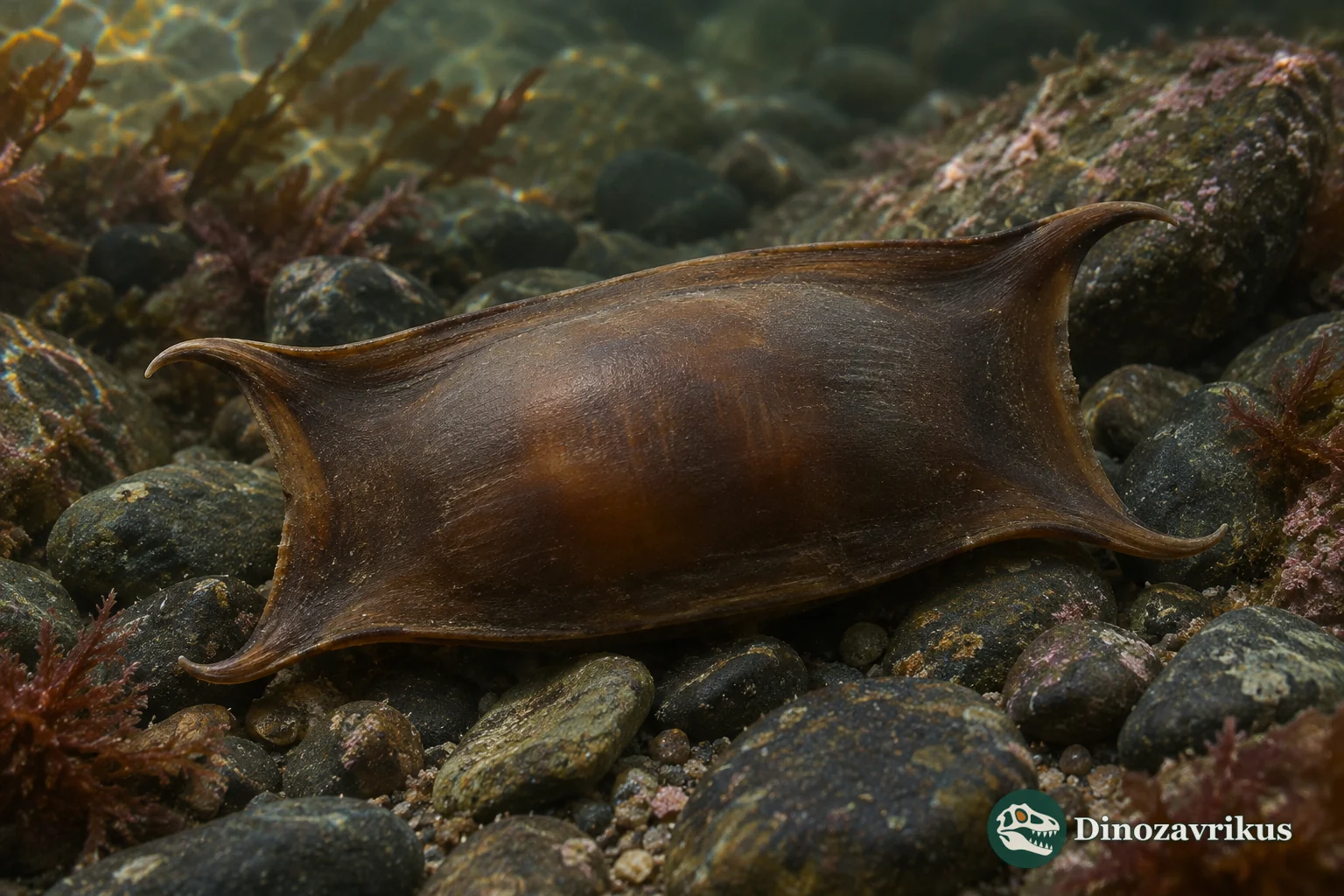
A captive flapper skate egg was observed from laying to hatching in Scotland. Mean monthly water temperatures ranged from 8.3 to 13.2°C. The hatchling emerged after 534 days, pushed through the front of the case and unfolded its pectoral fins. The male was 279 mm in total length and 184 mm across the disc.
Separate fieldwork documented eggs of the species on a shallow rocky site off western Scotland. The cases stay on the seabed throughout development. This makes an egg site particularly sensitive to disturbance of the substrate over time. The incubation period observed in captivity is a result for one egg, not a fixed duration for the genus.
Frequently asked questions
Is Dipturus extinct?
The genus survives today. Dipturus casieri is an extinct species known from Oligocene teeth.
When did Dipturus casieri live?
Teeth from the Sülstorf Beds of Mecklenburg are Late Oligocene in age.
What did palaeontologists find in Chile?
Late Miocene teeth assigned to Dipturus were identified in sediments at Bahía Inglesa.
How long does a living skate egg take to hatch?
One flapper skate hatched after 534 days in captivity. That result depends on the individual egg and the incubation conditions.