

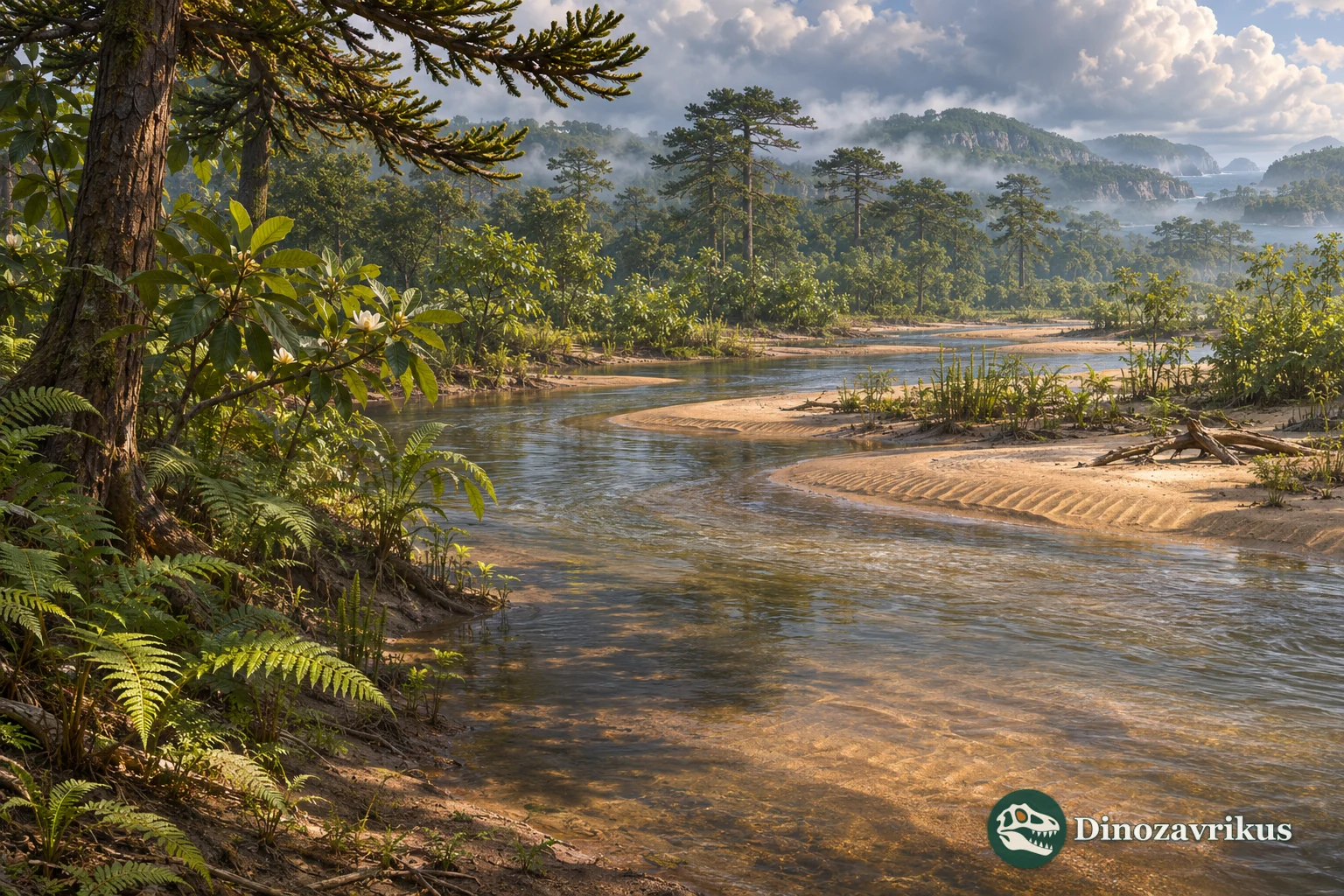
Dortoka was a freshwater turtle from the Late Cretaceous of what is now northern Spain. A pair of gaps between the bones of its carapace persisted as it grew. The gaps, together with the structure of the shell bone, offer clues to how much time the animal spent in water.
Quick facts
| Group | Turtles, Dortokidae |
|---|---|
| Age | Late Cretaceous, late Campanian to early Maastrichtian at Laño |
| Region | Europe: Burgos Province, Spain |
| Type species | Dortoka vasconica |
| Holotype | MCNA 6313, front half of the shell |
| Scientific name | Dortoka |
| Diet | No direct evidence |
What can the fossils tell us?
Plates from animals at different stages of growth preserve the edges of a paired opening. The ribs ended inside the costal bones instead of extending to the shell margin.
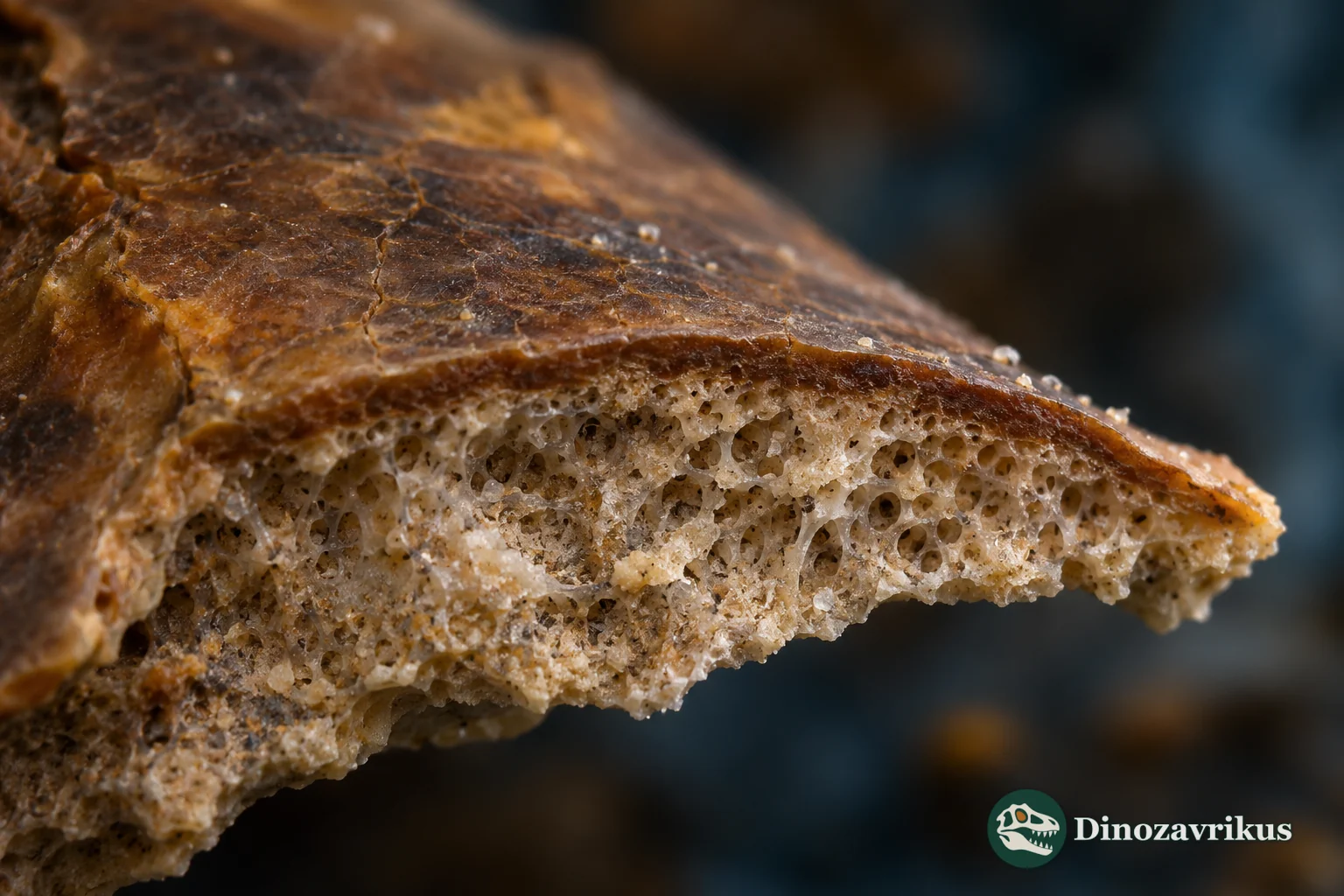
Sections of shell bone reveal a dense network of canals. Together with shell anatomy, this supports an aquatic interpretation. It does not identify the turtle’s food.
Two lower shell plates preserve bone destruction and subsequent remodelling. Researchers proposed infection, with both the pathogen and its route unresolved.
A shell assembled from the Laño evidence
France de Lapparent de Broin and Xabier Murelaga named Dortoka vasconica in 1996. The type, MCNA 6313, preserves the front part of the shell. Separate plates recovered at the same quarry document additional parts of the carapace and plastron.
Dortokids are related to side-necked turtles. The absence of skull material has left their exact position open to debate. The European Late Cretaceous record also preserves Taphrosphys, a representative of the separate bothremydid lineage.
The shape and position of the openings
Adán Pérez-García, Torsten Scheyer and Xabier Murelaga identified two persistent gaps between the costal plates and the outer rim of the carapace. Each sat between the two internal struts joining the lower and upper shell. The precise shape of the gaps varied across the Laño material.
Such areas of incomplete bone cover are called fontanelles. In Dortoka they were present through growth. Unlike the arrangement in some other turtles, the ribs did not protrude through the gap to reach the rim.
What shell bone records
Thin sections of the shell show heavily vascularised bone. The microscopic structure, the persistent fontanelles and the river deposits at Laño together support a freshwater aquatic interpretation.
Two plastron plates, MCNA 14377 and MCNA 16148, also preserve patches of dead bone and irregular new growth. These features led researchers to propose osteomyelitis, an infection involving bone. The case is stronger in MCNA 16148. Which organism caused the response and how it reached the bone remain unknown.
Frequently asked questions
Did the gaps close when Dortoka grew up?
The evidence indicates they persisted across growth stages, though their outlines varied.
Were the gaps open through the skin?
The fossils record gaps between the bones. The covering soft tissues are not preserved.
What points to a freshwater habitat?
Shell anatomy and vascular bone indicate an aquatic lifestyle, and the Laño material occurs in river deposits.
What caused the shell lesions?
The bone response is consistent with infection, but the fossils do not identify a pathogen or a route of entry.