

The extinct snake Dunnophis is known from small, elongated vertebrae. The genus was established from fossils in Wyoming. Some European material was later included, although isolated vertebrae have limited power to resolve the relationships of those species.
Quick facts
| Group | Snakes, constrictor affinities unresolved |
|---|---|
| Age | Eocene |
| Region | North America, USA (type species) |
| Type species | Dunnophis microechinus |
| Scientific name | Dunnophis |
| Diet | Exact prey is unknown |
What can the fossils tell us?
Five Eocene vertebrae from the Bridger Basin provided the basis for the type species.
A low neural spine and the outline of the accessory joint help compare the fossils with other snakes.
Some similar vertebrae occur on both sides of the Atlantic. More anatomical evidence is needed to establish whether all named species represent one lineage.
Five vertebrae from the Bridger Basin
Max Hecht described the type species in 1959 in a study of Wyoming geology and fossils. The original text contains both microechinis and microechinus. Krister Smith and Georgios Georgalis adopted the spelling Dunnophis microechinus in their review of Paleogene snakes.
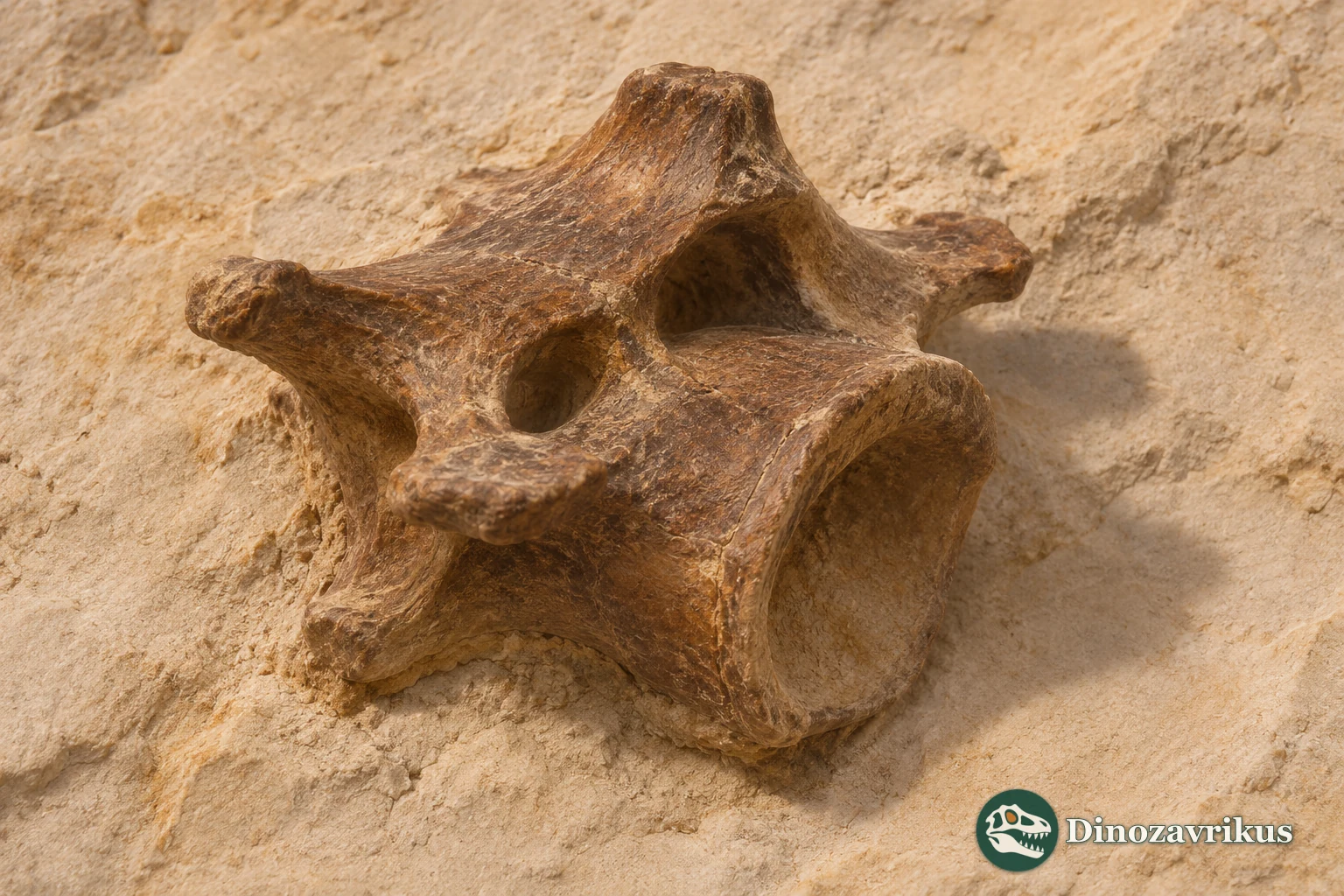
The shape of the vertebral joints
The type species has a short, low neural spine. A projection on the front of the neural arch fits into the next vertebra. This projection, the zygosphene, has a narrow central lobe in the Wyoming material. As with Calamagras, the surviving vertebrae allow detailed comparisons of bone proportions. The rest of the skeleton is needed to test closer relationships.
How the French fossils compare
The French species D. matronensis and D. cadurcensis were named from fossils in the Paris Basin and Quercy. Their descriptions distinguish a wide, rounded central lobe of the zygosphene in the former from a narrower one in the latter. Similar vertebral traits occur in different snake groups, so the named species remain difficult to unite as a single lineage.
Frequently asked questions
Where did the first Dunnophis fossils come from?
They came from Eocene rocks in the Bridger Basin of Wyoming.
What was the type species based on?
Five vertebrae provided the material for the original description.
Why do two spellings appear?
Both occur in the 1959 description. Smith and Georgalis used microechinus in their review.
What did Dunnophis look like?
The material shows details of the spine. The shape of the head, skin pattern and total body length remain unknown.