

Egyptemys was a marine turtle from the late Eocene deposits of the Faiyum in Egypt. Its shell consisted of many small bones fitted together in a mosaic. Low ridges on the surviving fragments are central to comparisons with other fossil leatherbacks.
Quick facts
| Group | Turtles, leatherbacks (Dermochelyidae) |
|---|---|
| Age | Late Eocene (Priabonian) |
| Region | Africa (Egypt, Faiyum) |
| Type species | Egyptemys eocaenus |
| Holotype | GMC 10028, humerus |
| Formation and locality | Birket Qarun, Wadi Al Hitan |
| Age of the deposits | About 36.5–35.5 million years |
| Scientific name | Egyptemys |
| Diet | Exact diet unknown |
What can the fossils tell us?
Charles Andrews based the species on a single upper arm bone, which gave him a basis for comparison with other leatherbacks.
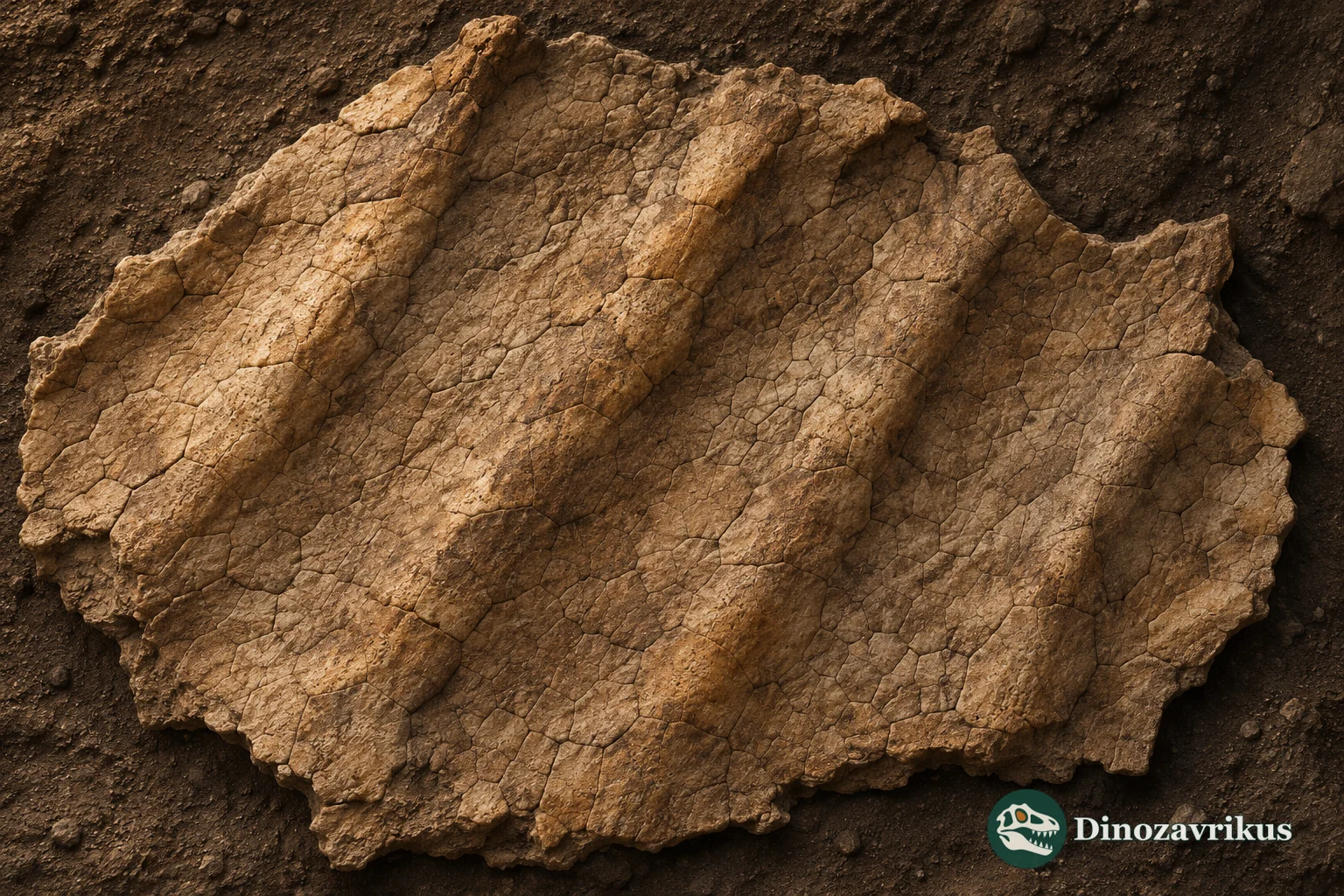
The Egyptian material shows at least five low ridges running along the back. The plates beneath the ridges are almost flat on their inner surface.
A later study revised the stratigraphic placement of the Egyptian material. The specimens come from the Birket Qarun Formation at Wadi Al Hitan.
From one arm bone to a genus
In 1901 Charles Andrews named Psephophorus eocaenus from an Egyptian humerus, GMC 10028. He placed it in Psephophorus provisionally because its type specimen had no humerus for comparison.
In 1996 Roger Wood and colleagues described additional Faiyum fossils, including the partial shells YPM 6212 and UMMP 97538. They assigned them to the same species and named the genus Egyptemys. The humeri and pieces of shell represent separate finds.
How the mosaic fits together
Small bones met at their edges in the shell. Some had low, rounded crests that aligned to form lengthwise ridges. Between adjacent ridges there are usually one or two small ossicles, and locally three.
In the Egyptian material the inner surface beneath a ridge is almost flat. The underside of some ridge plates in Psephophorus is distinctly concave. Shapes can vary within a single shell, so a fossil with several associated plates carries more information than an isolated ossicle.
Which deposits yielded the fossils
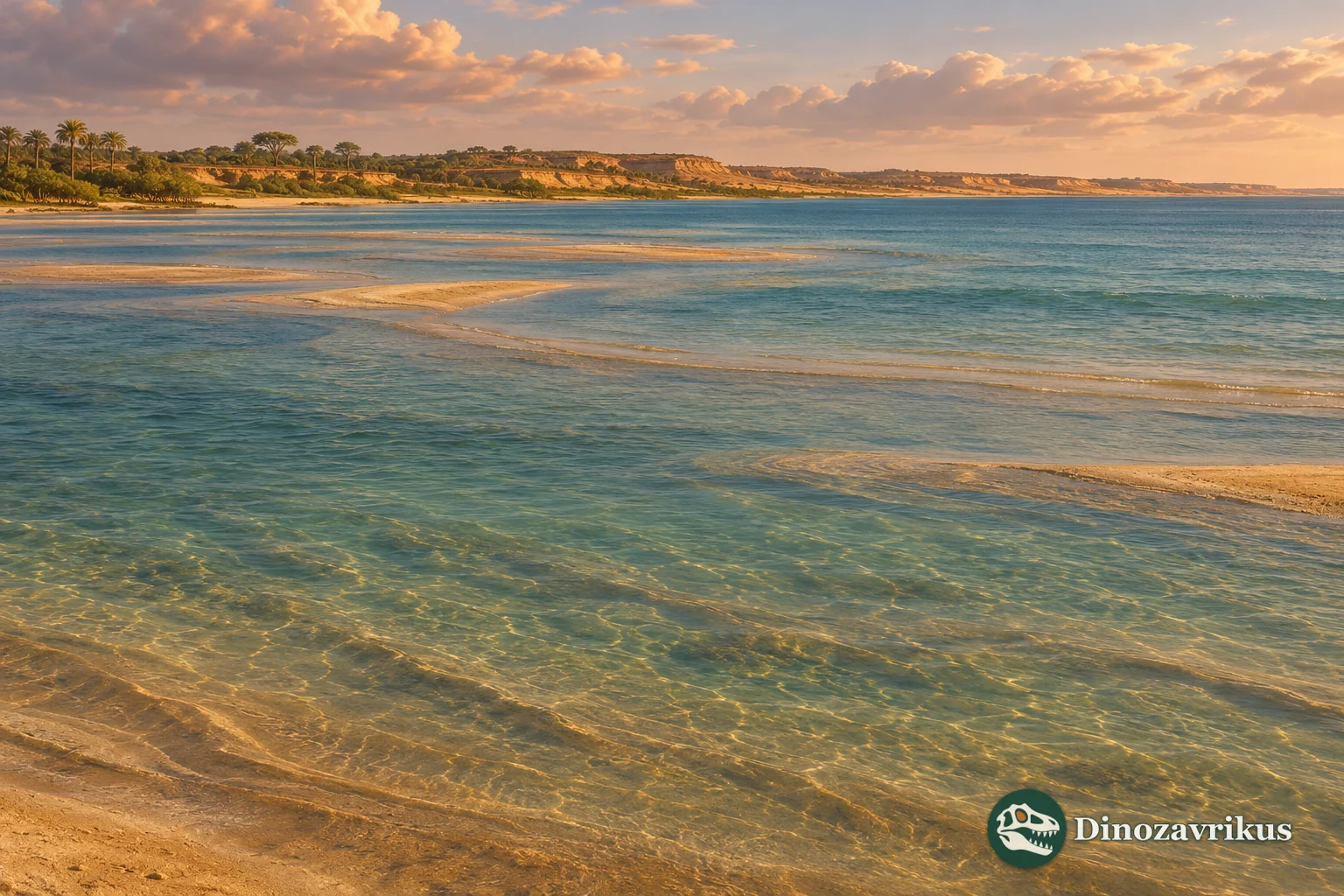
The original description of the genus placed the Egyptian material in the Qasr el-Sagha Formation. A later reassessment placed it in the Birket Qarun Formation. Magnetostratigraphic work dates those beds at Wadi Al Hitan to about 36.5–35.5 million years ago.
The 1996 study also referred material from Oregon to Egyptemys. A newer review found that a small patch of shell could not securely establish that identification. The Oregon material is Miocene in age. The best evidence for the Egyptian turtle comes from the Faiyum, and the known material leaves its precise diet unresolved.
Frequently asked questions
Which fossil was used to name the species?
The humerus GMC 10028. The shells attributed to the species were described later.
How many ridges did it have?
The Egyptian fossils preserve evidence of at least five low lengthwise ridges.
Where are the securely identified fossils from?
The Birket Qarun Formation at Wadi Al Hitan in the Faiyum region of Egypt.
Why is the Oregon identification uncertain?
It relied on a small shell fragment. The plates vary across a shell, and too few are preserved for a secure genus assignment.