

The name Empheresula is anchored by a partial bird pelvis from Late Oligocene deposits at Gannat in central France. A separate slab with a sternum and a younger shoulder-girdle fragment have also been linked to the species. The three fossils represent different parts of the skeleton, so the certainty of their identifications varies.
Quick facts
| Age of type | Chattian, Late Oligocene |
|---|---|
| Locality | Gannat, France |
| Group | Gannets and boobies |
| Lectotype | Pelvis in a limestone slab |
| Possible later record | Early Miocene coracoid |
What can the fossils tell us?
The slab preserves ridges and the area between the hip sockets. There is no skull or wing bone with it.
A sternum was included in the original type series. Its attribution to the gannet and booby family has been disputed, so its features need to be considered separately.
The French specimen resembles a sulid shoulder bone. Since the type series has no coracoid, the assignment is provisional.
How the name changed
Alphonse Milne-Edwards described the Gannat bird as Sula arvernensis in 1867. Colin Harrison moved it to a new genus, Parasula, in 1975. The genus name was already occupied, so he replaced it with Empheresula the same year. The species epithet remained unchanged.
Belgian Oligocene bones now called Cygnopterus were also once assigned to Sula. The two cases led in different directions. Empheresula was distinguished within the sulids, while the affinities of Cygnopterus remain uncertain.
What the limestone preserves
The lectotype is an incomplete pelvis in a limestone slab in the collection of the National Museum of Natural History in Paris. In comparisons with living sulids, researchers noted the diverging ridges of the ilia and a slightly concave area between the hip sockets.
A second slab preserves a sternum described as broad at the back, with long lateral projections. Its identification as a sulid has been questioned. Neither slab gives a reliable wingspan, bill shape or plumage pattern for the Gannat bird.
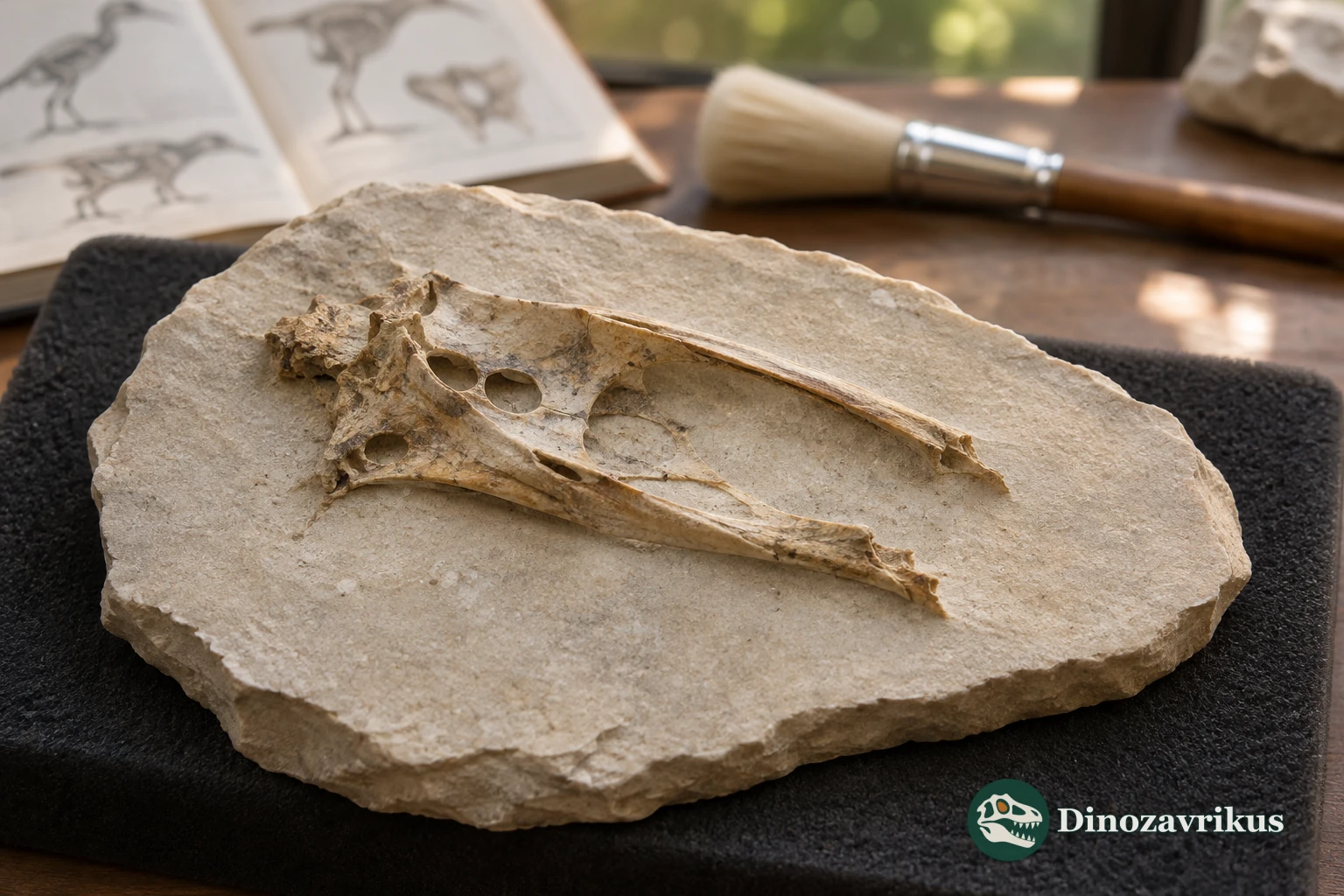
A coracoid from Saint-Gérand-le-Puy
Jacques Cheneval described FSL 443675, the proximal part of a right coracoid, from the Early Miocene of Saint-Gérand-le-Puy. The coracoid braces the shoulder against the sternum. The fossil resembles that of a sulid, but the shape of its head and joint surface differ from those of the living northern gannet.
The fragment was close enough in size to compare with Empheresula. Its counterpart is absent from the Gannat type series, so Cheneval referred the younger fossil tentatively. The Late Oligocene material from Gannat remains the most secure age record.
Frequently asked questions
Why were two genus names proposed in 1975?
The first name, Parasula, was already in use. Harrison replaced it with Empheresula.
What is the lectotype?
It is a pelvis in a limestone slab from Gannat, kept at the National Museum of Natural History in Paris.
Does Empheresula occur in the Miocene?
A shoulder bone from Early Miocene Saint-Gérand-le-Puy was assigned provisionally.
Do the bones show how it dived?
They do not resolve how the bird dived. The type specimen preserves no skull or wing.