

Emuarius was an Australian flightless bird with a mixture of emu-like and cassowary-like features. The first bones were assigned to an extinct species of emu. Finds in South Australia and Queensland showed a more distinctive combination, particularly in the thigh and lower leg.
Quick facts
| Family | Casuariidae |
|---|---|
| Age | Late Oligocene to Miocene |
| Localities | South Australia and Queensland |
| Type specimen | SAMA P26779, associated left hindlimb bones |
| Genus described | Walter Boles, 1992 |
| Type species | Emuarius gidju |
| Locomotion | Flightless, with running adaptations |
What can the fossils tell us?
The type preserves the distal shin, a partial tarsometatarsus and toes. They document the structure of the leg. Its full length has to be estimated.
Boles compared the proportions of long bones with those of emus and cassowaries. The comparison indicates a degree of running specialisation, without yielding a maximum speed.
A later analysis used skull and postcranial characters to place the fossil beside the emu lineage. A sister relationship leaves direct ancestry unresolved.
The bones from Lake Ngapakaldi
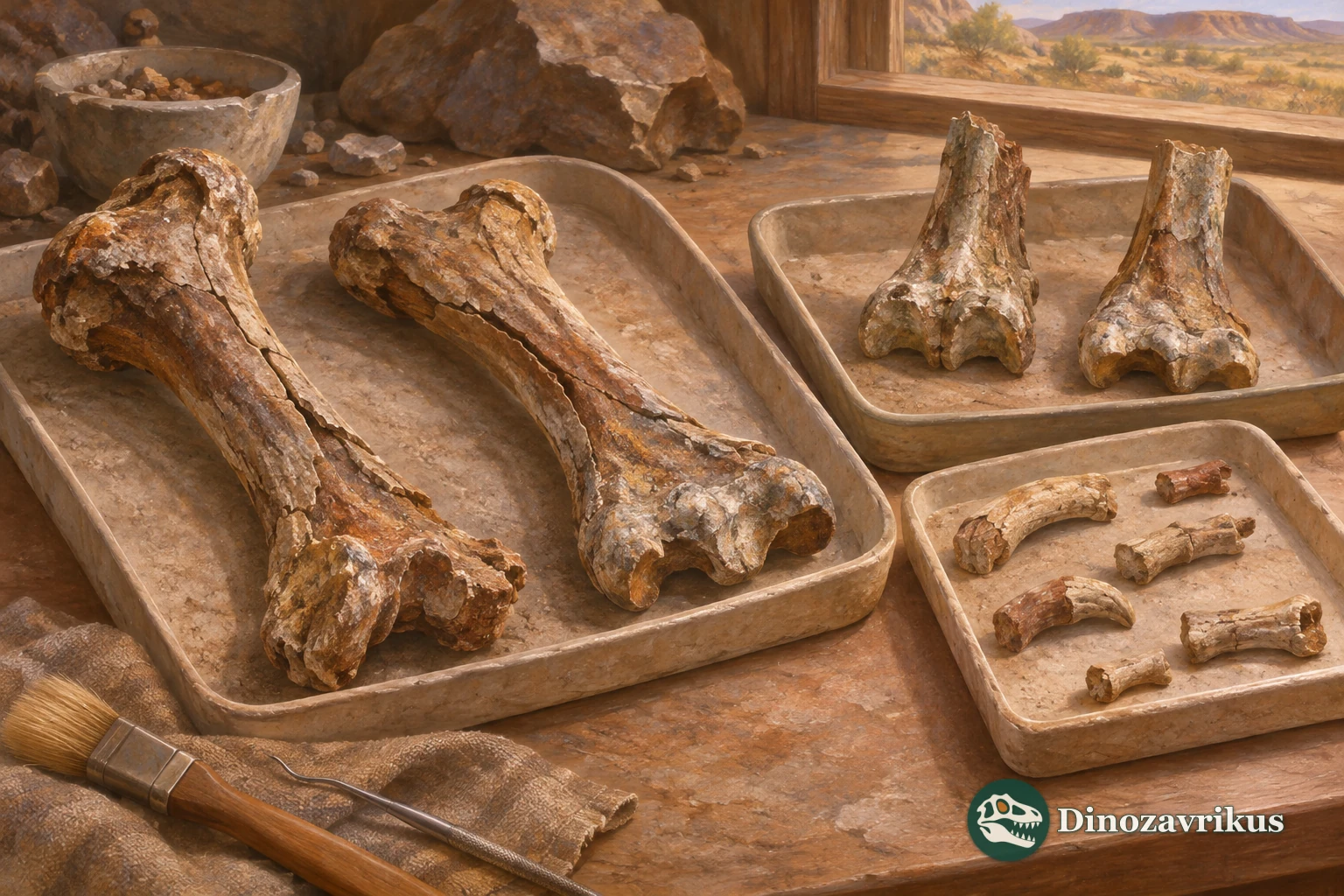
In 1987, C. Patterson and Patricia Rich named Dromaius gidju from fossils collected at the Leaf Locality near Lake Ngapakaldi, South Australia. The associated bones, SAMA P26779, include the distal left tibiotarsus, part of the tarsometatarsus and toe bones. The site lies in the Wipajiri Formation of the Lake Eyre Basin.
Walter Boles revisited the species in 1992 using more material from the type site and the Riversleigh deposits in northwestern Queensland. Parts of the shin and foot resembled those of emus. The femur retained similarities to cassowaries. That combination led Boles to name Emuarius.
How the legs were compared
Boles later measured the shares contributed by the femur, shin and tarsometatarsus to the total length of the hindlimb. The relative length of the tarsometatarsus fell between the values for cassowaries and emus. Several lengths required reconstruction from incomplete material. One worn femur, AM F78585, measured 194 mm. Boles estimated that its original length was about 198 mm.
Longer distal leg segments relative to the femur are associated with running specialisation in these birds. The comparison suggests that Emuarius could have used more open patches than living forest cassowaries tend to use. It supplies no direct measurement of speed or endurance.
Skull evidence and a second name
Trevor Worthy, Suzanne Hand and Michael Archer incorporated skull and other skeletal material into a 2014 analysis. It placed Emuarius gidju as the sister taxon of the emu genus Dromaius. Their shared branch was sister to cassowaries. Some of the resemblances to cassowaries can thus reflect features retained from an earlier form.
Boles also described Emuarius guljaruba in 2001 from SAMA P23977, a complete left tarsometatarsus from Mammalon Hill in the late Oligocene Etadunna Formation. While features of this bone suggested running adaptations beyond those of living cassowaries, Boles left its assignment to the genus provisional.
Localities and changing identifications
The main material recognised as Emuarius comes from Riversleigh and the Lake Eyre Basin. Small late Miocene birds from Alcoota were once referred to the genus. A study of additional fossils in 2019 assigned that material to a distinct emu, Dromaius arleyekweke.
Other Australian flightless birds evolved independently. Skull studies place Dromornis near the branch of fowl and waterfowl, while skull and limb bones unite Emuarius with the casuariids. The latter fossil material supplies no direct record of the foods it ate.
Frequently asked questions
Where has Emuarius been found?
The main records are from the Lake Eyre Basin in South Australia and the Riversleigh deposits in northwestern Queensland.
Why was it put in a separate genus?
Its femur retained features seen in cassowaries, while the shin and foot were closer in form to those of emus. Together those characters distinguish it from living genera.
How fast did it run?
Its limb proportions indicate some running specialisation. The fossil comparisons do not supply a reliable estimate of maximum speed.
How many species were assigned to the genus?
Emuarius gidju is the type species. Boles provisionally assigned a second species, Emuarius guljaruba, on the basis of a complete tarsometatarsus.