

Enneabatrachus hechti was a Late Jurassic frog from western North America. Susan Evans and Andrew Milner recognised the species from part of a pelvic bone. Isolated remains and an incomplete skeleton from Utah added to the original Wyoming record.
Quick facts
| Group | Frogs (Anura) |
|---|---|
| Age | Late Jurassic, Kimmeridgian for the holotype |
| Region | North America (Wyoming and Utah, United States) |
| Type species | Enneabatrachus hechti |
| Scientific name | Enneabatrachus |
| Diet | Exact prey is unknown |
What can the fossils tell us?
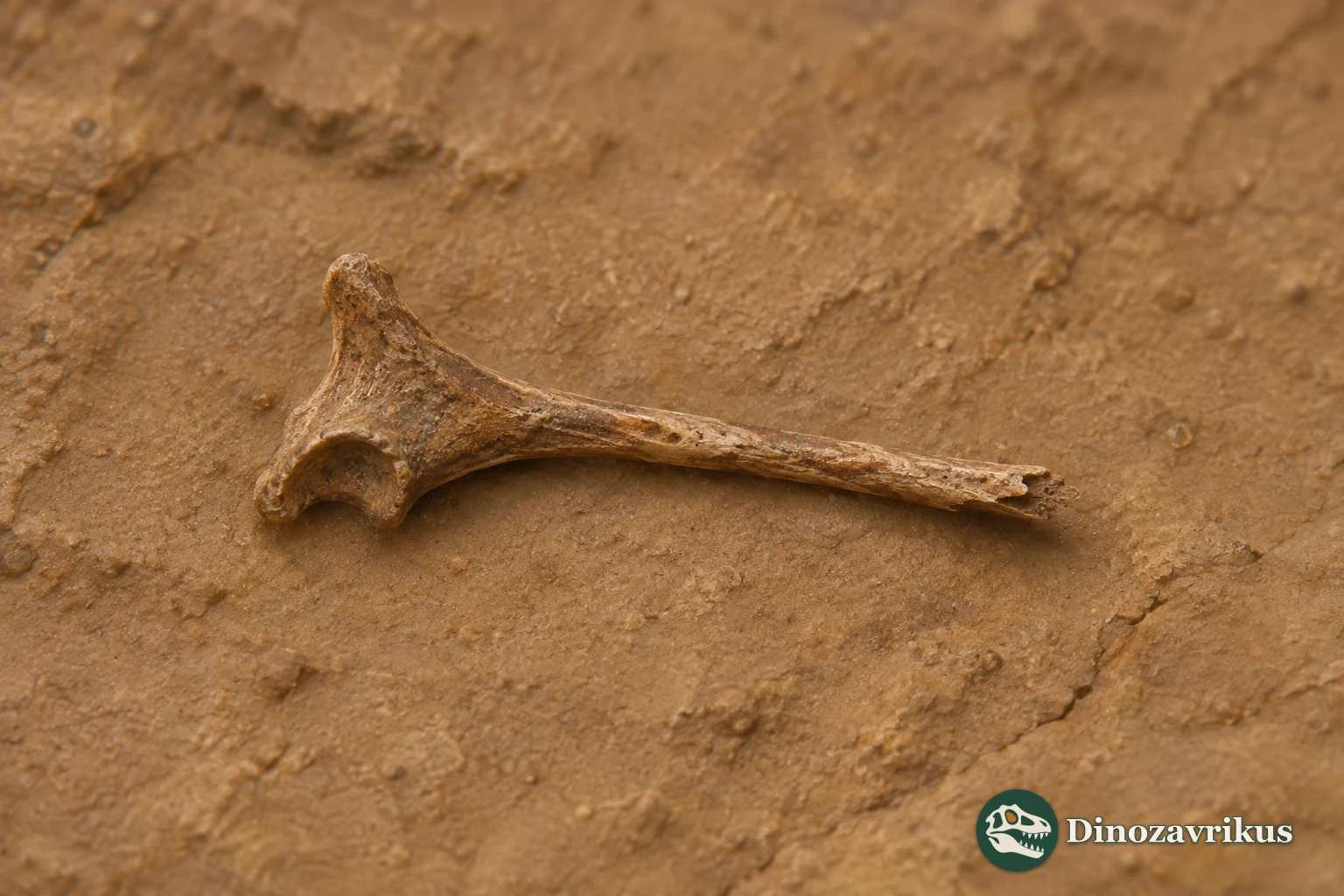
The type specimen USNM PAL460388 is an incomplete ilium from Como Bluff. A separate urostyle and an incomplete skeleton from Utah have been assigned to the species.
Evans and Milner identified it as a frog and compared its ilium with those of discoglossids in the broad sense.
The known fossils give limited evidence for finer family relationships, head shape or colour. The type does not support a reliable estimate of total body length.
The specimen from Quarry Nine
In 1993 Evans and Milner named the species from an incomplete left ilium from Quarry Nine at Como Bluff, Wyoming. It is held by the Smithsonian National Museum of Natural History. The bone comes from the Brushy Basin Member of the Morrison Formation. The museum assigns the specimen a Kimmeridgian age.
Further bones from Utah
Amy Henrici assigned material from Rainbow Park in Dinosaur National Monument to the species. The record from that locality includes a partial skeleton and a separate urostyle, a rod-like bone at the rear of the frog’s vertebral column. These fossils add regions of the skeleton beyond the type bone. The Early Cretaceous Nevobatrachus from Israel, by comparison, also preserves bones of the skull.
Placement among early frogs
The original description referred Enneabatrachus to discoglossids in a broad sense. Later work has treated the animal as a frog while approaching its finer placement more cautiously. The pelvis provides characters for comparison, but the known fossils leave open the exact family and offer little evidence for colour or diet.
Frequently asked questions
Which bone was used to name it?
USNM PAL460388 is an incomplete left ilium, part of the pelvis.
When was the species described?
Susan Evans and Andrew Milner published the description in 1993.
Where was additional material found?
Rainbow Park in Utah yielded an incomplete skeleton and a separate urostyle assigned to the species.
Is a complete skull known?
The material assigned to the genus mainly represents parts of the pelvis, spine and hind limbs. A complete skull has not been described.