

Nevobatrachus gracilis lived in what is now Israel during the Early Cretaceous. Fine lake sediment preserved the skeletons of these small aquatic frogs. Specimens reveal the arrangement of the vertebrae, teeth and shoulder bones.
Quick facts
| Group | Frogs (Anura), pipimorphs |
|---|---|
| Age | Early Cretaceous, Aptian |
| Region | Asia (Makhtesh Ramon, Israel) |
| Length | About 30.5 mm snout to vent in the holotype |
| Type species | Nevobatrachus gracilis |
| Scientific name | Nevobatrachus |
| Diet | Exact prey is unknown |
What can the fossils tell us?
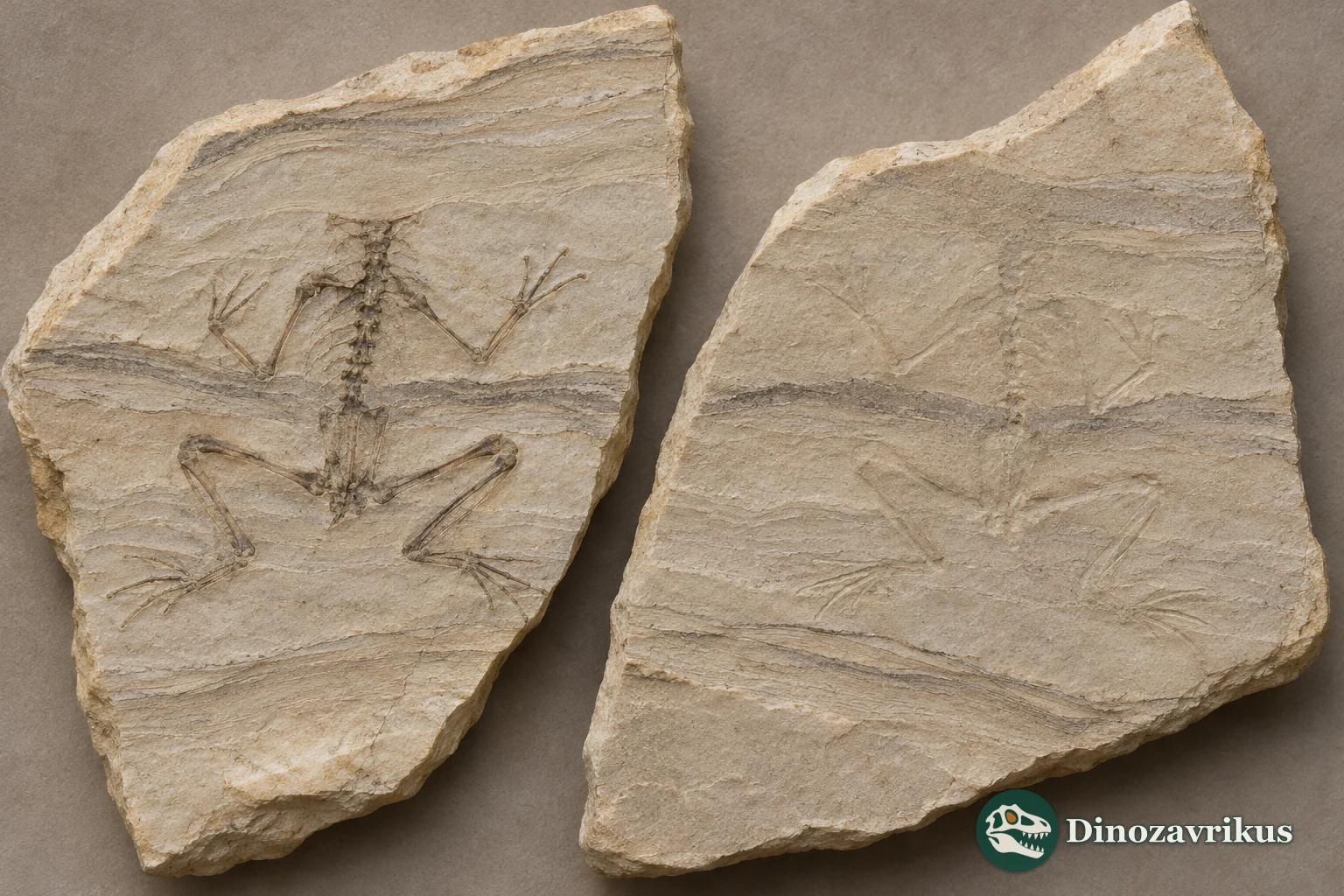
Holotype HUJZ F165a and F165b preserves parts of the skull, spine and limbs. A different specimen shows tiny teeth with two tips.
The proposed differences between the two original species were inconsistent across the sample. A revision placed them in one species.
A snout-to-vent length was estimated for the type specimen. Diet, colour and skin details remain unknown.
Lake beds at Makhtesh Ramon
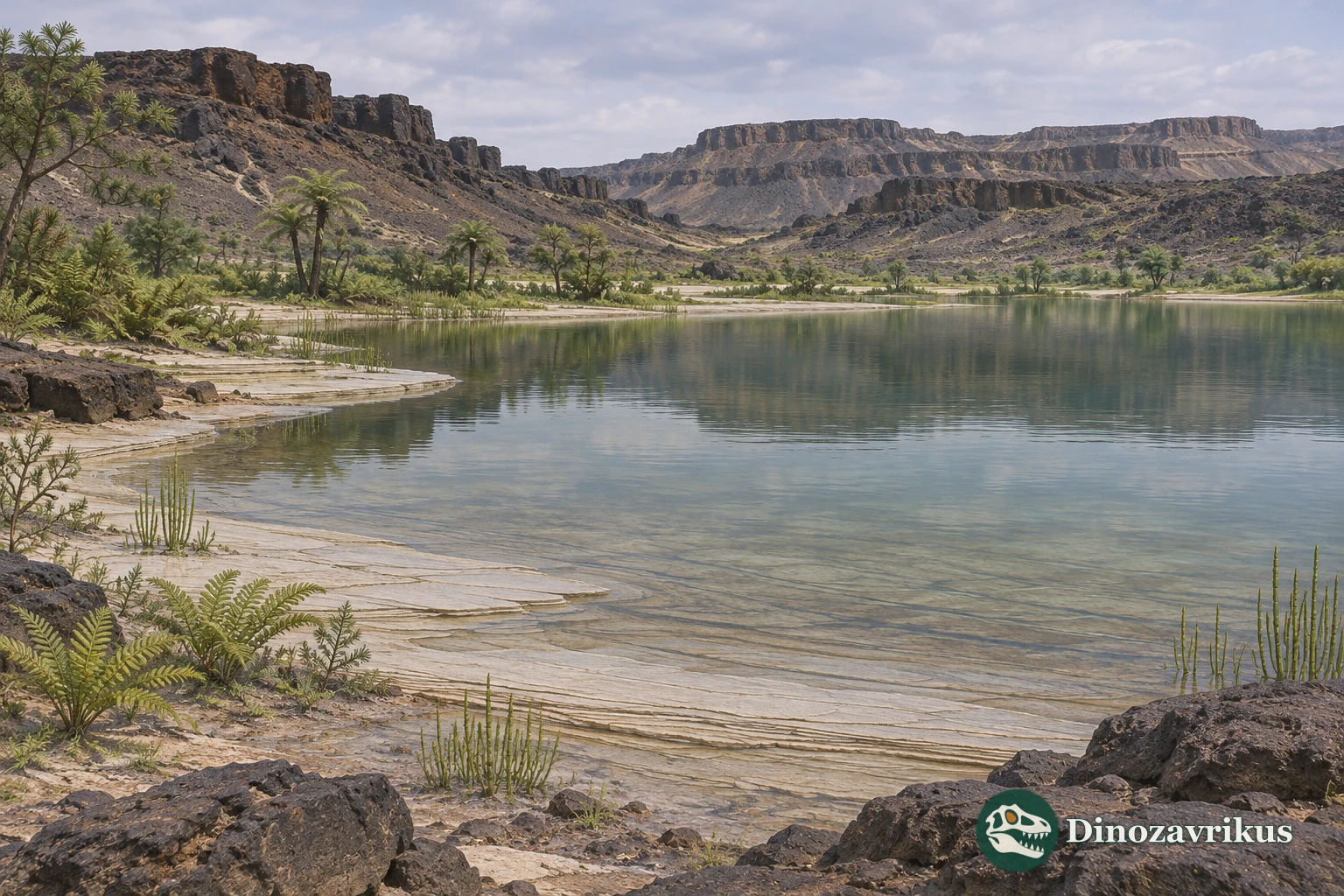
Eviatar Nevo described the frogs in 1968 from a site in western Makhtesh Ramon. The fossils come from alternating light and dark lake sediment in the Hatira Formation. Basalts above and below the frog beds provide evidence for an Aptian age. The holotype HUJZ F165a and F165b is preserved across two rock slabs. The front of the snout and some other bones are missing.
Details from the skeletons
Linda Trueb and Ana María Báez revised the material in 2006. They recognised seven separate presacral vertebrae, with the transverse processes of the last two curved forward. Sockets in the upper jaw indicate around 25 tooth positions. One specimen preserves two tips on the individual teeth. Those distinctive features help compare the Negev frogs with other Cretaceous pipimorphs, including Avitabatrachus from Patagonia.
Why the two species were united
Nevo originally separated Cordicephalus gracilis and C. longicostatus on differences in size and in the skull, ribs and shoulder. Trueb and Báez found that those distinctions did not hold consistently when they compared specimens. They placed both sets of fossils in C. gracilis. The subsequent change to the genus name did not create another species.
Why the genus changed names
In 2019 Stephen Mahony noted that the name Cordicephalus had already been published for a genus of tapeworms in 1947. He proposed Nevobatrachus to honour Nevo, the original describer of the frog. The older name still appears in the original account and in the 2006 revision.
Frequently asked questions
How big was Nevobatrachus?
The type specimen was estimated at about 30.5 mm from the snout to the vent. The estimate refers to one individual.
Where were the skeletons found?
They came from Early Cretaceous lake sediments in western Makhtesh Ramon, in the Negev of southern Israel.
What was the genus called before?
Eviatar Nevo called it Cordicephalus. That name was already used in zoological nomenclature, so it was replaced by Nevobatrachus.
What happened to the second named species?
The revision united the two sets of skeletons after it found that the original distinctions were inconsistent. The recognized species is now called Nevobatrachus gracilis.