

Entomophontes was an Eocene anguimorph lizard from Wyoming. Its teeth had flared crowns and parts of its head carried textured bony plates. Isolated jaws and skull bones distinguish two species and support comparison with living knob-scaled lizards.
Quick facts
| Group | Anguimorphs (Anguimorpha) |
|---|---|
| Age | Early and middle Eocene |
| Region | North America, United States, Wyoming |
| Type species | Entomophontes incrustatus |
| Scientific name | Entomophontes |
| Diet | No direct evidence |
What can the fossils tell us?
The type species is based on right dentary UCMP 98223. USNM 527961, a left dentary, anchors the second species.
Parts of the skull and upper jaw support a relationship with the lineage of living knob-scaled lizards.
The shape of the teeth is consistent with feeding on animals. The fossils preserve no identified prey.
Two species from Wyoming
K. T. Smith and J. A. Gauthier named the genus in 2013. The type species, Entomophontes incrustatus, comes from early Eocene deposits including the Wasatch Formation near Bitter Creek. The study described jaw bones, separate skull fragments and isolated osteoderms. The second species, Entomophontes hutchisoni, is also known from younger material near Tabernacle Butte in the Bridger Formation.
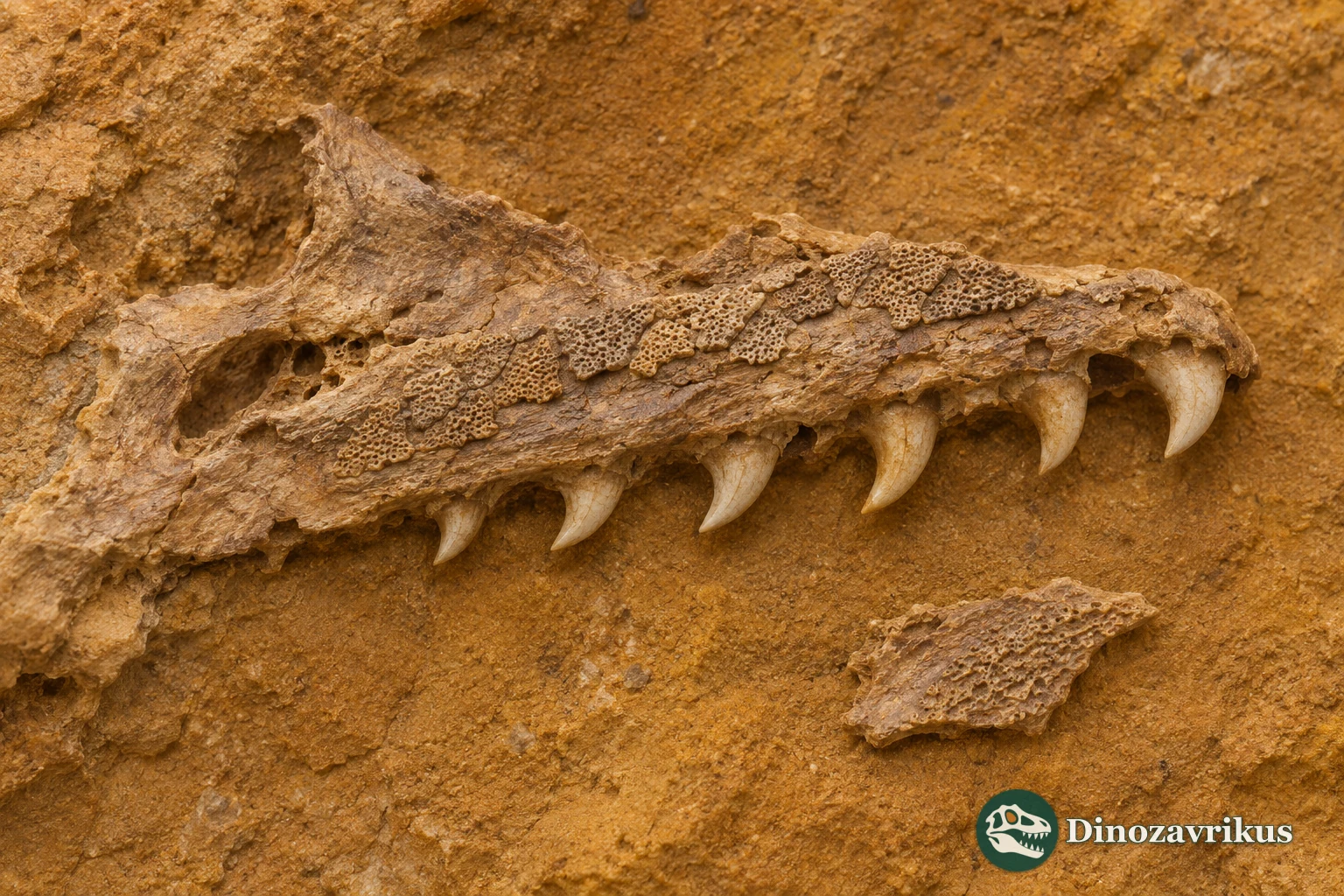
Flared crowns and textured plates
The crowns broadened at about mid-height, more markedly in the type species. Bony plates on the skull formed a thick surface layer with a winding pattern. Together these features help distinguish the genus from Cretaceous Parasaniwa, to which some of the Eocene material was once compared.
What the fossils support
Premaxillary and parietal features supported a position on the lineage of Xenosaurus. The authors interpreted the teeth as consistent with predatory feeding, while specific prey cannot be identified. The earliest known fossils date to the onset of Eocene warming. The authors proposed that climatic change may have allowed the lineage to extend farther north.
Frequently asked questions
What does the name Entomophontes mean?
It combines Greek roots for insect and slayer. The name reflects an interpretation of feeding, and specific prey remains unknown.
How do the two named species differ?
The type species has more strongly flared crowns. The second has distinct longitudinal grooves on the inner surfaces of its tooth crowns.
Where are its youngest fossils known from?
The younger material referred to the second species comes from the middle Eocene Bridger Formation in Wyoming.
Which living lizards provide a comparison?
Some skull features are shared with knob-scaled lizards of the genus Xenosaurus.