

Eocenochelus was a side-necked turtle known from coastal Eocene deposits of Western Europe. The type skull preserves a short snout and a robust jaw. Shells from different localities record the genus from the Early to Late Eocene and show differences in the arrangement of the shell bones.
Quick facts
| Group | Turtles, side-necked podocnemidids (Podocnemididae) |
|---|---|
| Age | Eocene (Ypresian, Lutetian and Priabonian) |
| Region | Europe (France, Belgium and Spain) |
| Type species | Eocenochelus eremberti |
| Holotype | MNHN.F CGR 101, skull and partial skeleton |
| Plastron length | At least 60 cm in the type species holotype |
| Scientific name | Eocenochelus |
| Diet | Exact diet unknown |
What can the fossils tell us?
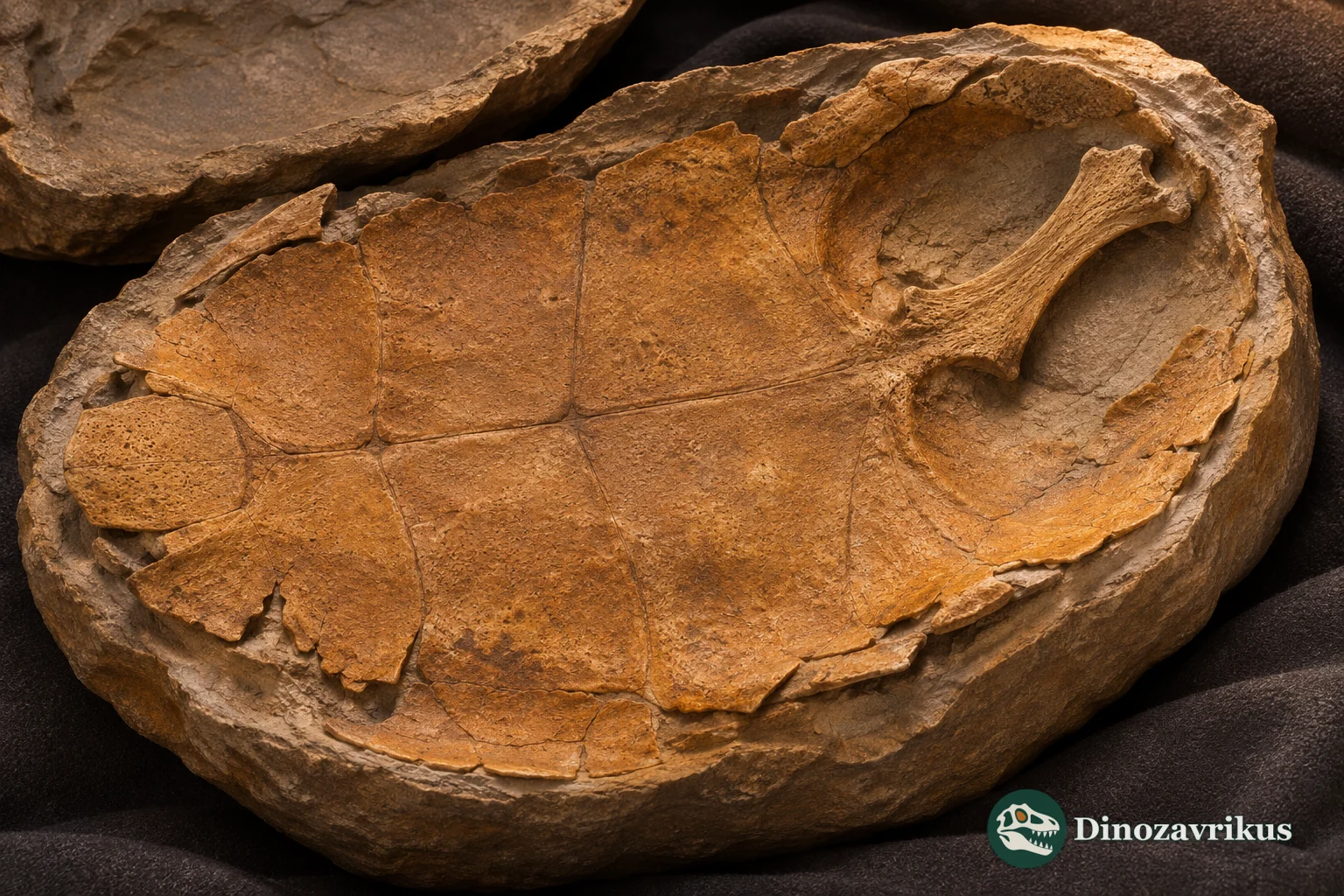
MNHN.F CGR 101 preserves a robust jaw and much of the lower shell. Its plastron was at least 60 centimetres long.
IRSNB R356 from Saint-Gilles has an almost complete plastron. It extends the known range of E. eremberti beyond its French type locality.
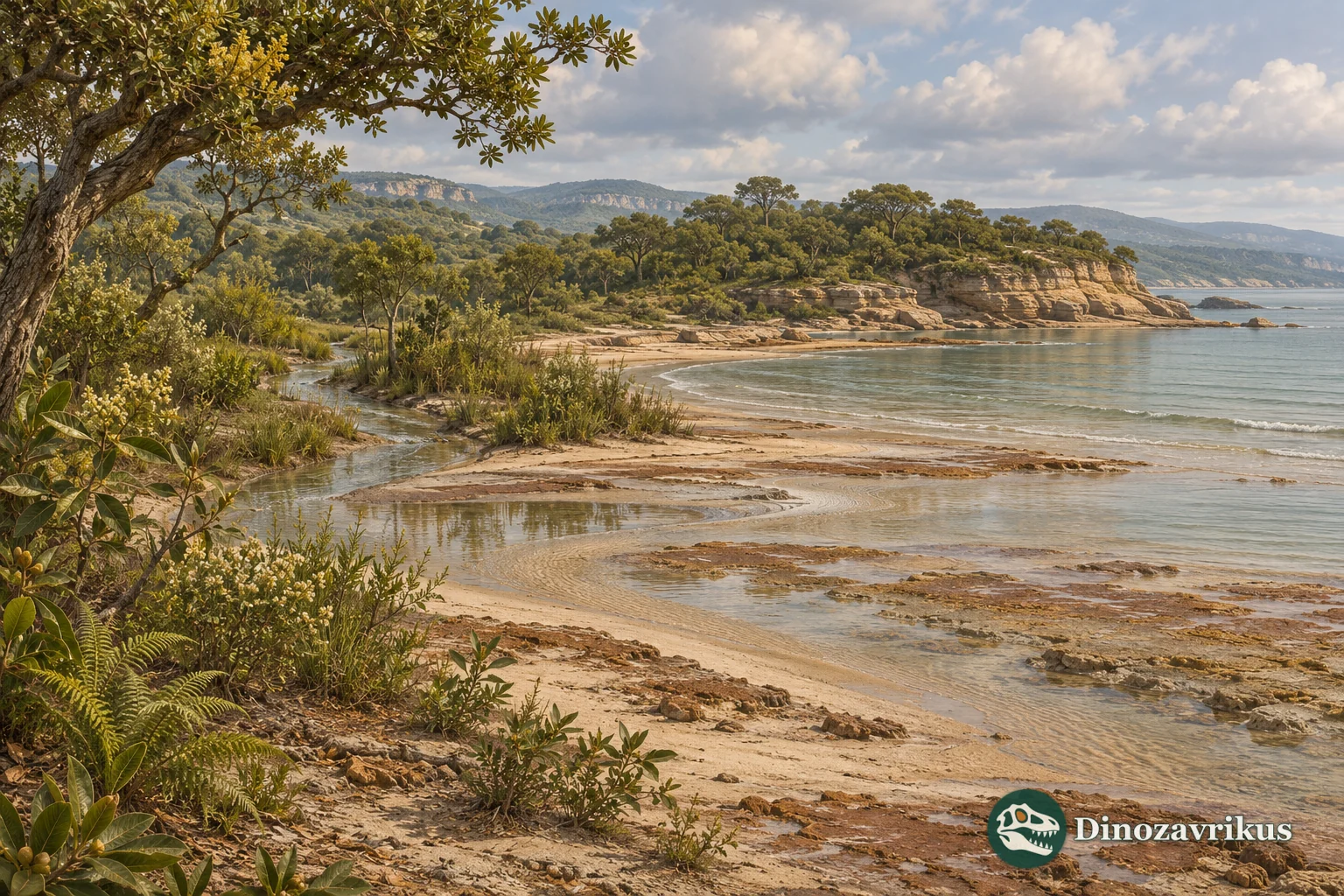
All named species are known from coastal deposits. Those occurrences support a nearshore habitat, with the distances the turtle could travel at sea left open.
An Eocene skull with a lengthy jaw symphysis
France de Lapparent de Broin described the type species in 1977 from a partial skeleton at Saint-Germain-en-Laye, west of Paris. The Lutetian specimen is MNHN.F CGR 101. In 2017, Adán Pérez-García, de Lapparent de Broin and Xabier Murelaga assigned the species to the new genus Eocenochelus after re-examining the skeleton.
The skull has a short snout and wide spacing between its eye sockets. The lower jaw is robust, with the joined portion of its halves making up about 40 percent of its length. This differs from the proportions in several relatives. The jaw points to a distinctive way of processing food, while actual food items remain unknown.
Additional shells from Belgium, France and Spain
The Belgian specimen IRSNB R356 comes from early Lutetian sediments at Saint-Gilles, Brussels. It preserves the most complete plastron known for the species and several other plates. Its features helped identify it as E. eremberti outside the original French locality.
Laurent Lacombe found the holotype of the older E. lacombianus at Soulane in southern France. Its plastron is about 30 centimetres long, compared with at least 60 centimetres in the holotype of E. eremberti. These are measurements of individual fossils. The late Eocene Spanish species E. farresi has six neural plates, whereas the early Eocene species has seven.
A coastal member of a mainly freshwater lineage
The genus belongs to the podocnemidid lineage that includes Madagascar’s living big-headed turtle. Eocene European specimens of Eocenochelus come from coastal marine deposits. The authors of the genus interpreted it as a nearshore inhabitant, including in coastal gulfs. Specialisation of the jaw could reflect life in those settings, with no direct evidence of diet.
The Eocene record in Europe also includes Eochelone, which belongs to a separate branch of turtles despite the similar name.
Frequently asked questions
Where was the type specimen found?
It came from Lutetian limestone at Saint-Germain-en-Laye, west of Paris.
What do the Belgian fossils preserve?
IRSNB R356 includes a nearly complete plastron and several other shell bones. It was assigned to Eocenochelus eremberti.
When did the Spanish species live?
Eocenochelus farresi occurs in Priabonian deposits of the Late Eocene.
Was Eocenochelus a marine turtle?
The deposits point to a coastal marine habitat. The finds establish a nearshore association, with long-distance ocean travel unresolved.