

Eochelone is a fossil sea turtle known from the Eocene of Europe. Much of the comparison between Belgium and Spain rests on a part of the animal seldom seen in life: the bones beneath the body and the openings left between them.
Quick facts
| Group | Turtles, sea turtles (Cheloniidae) |
|---|---|
| Age | Eocene (Lutetian to Priabonian) |
| Region | Europe (Belgium, Spain and England) |
| Type species | Eochelone brabantica |
| Holotype | IRSNB R1, skeleton with shell from Belgium |
| Scientific name | Eochelone |
| Diet | Exact diet unknown |
What can the fossils tell us?
IRSNB R1 shows the shell and skull in one specimen from the middle Eocene.
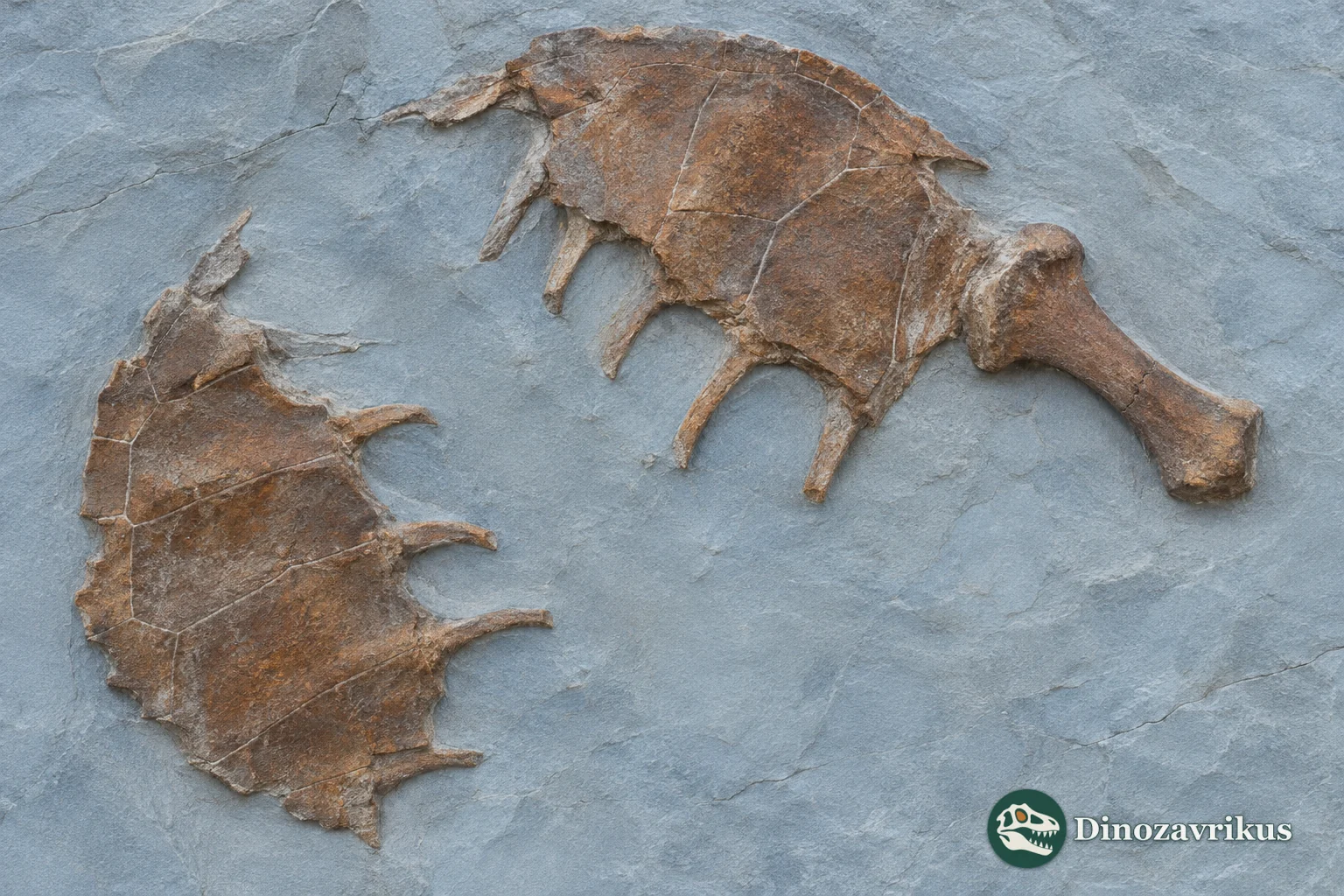
The Spanish fossil preserves the borders of openings in the lower shell. Their proportions can be compared with the Belgian material.
The two species with cranial material lack the very broad chewing surface of some other Eocene sea turtles. This places limits on dietary inference.
The species described by Dollo
Louis Dollo established the genus in 1903 for Eochelone brabantica. Its type skeleton, IRSNB R1, is from Saint-Rémy-Geest in the Belgian province of Brabant. The Lutetian material is held by the Royal Belgian Institute of Natural Sciences. Because the shell and skull are associated, the Belgian type is an unusually valuable point of comparison.
A younger skeleton from Spain
In 2018, France de Lapparent de Broin and colleagues described E. voltregana from late Eocene deposits in Osona, Catalonia. The holotype, MGSB-74.642, includes shell bones, a right humerus and part of the pelvis. Jacint Altimiras and Francesc Farrés led much of the finding and preparation with GeoLab Vic. Other localities yielded additional material.
The upper shell of the Spanish species was broadly rounded and lacked a dorsal keel. Its lower shell retained a pentagonal opening far longer than the openings to either side. The way these spaces and the neighbouring plates were proportioned is one reason the team assigned the Spanish species to the Belgian genus.
Using the skull to ask about diet
The Bartonian English species E. athersuchi can be compared to the type through the skull. Its postcranial skeleton has yet to be identified. In the Spanish species the situation is reversed: the shell and some limb bones are available, while a skull is unknown. Future finds could test whether its head resembled those of the other species.
The skulls of the Belgian and English species lack the long, wide secondary palate seen in some hard-prey specialists. The comparison includes Puppigerus, whose palate was more extensively developed. Fossils from the marls of the Ebro Basin establish a marine setting in Catalonia. The exact prey of the turtles remains unknown.
Frequently asked questions
What is the type species of Eochelone?
Eochelone brabantica, described by Louis Dollo from Belgium.
Which parts of the Spanish fossil were preserved?
The holotype has shell bones, the right humerus and part of the pelvis.
How old is Eochelone voltregana?
The material comes from Priabonian deposits of the late Eocene.
Did Eochelone crush hard prey?
Its known palates lack the specialisation seen in some hard-prey crushers. Its specific diet is uncertain.